Air pollution control has become a critical part of modern industrial development. As industries expand, the need for efficient waste gas treatment technologies continues to grow. Among various solutions, the ESP electrostatic precipitator stands out as one of the most widely used systems for controlling particulate emissions. However, it is not the only available technology. Other devices such as bag filters, wet scrubbers, cyclones, and activated carbon systems also play important roles.
Overview of Major Air Pollution Control Devices
Different air pollution control systems are designed to target specific types of pollutants. Below is a simplified overview:
| Device Type |
Main Function |
Target Pollutants |
Key Strength |
Limitation |
| ESP electrostatic precipitator |
Uses electric charge to remove particles |
Fine dust, fly ash |
High efficiency for fine particles |
Less effective for sticky gases |
| Bag filter (fabric filter) |
Physical filtration through fabric |
Dust, smoke particles |
Very high removal efficiency |
Higher maintenance and pressure drop |
| Wet scrubber |
Uses liquid to capture pollutants |
Acid gases, dust |
Good for gas absorption |
Wastewater generation |
| Cyclone separator |
Centrifugal force separation |
Coarse particles |
Simple structure, low cost |
Low efficiency for fine dust |
| Activated carbon system |
Adsorption of gas molecules |
VOCs, odors |
Effective for gas-phase pollutants |
Requires frequent replacement |
How ESP Electrostatic Precipitators Work
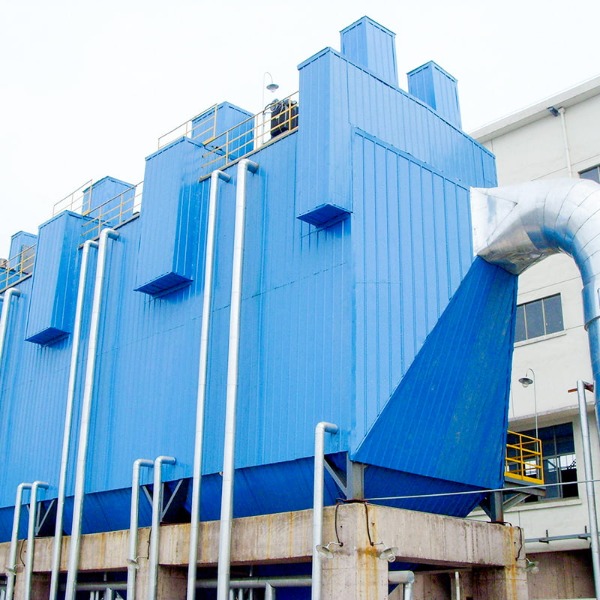
The industrial electrostatic precipitator operates by charging dust particles in a gas stream using high-voltage electrodes. These charged particles are then attracted to collection plates with opposite polarity. Once collected, dust is removed mechanically.
This process is highly efficient for fine particulate matter, making it a core technology in many industrial emission control systems.
Key high-volume related keywords include:
- particulate matter removal system
- industrial dust collection technology
- emission control equipment
- high efficiency dust separator
Environmental Performance Comparison
From an environmental perspective, performance depends on particle size control efficiency, secondary pollution, and energy consumption.
- ESP electrostatic precipitator: Excellent for fine particulate control with low secondary waste.
- Bag filters: Extremely high efficiency but generate more solid waste from filter replacement.
- Wet scrubbers: Effective for combined gas and dust removal but may create wastewater pollution risks.
- Cyclones: Environmentally limited due to poor fine particle capture.
- Activated carbon systems: Best for gas pollutants but not suitable for large dust loads.
In modern waste gas treatment systems, ESP technology is often selected when large gas volumes and fine dust control are required.
Efficiency and Energy Considerations
Energy consumption is an important factor in environmental sustainability. While all systems require energy input, their efficiency varies significantly.
- ESP systems typically maintain low pressure drop, reducing energy demand in airflow systems.
- Bag filters require higher fan power due to resistance from filter media.
- Wet scrubbers consume additional energy for liquid circulation and pumping.
- Cyclone systems are energy-efficient but less effective in purification quality.
Therefore, in large-scale industrial applications, industrial electrostatic precipitator systems often provide a balanced solution between energy use and emission reduction.
Application Suitability
Each air pollution control device is designed for different industrial environments:
- ESP electrostatic precipitator: Power plants, metallurgy, cement production, large boilers
- Bag filters: Chemical processing, small-to-medium industrial dust collection
- Wet scrubbers: Chemical industries with acid gas emissions
- Cyclones: Pre-treatment for coarse dust removal
- Activated carbon systems: Chemical vapor and odor control
A complete waste gas treatment system may combine multiple devices for optimal results.
Advantages of ESP in Environmental Protection
The environmental benefits of ESP technology include:
- High collection efficiency for fine particulate matter
- Stable performance under high gas flow conditions
- Low maintenance frequency compared to filtration systems
- Reduced solid waste generation
- Long operational lifespan
Because of these advantages, ESP electrostatic precipitator systems are widely recognized as a key component in sustainable industrial emission control strategies.
Limitations and Optimization Needs
Despite its advantages, ESP technology also has limitations:
- Reduced efficiency for sticky or oily particles
- Performance affected by dust resistivity
- Requires stable electrical conditions
- Less effective for gaseous pollutants
To overcome these limitations, ESP systems are often integrated with other technologies in hybrid waste gas treatment systems, improving overall environmental performance.
Conclusion
When comparing ESP electrostatic precipitator systems with other air pollution control devices, no single solution is universally superior. However, ESP technology stands out in handling large volumes of fine particulate emissions with high efficiency and low energy consumption.
For industries focusing on sustainable development and effective emission control, industrial electrostatic precipitator systems remain a highly reliable choice, especially when integrated into multi-stage waste gas treatment solutions.
FAQ
Q1: What is an ESP electrostatic precipitator used for?
It is used to remove fine particulate matter from industrial exhaust gases using electrical charging and collection plates.
Q2: Is ESP better than bag filters?
ESP is more energy-efficient for large gas volumes, while bag filters offer higher efficiency for certain dust types but require more maintenance.
Q3: Can ESP remove gases like VOCs?
No, ESP is mainly designed for particulate matter. Gas pollutants require other systems like activated carbon or scrubbers.
Q4: What industries commonly use industrial electrostatic precipitators?
They are widely used in power generation, cement production, metallurgy, and large-scale industrial boilers.
Q5: Can ESP be combined with other waste gas treatment systems?
Yes, ESP is often integrated with scrubbers or filtration systems for improved multi-pollutant control.



 English
 Français
 عربى
عربى 简体中文
简体中文