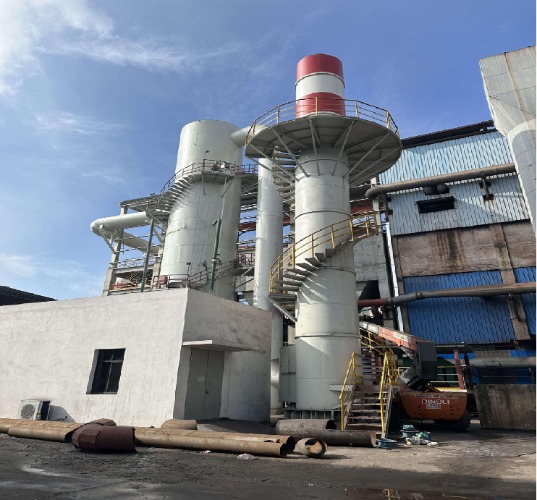
Wet scrubbers quietly protect workers, neighbors and the environment by pulling pollutants out of exhaust streams before they leave a plant. When they run well, nobody notices them. When they drift out of specification, the consequences appear quickly: falling removal efficiency, rising energy bills, unplanned shutdowns and emission exceedances that can trigger regulatory action. Most of these problems are preventable. They usually begin as small deviations that a disciplined maintenance routine would have caught weeks earlier.
This guide is written for maintenance engineers, EPC project teams and plant managers who need a practical reference. It organizes tasks by frequency, provides a pre-startup checklist, compares the maintenance demands of several scrubber types, walks through common failures and explains record-keeping practices. Tables and diagrams are included so you can reuse the material in shift briefings and procedure documents.
A wet scrubber performs only as well as its least-maintained component, and most failures trace back to a parameter that was watched too loosely or inspected too late.
Why Wet Scrubber Maintenance Is Critical for Industrial Facilities
Consistent performance at the required efficiency level depends on a documented maintenance plan. Without regular attention, a scrubber tends to consume more energy to move air and circulate liquid, and it becomes less effective at capturing pollutants. That combination puts personnel safety, environmental performance and regulatory standing at risk at the same time.
Consider a realistic scenario. A plant runs a scrubber on a process line that operates around the clock. Over several months, a partially plugged set of spray nozzles reduces liquid coverage across the tower cross section. Nobody notices, because the fan still moves air and the stack looks normal from the ground. Then a routine emissions test shows removal efficiency below permit limits. The corrective work now requires an unplanned outage, expedited parts and a compliance report. A weekly nozzle check would have cost a few hours of labor.
A well-run maintenance program delivers value in five areas:
Worker safety: Equipment failures such as loose internals, leaking pumps and corroded ductwork create hazards for operators working nearby.
Environmental compliance: Stable removal efficiency keeps emissions inside permit limits and reduces the risk of violation notices.
Cost control: Small, scheduled interventions are far cheaper than emergency repairs and the lost production that follows them.
Equipment life: Attention to shells, spray nozzles, packing and mist eliminators extends the service life of the entire unit.
Predictability: Trend data from routine checks makes it possible to plan outages instead of reacting to them.
Foundations matter as well. A dust collection system that is designed with accessible inspection ports, adequate drainage and properly sized pumps is far easier to maintain than one assembled without these considerations.
Daily Checks: Catching Drift Before It Becomes Failure
Daily checks are the most important defense against silent degradation. Operators should review a short, consistent set of parameters at every shift handover and compare each reading to a documented baseline. A deviation that stays within alarm limits can still signal a developing problem, so trend awareness matters as much as alarm response.
Parameters to Monitor Every Shift
Parameter
What It Indicates
Typical Response
Pressure drop across scrubber and mist eliminator
Plugging, fouling or mist eliminator loading
Investigate any rise above baseline and schedule cleaning
Sump pH
Reagent dosing accuracy and scaling risk
Verify dosing pump operation and probe calibration
Fresh water make-up flow
Liquid balance and solids buildup
Confirm valve position and flow meter reading
Blowdown rate
Dissolved solids concentration
Adjust to keep solids within design limits
Sump temperature
Absorption efficiency and material stress
Check cooling performance and heat load
Pump flow and pressure
Nozzle coverage across the tower
Compare against the pump performance curve
Sump level
Pump protection and carryover risk
Check level transmitter and make-up control
Duct airflow
Fan loading and capture efficiency
Compare against design airflow and damper position
Pressure Drop as an Early Warning
Pressure drop across the scrubber and mist eliminator is the most informative daily reading. A gradual rise usually points to solids accumulating in packing, trays or the mist eliminator. A sudden drop can indicate channeling, a torn component or a fan operating outside its curve. Both patterns deserve investigation before they affect emissions.
pH Control and Crystal Prevention
Off-target pH is a leading cause of scaling. When pH drifts too high or too low, dissolved solids crystallize on spray nozzles, packing and tray orifices. Automatic reagent dosing systems should be checked against a portable reference probe on a fixed schedule, because a drifting probe can cause the dosing system to chase a false target for days.
Visual Stack Inspection
A quick visual check of the stack and surrounding area reveals a surprising amount. Streaking, wet deposits on nearby surfaces or visible droplets falling from the stack often indicate mist eliminator failure. This condition, known as droplet re-entrainment, allows captured liquid to escape the tower and carry dissolved solids out of the stack.
Weekly and Quarterly Maintenance Tasks
Weekly and quarterly tasks extend the daily picture. They focus on components that change slowly and are easy to overlook when the unit appears to be running normally.
Weekly Work
Read the supply header pressure gauge. A reading above normal usually means nozzles are plugging, while a reading below normal often means nozzle orifices have eroded and are passing too much liquid.
Drain, clean and refill the sump. Remove settled solids, inspect sump walls and floor for thinning or deposits, then refill with clean water and confirm level control operation.
Quarterly Inspection
Complete a full-system leak survey. Walk the ductwork, flanges, pump seals and tank connections. Repair small leaks immediately, because they become corrosion hotspots quickly.
Inspect auxiliary piping and valves. Check external condition, support hangers, actuator function and signs of crystallization around valve stems.
Quarterly results should be logged in the same format every time. Consistent records make it obvious when a leak rate or valve condition is slowly worsening.
Semi-Annual Internal Inspection
The internal inspection is the most valuable routine task in the schedule, because it is the only time many components are seen directly. Shut the unit down, isolate and drain it, allow it to cool, and follow lockout procedures before anyone enters the vessel. Inspectors should document conditions with photographs and measurements so that changes are measurable from one inspection to the next.
Corrosion on shell, internals, supports and access platforms
Erosion patterns on spray nozzles, tray surfaces and inlet areas
Plugged or eroded spray nozzles, including uneven spray pattern
Solids deposits in tray orifices and packed beds
Solids accumulation and scaling on mist eliminator blades
Finding
Common Cause
Recommended Response
Localized corrosion
Acid condensation or lining damage
Repair lining and review operating temperature
Uneven spray pattern
Partially plugged nozzles
Clean or replace nozzles and verify coverage
Packing fouling
Solids carryover or poor pH control
Clean packing and tighten chemistry control
Mist eliminator scaling
Liquid carryover at high loading
Wash or replace elements and check drainage
Findings that show progression between inspections are more important than any single observation. A corrosion spot that doubles in size over six months needs a root-cause review, even if it does not yet threaten structural integrity.
Pre-Startup Checklist Before the Fan Starts
Starting a scrubber after a shutdown, or after any internal work, requires a deliberate checklist. Many startup problems are caused by items that were left isolated, a probe that was never recalibrated or a gasket that was not replaced. Use the following sequence before introducing process gas.
Full ductwork check: Look for warping, wear, corrosion and solids buildup. Confirm gaskets, expansion joints and supports are intact.
Gas pretreatment equipment: Inspect for corrosion, sediment and valve operation. Confirm nozzles in upstream devices are clear.
Scrubber body: Check for rust, scale, leaks, piping connections and internal hangers.
Mist eliminator and filter media: Check for wear, blockage and corrosion. Decide whether elements can be cleaned or must be replaced.
Liquid treatment system: Calibrate pH probes, verify reagent tank levels, check sludge buildup and confirm there are no leaks in dosing lines.
Record the outcome of each item and sign off before startup. A written sign-off turns a checklist into an accountable process.
Planned Versus Reactive Maintenance
Maintenance activities fall into two broad categories. Planned preventative work is scheduled in advance, usually during low-production periods. Reactive work responds to a failure that has already occurred. A sound program minimizes reactive work by making planned activities thorough enough to catch problems early.
Aspect
Planned Preventative
Reactive
Trigger
Calendar, runtime or condition data
Equipment failure or process upset
Timing
Scheduled during low-production windows
Immediate, often during peak demand
Cost profile
Predictable labor and parts
Expedited parts and overtime premiums
Typical scope
Inspection, cleaning, calibration and replacement
Repair or replace damaged components
Production impact
Limited and planned
Often larger than the repair cost itself
Planned Turnaround and Capital Work
Some planned work spans years rather than months. Larger turnarounds and capital upgrades, such as expanding tower capacity or replacing an outdated mist eliminator design, should be aligned with the overall plant shutdown schedule. Combining these projects with routine inspection reduces the number of separate outages required.
Reactive Maintenance and Unplanned Shutdowns
Reactive work becomes necessary after a major component failure, a supply shortage, or an external event that forces the unit offline. In these situations the priority is restoring operation with minimum downtime. Plants that maintain a small stock of critical spares, such as nozzles, gaskets and pump seals, can reduce outage duration significantly. Every reactive event should also be reviewed to determine whether a planned task would have prevented it.
Maintenance Differences Across Scrubber Types
Maintenance requirements vary with the chemistry and operating conditions of each application. All scrubber types require periodic replacement of packing and internals on similar intervals, but the sensitivity of each design to temperature, pressure and pH changes the daily workload considerably.
Scrubber Type
Main Sensitivity
Maintenance Focus
Relative Effort
Hydrogen sulfide
Temperature and pressure
Frequent pH and temperature adjustment
High
Carbon dioxide degassifier
Pressure and temperature
Frequent pH adjustment and pressure checks
High
Nitrogen oxide
Moderate pressure and temperature
Regular monitoring of reagent and flow
Medium
Sulfur dioxide
Moderate pressure and temperature
Scaling control and nozzle inspection
Medium
Hydrochloric acid
pH with low temperature sensitivity
Corrosion monitoring and pH control
Medium
Water-only
Wastewater containment
Collection integrity and discharge control
Low
For hydrogen sulfide and carbon dioxide degassifier systems, a shift schedule that includes temperature and pH trend review is worth the effort. For water-only systems, the emphasis shifts to ensuring that collected liquid never escapes containment, which is often simpler to manage but still requires disciplined housekeeping.
Troubleshooting Common Wet Scrubber Failures
Most scrubber problems fall into a few recognizable patterns. The diagram below shows a logical path from a visible symptom to verification, a sequence that prevents teams from replacing components before confirming the cause.
Droplet Re-Entrainment
Droplet re-entrainment usually originates in a failing mist eliminator, although overloaded internals and poor drainage can contribute. The root cause should be confirmed by inspection before any replacement. Cleaning or replacing mist eliminator elements, and verifying that drain paths are clear, resolves most cases. Recheck the stack after restart, because a clean element that was incorrectly seated will reproduce the problem within days.
Nozzle Pluggage and Erosion
Nozzle problems show up first as abnormal supply header pressure. High pressure with reduced flow usually indicates blockage from solids or scale, while low pressure with excess flow suggests erosion of the orifice. Remove nozzles, clean them with approved methods, measure orifice dimensions and replace any that have worn beyond tolerance.
Crystal and Solids Blockage
Most crystal formation traces back to pH control that has drifted outside its target band. Restore pH control first, then clean affected surfaces. Daily pH review and periodic probe verification are the most effective preventive measures, and they cost far less than the downtime associated with a fouled tower.
Corrosion and Solids Buildup
Corrosion is slow and easy to miss between inspections. Semi-annual internal checks are the best opportunity to identify early thinning, pitting or lining damage. Address the operating cause, such as temperature excursions or incorrect reagent concentration, rather than only repairing the visible damage.
Record-Keeping That Actually Helps
Accurate records are an essential part of maintenance best practice. They turn individual observations into trends, support compliance inspections and make it possible to justify budget decisions with evidence.
Use one standard record system for inspections, parameter logs, repairs and component replacements.
Record measured values, not only pass or fail results, so that trends can be detected over time.
Attach photographs to internal inspection findings and reference them in future reports.
Log every component replacement with part numbers, installation date and expected service interval.
Review trend data monthly to identify parameters that are drifting toward alarm limits.
Good records also speed up troubleshooting. When a new problem appears, comparing current readings with the last six months of data often reveals the cause within minutes.
Designing Maintainable Systems From the Start
The quality of a maintenance program depends heavily on decisions made during design. Scrubbers that include accessible inspection ports, adequate drainage, reachable nozzle headers, correctly sized pumps and reliable instrumentation are far easier to maintain than units assembled without these features. Non-standard process conditions often require tailored solutions, and the right equipment selection can reduce the maintenance burden for the life of the plant.
For facilities planning new or upgraded installations, a well-engineered wet dust collector design should account for these factors from the beginning. Engineering teams typically evaluate:
Process gas composition, temperature and flow variability
Materials of construction for corrosion resistance
Access for inspection, cleaning and component replacement
Instrumentation for real-time pH, pressure and level monitoring
Integration with upstream and downstream air pollution control equipment
Engaging engineering support early, from solution design through equipment selection, construction and long-term operation, helps ensure that maintenance requirements match the actual conditions of the plant.
Conclusion: Make Maintenance a Routine, Not a Reaction
A reliable wet scrubber depends on a structured program: daily monitoring of key parameters, weekly and quarterly checks of components that change slowly, semi-annual internal inspections, disciplined pre-startup verification and thorough records. Understanding how different scrubber types respond to temperature, pressure and pH allows teams to focus their effort where it matters most. Together these practices reduce unplanned shutdowns, protect personnel and keep emissions within permit limits.
Whether you are improving an existing maintenance plan or specifying a new custom air pollution control system, a well-planned schedule and consistent inspection will deliver long-term value for your plant.
Frequently Asked Questions
Q1: What daily parameters should you monitor for wet scrubber maintenance?
Operators should track pressure drop across the scrubber and mist eliminator, sump pH, fresh water make-up flow, blowdown rate, sump temperature, pump flow and pressure, sump level and duct airflow. Each reading should be compared against a documented baseline so that gradual drift is noticed before alarm limits are reached.
Q2: What causes droplet re-entrainment in a wet scrubber?
The most common cause is a failing or overloaded mist eliminator that can no longer separate liquid droplets from the gas stream. Visible symptoms include streaking on the stack, wet deposits on nearby surfaces and droplets falling from the stack. Inspection should confirm the cause before cleaning or replacing elements.
Q3: What is the difference between preventative maintenance and reactive maintenance for wet scrubbers?
Preventative maintenance is scheduled in advance, usually during low-production periods, and focuses on inspection, cleaning and replacement before failure occurs. Reactive maintenance responds to a failure that has already happened and typically involves expedited parts, overtime and unplanned production loss.
Q4: How often should you perform an internal inspection of a wet scrubber?
A semi-annual internal inspection is a widely used interval for most industrial applications. Units operating under severe temperature, pressure or chemistry conditions may need more frequent inspection, while stable applications with strong trend data may be able to adjust the interval after reviewing results.
Q5: Why does pH control matter so much for scrubber maintenance?
Off-target pH is one of the leading causes of scaling and crystal formation on nozzles, packing and tray orifices. Keeping pH within its design band reduces solids buildup, protects internals and lowers the frequency of cleaning and repair work.



 English
 Français
 عربى
 简体中文