English
 Français
 عربى
عربى 简体中文
简体中文


Are Electrostatic Precipitators the Solution to Air Pollution Challenges?
HOME / NEWS / Industry News / Are Electrostatic Precipitators the Solution to Air Pollution Challenges?
 By Admin
Content
Air pollution remains one of the most critical environmental concerns facing industrial sectors today. Manufacturing plants, power generation facilities, cement production lines, metal processing workshops, and other heavy industries continuously release airborne particles during production. As environmental regulations become stricter and public awareness grows, industries are under increasing pressure to adopt cleaner and more efficient emission control technologies.
Among the available air filtration technologies, the industrial electrostatic precipitator has gained significant attention due to its ability to remove fine particulate matter from industrial exhaust streams. Known for high collection efficiency and stable long-term operation, the ESP electrostatic precipitator is widely regarded as a practical solution for industrial air pollution management.
But can electrostatic precipitators truly solve modern air pollution challenges? Understanding their operating principles, advantages, limitations, and industrial applications helps answer this question more clearly.
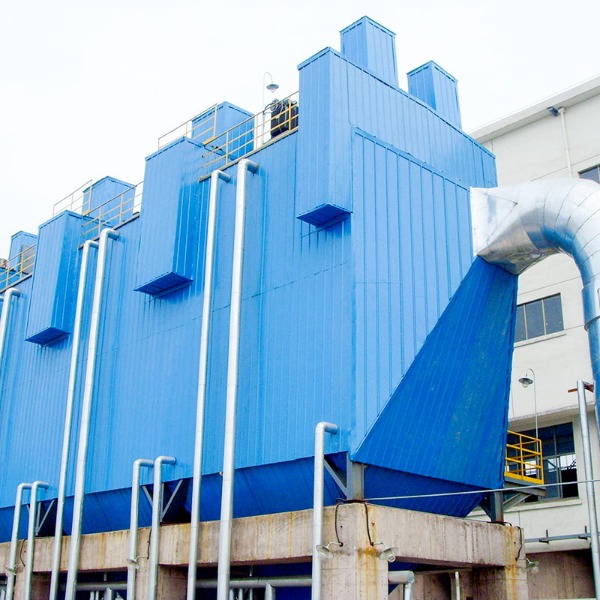
An electrostatic precipitator is an air pollution control device designed to capture suspended particles from industrial gas flows using electrical forces. Unlike traditional filtration systems that physically block particles through mesh or fabric materials, electrostatic precipitators rely on electrically charging particles and collecting them on oppositely charged plates.
The system typically includes:
| Component | Function |
|---|---|
| Discharge Electrodes | Generate electrical charges |
| Collection Plates | Capture charged dust particles |
| Power Supply Unit | Maintains high-voltage electric fields |
| Rapping System | Removes accumulated dust from plates |
| Hopper | Collects discharged particles |
During operation, contaminated gas passes through a high-voltage electric field. Dust particles become electrically charged and migrate toward collection surfaces, where they accumulate until mechanically removed.
This process enables continuous filtration without significantly restricting airflow, making the industrial electrostatic precipitator suitable for large-scale industrial environments.
Industrial growth has improved productivity worldwide, but it has also increased emissions of fine particulate matter, smoke, ash, and industrial dust. These pollutants can affect environmental quality, equipment performance, workplace safety, and regulatory compliance.
Common industrial pollutants include:
Traditional dust collection systems may struggle with extremely fine particles or high-temperature gas streams. In such conditions, the ESP electrostatic precipitator offers distinct operational advantages.
Industries now seek solutions that balance environmental responsibility with operational efficiency. This shift has accelerated interest in advanced industrial air filtration technologies.
One of the main strengths of an industrial electrostatic precipitator is its ability to capture extremely fine particles. Many systems achieve very high filtration efficiency while handling large gas volumes continuously.
This makes ESP systems especially suitable for facilities where fine dust emissions are difficult to control through conventional filtration methods.
Unlike fabric filters that create pressure drops as dust accumulates, electrostatic precipitators maintain relatively stable airflow resistance. Lower pressure loss can contribute to reduced energy consumption in industrial ventilation systems.
Industrial processes often generate hot exhaust gases that can damage standard filtration materials. Electrostatic precipitators can operate effectively under elevated temperatures, making them valuable in power plants, metallurgy, and cement manufacturing.
Because ESP systems contain fewer consumable filtering materials, maintenance cycles are generally longer compared to some alternative filtration technologies. Properly maintained systems can operate reliably for extended periods.
Many industrial environments require uninterrupted production schedules. The ESP electrostatic precipitator supports continuous operation while maintaining emission control performance.
Electrostatic precipitators are widely used across multiple industrial sectors due to their adaptability and scalability.
| Industry | Typical Application |
|---|---|
| Power Generation | Fly ash collection |
| Cement Production | Kiln dust control |
| Steel Manufacturing | Smoke and particle filtration |
| Chemical Processing | Fine particulate removal |
| Waste Incineration | Emission purification |
| Mining Operations | Dust suppression systems |
In many facilities, the industrial electrostatic precipitator functions as part of a broader air pollution control system that includes scrubbers, ventilation equipment, and gas treatment units.
Although electrostatic precipitators provide many advantages, they are not universally perfect for every industrial environment.
Particle size, moisture content, electrical resistivity, and gas composition can influence ESP performance. Certain dust types may be more difficult to charge and collect efficiently.
Compared to smaller filtration systems, electrostatic precipitators often require larger upfront investment due to their structural size and electrical components.
However, many industries view the long-term operational efficiency as a worthwhile tradeoff.
Large industrial ESP systems may require significant installation space. Facilities with limited layout flexibility may face integration challenges.
Routine inspection of discharge electrodes, transformers, and collection plates is necessary to maintain optimal efficiency. Improper maintenance may reduce collection performance over time.
Different industrial environments require different pollution control approaches. The table below highlights general differences between common systems.
| Technology | Main Strength | Limitation |
|---|---|---|
| Electrostatic Precipitator | High efficiency for fine particles | Higher installation cost |
| Baghouse Filter | Effective dust capture | Filter replacement required |
| Cyclone Separator | Simple structure | Less effective for ultrafine particles |
| Wet Scrubber | Gas and particle treatment | Water handling required |
The ESP electrostatic precipitator is particularly valuable when handling large gas volumes with fine particulate content and elevated temperatures.
Sustainability has become a major priority for industrial operations worldwide. Cleaner production methods not only support environmental goals but also improve operational reputation and regulatory compliance.
Modern industrial electrostatic precipitator systems contribute to sustainability in several ways:
As industries pursue carbon reduction strategies and cleaner manufacturing processes, advanced particulate control technologies are expected to remain essential.
An industrial electrostatic precipitator is a pollution control system that removes dust and particulate matter from industrial exhaust gases using electrically charged collection methods.
The system charges airborne particles within an electric field and captures them on collection plates. The collected dust is periodically removed into storage hoppers.
Power generation, cement production, metallurgy, mining, chemical processing, and waste treatment industries commonly use ESP systems.
Compared with some traditional filtration systems, electrostatic precipitators often maintain lower airflow resistance, which can support energy-efficient operation.
Yes. One of the major advantages of an ESP electrostatic precipitator is its ability to capture extremely fine particulate matter from industrial gas streams.
Air pollution control remains a critical challenge for modern industries, especially as environmental standards continue to evolve. While no single technology can eliminate every emission issue, the industrial electrostatic precipitator has proven to be one of the most effective solutions for large-scale particulate removal.
Its combination of high collection efficiency, continuous operation capability, and suitability for demanding industrial environments makes the ESP electrostatic precipitator an important component in modern air pollution control systems.