English
 Français
 عربى
عربى 简体中文
简体中文


Dust Filter Cartridge Technology: Maximize Efficiency and Lifespan in Industrial Applications
HOME / NEWS / Industry News / Dust Filter Cartridge Technology: Maximize Efficiency and Lifespan in Industrial Applications
 By Admin
Content
Dust filter cartridges represent the heart of modern industrial dust collection systems. These seemingly simple cylindrical components perform the critical task of separating fine particulate matter from air streams, often determining whether a facility achieves environmental compliance, protects worker health, and operates cost-effectively. Yet behind their straightforward appearance lies sophisticated materials science, precise engineering, and evolving technology that continues to advance the boundaries of filtration performance.
Understanding cartridge technology—from the molecular structure of filter media to advanced coating systems—enables facility managers and engineers to make informed decisions about system selection, maintenance practices, and optimization strategies that reduce costs while improving environmental outcomes.
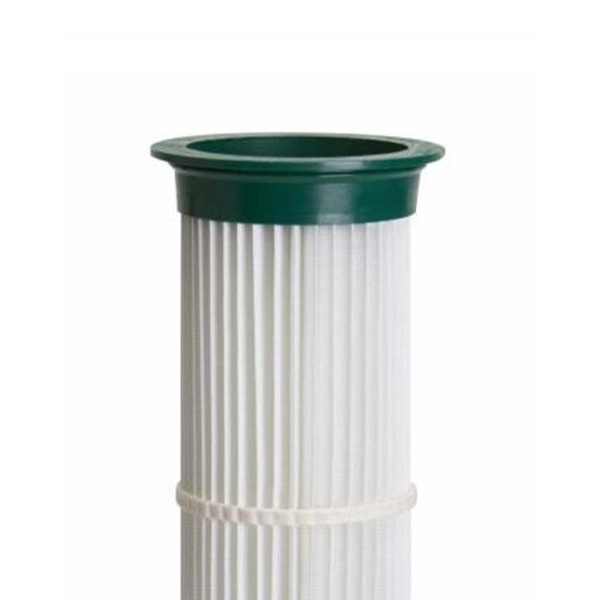
A dust filter cartridge consists of multiple layers of engineered material bonded together to create a filtration element. Unlike flat panel filters or traditional bag filters, cartridges feature pleated construction that multiplies the effective surface area for particle capture.
The pleated design is the defining characteristic that distinguishes cartridges from other filter types. Vertical pleats (typically 20-40 per cartridge) run from top to bottom, creating a corrugated surface that dramatically increases the area available for particle capture. A single cartridge measuring approximately 10 inches in diameter and 22 inches tall can provide 300-500 square feet of filtration surface area—equivalent to multiple flat panel filters in a far smaller footprint.
The layered construction includes:
Inner support sleeve: Rigid structure preventing collapse under pressure differential
Primary filter media: Main layer capturing particulate matter
Secondary layers: Additional filtration surfaces for enhanced efficiency and longevity
Top and bottom end caps: Sealing elements preventing bypass around filter media
Adhesive systems: Bonding layers together while maintaining media permeability
The pleated configuration provides several performance advantages over flat filters. By increasing surface area by 5-10 times compared to flat panels of similar dimensions, pleated cartridges allow lower face velocity (air speed across filter surface), which reduces pressure drop and improves collection efficiency. Lower pressure drop means the system fan requires less power to achieve the same air flow, directly reducing energy consumption.
The compact footprint is another major advantage. A cartridge dust collector containing pleated elements occupies significantly less floor space than baghouse systems achieving equivalent air flow. This space efficiency has driven widespread adoption in facilities with limited available area.
The filter media itself—the material that actually captures dust particles—is where most of the innovation in cartridge technology occurs. Different media materials offer distinct performance characteristics suited to different applications.
Glass fiber was the original cartridge filter media and remains common for general-duty applications. Composed of randomly oriented glass fibers bonded with resin, glass fiber media offers good chemical resistance, high temperature capability (up to 260°C), and cost-effectiveness. However, glass fiber has moderate dust release characteristics and can suffer from alkaline attack in certain chemical environments.
Temperature range: up to 260°C continuous
Chemical resistance: Good to most acids; limited to alkaline exposure
Dust cake release: Moderate; some dust may re-entrain during cleaning
Cost: Low to moderate
Typical applications: Foundries, metalworking, general industrial dust
Polyester fibers offer improved dust release characteristics compared to glass fiber, reducing the force required during filter cleaning. This gentler cleaning reduces filter media fatigue and extends service life. Polyester handles moisture better than glass fiber but has lower maximum temperature capability.
Temperature range: up to 150°C continuous
Chemical resistance: Good to most acids and alkalis; limited to strong oxidizing agents
Dust cake release: Excellent; clean very easily during pulse events
Cost: Moderate
Typical applications: Pharmaceutical, food processing, cement plants
Polytetrafluoroethylene (PTFE) is a synthetic fluoropolymer applied as a thin coating to filter media surfaces. PTFE coating dramatically improves dust cake release—dust practically slides off the filter surface rather than requiring aggressive cleaning. This technology has revolutionized cartridge filter performance, particularly for challenging dusts.
Dust release: Exceptional; minimal adhesion regardless of dust type
Temperature compatibility: Media-dependent (typically 150-260°C depending on base media)
Moisture resistance: Excellent hydrophobic properties prevent moisture absorption
Cost: High; significant premium over uncoated media
Typical applications: Sticky dusts, wet processes, high-frequency cleaning requirements
Cutting-edge nano-fiber technology uses extremely fine synthetic fibers (often less than 1 micrometer diameter) to create ultra-dense filter surfaces. These media achieve collection efficiencies of 99.95-99.99%, capturing particles as small as 0.3 microns. Nano-fiber media also exhibits excellent dust release and can significantly reduce filter cleaning frequency.
Collection efficiency: 99.95-99.99% for particles as small as 0.3 microns
Dust release: Superior; minimal cleaning force required
Filter life: Extended by 30-50% compared to conventional media
Cost: Premium pricing; highest cost media option
Typical applications: Pharmaceutical, electronics, ultra-clean environments
Beyond the base media fibers, surface coatings and treatments dramatically influence filter performance. These microscopically thin layers modify the way dust interacts with filter surfaces.
PTFE (Teflon) coating creates a slippery surface where dust particles cannot easily adhere. The coating is applied through electrospray or other precision methods to create a uniform layer typically 20-50 microns thick. PTFE surfaces are inherently hydrophobic, repelling moisture and preventing moisture-related dust caking.
The benefits of PTFE coating are substantial:
Dramatic improvement in dust release: Cake cleaning force reduces by 50-70%
Reduced cleaning frequency: Pulse cleaning can be less aggressive, extending media life
Moisture handling: Excellent performance in humid or wet-process environments
Sticky dust performance: Handles chocolates, minerals, adhesives that would blind uncoated media
Filter life extension: 30-50% longer service life compared to uncoated media
Oleophobic coatings repel oils and lipids, preventing oil-laden dust from caking and blinding filters. These coatings are particularly valuable in machining operations where metalworking fluid aerosols combine with metal dust to create tenacious dust cakes. Oleophobic coatings maintain their effectiveness even as base media becomes loaded with dust particles.
Some cartridges use electrostatically charged fiber technology to enhance particle capture. The charges attract fine particles, improving collection efficiency for submicron particles. Electrostatic effects are maintained even as static charges gradually dissipate over the filter's life, making this an effective long-term enhancement.
In pharmaceutical, food processing, and clean-room applications, surface treatments that inhibit microbial growth prevent filter colonization by bacteria and fungi. These treatments don't eliminate microbes but slow their growth, extending the acceptable filter life before microbial contamination requires replacement.
Emerging hydrophobic nano-textured surfaces mimic lotus leaf characteristics, creating a super-hydrophobic effect that sheds both moisture and fine particles with minimal cleaning force. These advanced surfaces promise to extend filter life further while reducing cleaning energy requirements.
Collection efficiency measures what percentage of particles entering the filter are captured. A cartridge with 99.5% efficiency allows 0.5% of incoming particles to pass through. This seemingly small percentage can be significant in high-volume applications.
Efficiency varies based on particle size, with most cartridges being less efficient at capturing extremely fine particles (below 1 micrometer). Efficiency also changes during the filter's life—efficiency typically increases as dust accumulates on the filter surface and creates an additional filtration layer, until the accumulated dust cake becomes so thick that air begins to pass around it rather than through it.
Pressure drop is the resistance to air flow created by the filter media. Initial pressure drop with clean filters is typically 2-5 inches of water column, depending on media construction and air face velocity. As dust accumulates, pressure drop increases linearly until cleaning occurs. The maximum allowable pressure drop (typically 6-8 inches of water column) triggers automatic cleaning cycles.
Understanding pressure drop is crucial for system energy efficiency. A 2-inch increase in pressure drop requires the fan to consume approximately 15-20% more power. Regular filter replacement before pressure drop becomes excessive is an essential maintenance discipline that directly impacts operating costs.
Measured in cubic feet per minute (CFM) or cubic meters per hour (CMH), air flow capacity indicates the volume of dusty air a cartridge can process. Air flow capacity depends on filter area, media permeability, and acceptable pressure drop. A single cartridge typically processes 300-1,200 CFM depending on these factors.
System sizing must account for simultaneous operation of all emission points plus safety margin for future expansion. Undersized systems cannot maintain required air velocity for dust capture, resulting in fugitive emissions and inadequate collection.
Maximum continuous operating temperature varies by media type and coating. Glass fiber and high-temperature polyesters tolerate 250-260°C, while standard polyester is limited to 150°C. PTFE coating doesn't alter base media temperature limits but provides superior performance within those limits. Nano-fiber media temperature capability depends on the base fiber composition.
Brief temperature excursions above continuous rating are tolerable (5-10 minutes above rated temperature rarely causes permanent damage), but sustained operation at elevated temperatures causes rapid degradation. Temperature management becomes critical in high-temperature applications like foundries and steel mills.
High dust concentration exhausts filter capacity more quickly, requiring more frequent replacement. Fine dust clogs media more readily than coarse dust. Sticky dust adhesion reduces effective filter life by requiring more aggressive cleaning. Hygroscopic dust that absorbs moisture can cake and blind filters. Understanding your dust characteristics enables prediction of realistic filter life expectations.
Continuous operation at design capacity produces predictable filter life. Part-load operation may extend filter life by reducing dust loading rate. Frequent start-stop cycles can shorten life due to pressure spikes during startup. Temperature stability improves filter longevity; temperature swings cause media contraction and expansion, accelerating fiber fatigue.
Aggressive filter cleaning (excessive pulse pressure or frequency) fatigues media fibers and shortens life. However, inadequate cleaning that allows pressure drop to rise excessively can cause permanent media blockage. Proper cleaning parameters—balanced to maintain reasonable pressure drop without over-stressing media—optimize filter life.
Poor sealing of end caps allows dirty air bypass, reducing effective filter life through internal bypass rather than true media exhaustion. Improper cartridge installation that leaves gaps or damages end caps undermines system performance from day one.
High humidity can accelerate dust caking and media deterioration. Extreme temperature swings stress media fibers. Corrosive atmospheres containing acid or alkaline vapors chemically attack media. Protection of collection equipment from harsh environmental conditions extends component life significantly.
Pulse jet cleaning, the most common cartridge cleaning method, sends high-pressure compressed air bursts through the filter media in reverse. This cleaning method is effective and reliable. However, optimal performance requires careful calibration of pulse pressure and frequency.
Pulse pressure: Typically 80-100 PSI compressed air; excessive pressure (above 120 PSI) damages media
Pulse duration: 50-200 milliseconds; longer pulses don't improve cleaning but increase media stress
Cleaning frequency: Automated systems measure pressure drop and trigger cleaning when reaching preset threshold, typically every 2-24 hours depending on application
Solenoid valve timing: Precise valve operation is critical; worn or poorly adjusted valves create erratic cleaning patterns
Modern cartridge collectors include pressure drop sensors that provide real-time monitoring. Plotting pressure drop over time reveals filter performance trends. If pressure drop increases faster than expected, this signals potential problems:
Dust bypass: Rapid pressure rise may indicate seal failure or improper cartridge seating
Media damage: Torn or punctured filter media shows sudden pressure spike
Moisture accumulation: Wet dust clogs media causing excessive pressure rise
Cleaning system failure: Inadequate cleaning allows progressive pressure rise
Comparison of actual pressure drop performance against historical baseline reveals emerging problems before system failure occurs, enabling proactive maintenance scheduling.
Pulse jet cleaning depends on clean, dry compressed air. Oil aerosols from air compressors coat filter media and reduce cleaning effectiveness. Water vapor condenses on cold days and creates wet dust cakes. High-quality air dryers and filters on the compressed air system are essential maintenance investments that extend filter life and reduce cleaning system failures.
Several strategies reduce filter replacement frequency:
Oversizing: Specifying higher-capacity cartridges operating at lower air face velocity reduces pressure drop and extends life 20-30%
Pre-filtration: Removing coarse particles before they reach main cartridges protects expensive fine-media cartridges
Quality media: Premium PTFE-coated or nano-fiber media costs more initially but delivers 30-50% longer life, providing excellent economic value
Environmental control: Managing humidity and temperature in the collection housing reduces dust caking issues
Proper cleaning: Optimized pulse parameters maintain filter condition without excessive stress
Clean cartridge efficiency reflects the inherent capture capability of filter media. As the filter operates, dust accumulates on the surface, creating a dust cake that actually increases efficiency—the accumulated dust acts as an additional filtration stage. This efficiency improvement continues for some period, typically weeks to months depending on dust concentration.
However, as dust cake thickness increases, efficiency peaks and then gradually declines as high pressure across the accumulated cake causes air to increasingly pass around the dust rather than through it. Eventually, the system reaches maximum allowable pressure drop, triggering cleaning. The cleaning cycle removes most accumulated dust, dropping efficiency back toward initial clean-filter values, and the cycle repeats.
Penetration (percentage of particles passing through untreated) decreases initially as dust accumulates, creating the efficiency improvement mentioned above. However, penetration increases again as cake thickness increases and bypass becomes significant. The point of lowest penetration (highest efficiency) typically occurs at 60-80% of maximum allowable pressure drop.
This relationship has practical implications: replacing filters before reaching maximum pressure drop maintains higher average efficiency throughout the filter life cycle, even if individual cartridges could theoretically operate longer.
Submicron particles (below 1 micrometer) are particularly challenging to capture. While most cartridges advertise 99%+ efficiency, this efficiency applies to particles in the 1-10 micrometer range where collection mechanisms (impact, interception, diffusion) work most effectively. Submicron particle efficiency can be 5-10% lower.
For applications requiring exceptional submicron control (pharmaceutical manufacturing, electronics, ultra-clean environments), nano-fiber media with their dense fiber networks significantly improve submicron capture.
Foundries, steel mills, and high-temperature chemical processes generate dust at elevated temperatures requiring media that maintains integrity in heat. High-temperature polyester or glass fiber media rated to 250-260°C are essential. PTFE coating provides superior dust release in these demanding conditions.
Temperature management—using insulation or water-cooled inlet ducts to reduce inlet air temperature—extends high-temperature filter life. Allowing inlet air to cool slightly below the maximum media temperature provides operating margin for temperature spikes during production surges.
Chocolate dust in confectioneries, rosin in woodworking, and mineral dust in ceramic production all present challenges—dust adheres strongly to standard filter media, requiring aggressive cleaning that damages media. PTFE-coated or oleophobic media with superior dust release properties excel in these applications.
For hygroscopic dust that absorbs moisture, pre-drying of inlet air or heated filter housing prevents moisture absorption and caking. Some facilities use cartridges with drainage provisions to handle moisture condensation.
Wet grinding processes and high-humidity environments create moisture-laden dust that clogs standard media. PTFE-coated media's hydrophobic properties prevent water absorption. Some facilities employ cartridge collectors with moisture drainage to handle water droplet carryover from wet processes.
Some chemicals attack certain filter media. Strong acids require polyester or PTFE-coated media; strong alkalis may damage polyester, requiring glass fiber. Chemical compatibility assessment ensures media selection matches the specific chemical environment.
Stringent cleanliness requirements in food and pharmaceutical manufacturing demand highest-efficiency media. Nano-fiber cartridges meeting ultra-clean standards are standard in these industries. Anti-microbial coatings prevent biological growth that could contaminate product or compromise filter performance.
Premium media (PTFE-coated or nano-fiber) costs 3-5 times more than basic glass fiber media. However, cost-per-hour analysis often reveals that premium media delivers superior economic value:
| Media Type | Unit Cost | Expected Life (hours) | Cost per Operating Hour | Cleaning Cycles/Year |
|---|---|---|---|---|
| Glass Fiber | 100 | 2,000 | 0.05 | 4,380 |
| Polyester | 150 | 2,500 | 0.06 | 3,500 |
| PTFE Coated | 350 | 3,500 | 0.10 | 2,000 |
| Nano-Fiber | 500 | 4,500 | 0.11 | 1,500 |
This analysis reveals that while premium media has higher cost-per-hour on material alone, the extended life and reduced cleaning frequency lower total system operating costs when accounting for energy, labor, and wear on cleaning systems.
Dirty filters requiring high fan power to overcome pressure drop consume significantly more energy than properly maintained systems. A single cartridge operating at excessive pressure drop (due to delayed replacement) can add 1-2 kilowatts to system power consumption. In continuous-operation facilities, this translates to thousands of dollars annually in unnecessary energy costs.
Reduced compressed air consumption: Gentle cleaning of premium media requires less cleaning pressure
Lower maintenance labor: Less frequent replacements reduce labor requirements
Reduced equipment wear: Lower pressure drop reduces stress on fans and bearings
Improved environmental performance: Consistent high efficiency provides cleaner exhaust air
Reduced facility downtime: Extended filter life means fewer maintenance interruptions
Proper cartridge installation prevents bypass that would compromise system performance. Key practices include:
Inspect end caps: Before installation, verify end caps are undamaged and seals are intact
Clean housing: Remove dust and debris from cartridge housing before installation
Correct seating: Ensure cartridge seats properly in top and bottom connections with no gaps
Gasket inspection: Verify gaskets are present, properly positioned, and undamaged
Retaining hardware: Secure any fasteners or clamps properly without over-tightening
System pressure test: After installation, verify system holds pressure with no leaks
Cartridges are fragile despite appearing robust. Rough handling can damage internal support sleeves or create micro-perforations in media that go undetected until pressure testing reveals leaks.
Handle cartridges carefully; avoid dropping or rough impact
Transport in protective packaging to prevent damage
Store in dry environment to prevent moisture absorption before installation
Protect from extreme temperatures that could damage media or end cap seals
Used cartridges may contain hazardous dust requiring special handling during disposal. Follow applicable environmental regulations for dust disposal. Some industrial areas have specialized hazardous waste handling facilities accepting filter cartridges and contaminated materials. Proper disposal prevents environmental contamination and ensures regulatory compliance.
If pressure drop climbs faster than historical baseline, investigate these potential causes:
Increased dust generation: Changes in production or raw material can increase dust load
Dust bypass: Leaking seals or improper cartridge seating allows dirty air bypass
Media damage: Tears or perforations allow air bypass without collecting dust
Inadequate cleaning: Solenoid valve failure or compressed air problems prevent effective cleaning
Moisture accumulation: Humidity or condensation causes dust caking
Visible dust exiting the clean air outlet indicates filter failure. Causes include:
End cap seal failure allowing direct bypass
Media perforation or tear
Incompatible media for the dust being collected
Oversized system operating at excessive face velocity
If cartridges require replacement much more frequently than expected:
Verify dust characteristics match filter design specifications
Check compressed air quality (oil, water contamination)
Audit cleaning parameters (pulse pressure, frequency, timing)
Examine facility for dust generation changes
Verify cartridge installation procedure and seating
Cartridge filters use pleated media in a compact cylindrical configuration, while baghouse filters use elongated fabric bags. Cartridges offer superior compactness, typically 5-10 times more surface area in the same floor space. Cartridges generally provide higher efficiency and lower operating cost due to lower pressure drop. Baghouses are better suited for very high air flow applications and allow individual bag replacement while system operates. Selection depends on facility constraints and application requirements.
Pressure drop monitoring is the primary indicator. When system pressure drop reaches the manufacturer-specified maximum (typically 6-8 inches of water column), filter replacement is needed. Some facilities use time-based replacement schedules rather than pressure-based, particularly in applications where pressure drop is difficult to measure accurately. Always replace filters before system performance degradation occurs.
Not inherently, but the cartridge configuration with superior dust release characteristics and PTFE coating availability makes cartridges better suited for challenging dusts. PTFE-coated cartridges handle moisture and sticky dust far better than uncoated media. For very wet applications, wet collectors may be necessary regardless of filter type.
Basic glass fiber cartridges cost approximately 100 units. PTFE-coated cartridges cost 3-4 times more, while nano-fiber cartridges cost 4-5 times more. However, premium media extends service life by 30-50% and reduces energy costs through lower pressure drop, often making premium options more economical over the equipment lifetime despite higher initial cost.
Each media type has maximum continuous temperature rating. Operating above rated temperature accelerates fiber degradation and reduces filter life. Brief temperature excursions (minutes) above rating rarely cause permanent damage, but sustained elevated temperature causes rapid failure. Select media with temperature rating matching your application, and manage inlet air temperature through system design if necessary.
Standard industrial cartridges are not designed for washing and reuse; attempting to wash them can damage internal support structures and seals. Some specialized cartridges are designed as washable elements, but these are specifically engineered for that purpose. Always use manufacturer-approved cleaning and replacement procedures.
Common causes include improper installation with bypass leaks, contaminated compressed air in pulse cleaning systems, application to dust types incompatible with media chemistry, excessive cleaning pressure damaging media, operating at excessive temperature, moisture absorption causing dust caking, and inadequate housing environmental controls. Addressing these issues often resolves premature failure problems.
PTFE coating applied to quality base media is excellent for sticky dusts, moisture-laden applications, and high-frequency cleaning scenarios. Nano-fiber media excels when highest efficiency (99.95%+) is required or when submicron particle control is critical. Selection depends on your specific dust characteristics, efficiency requirements, and budget. Consult with specialists for applications requiring the highest performance levels.
Filter cartridge technology continues to advance, offering industrial facilities increasingly effective solutions for dust control. Understanding the science behind media materials, coating technologies, and performance characteristics enables informed decisions about system selection and optimization.
The most cost-effective approach often involves investing in higher-quality cartridges operating in properly designed systems with excellent maintenance practices. While premium cartridges cost more initially, their extended service life, lower operating costs, superior efficiency, and reduced energy consumption frequently deliver better total cost of ownership than economical budget alternatives.
Proper installation, monitoring, and maintenance practices are equally important as media selection. Even the finest cartridges underperform in poorly maintained systems with seal failures, inadequate cleaning, or contaminated compressed air. Establishing disciplined maintenance programs and promptly addressing emerging problems maximizes the return on your filtration system investment.