English
 Français
 عربى
عربى 简体中文
简体中文


How Multi‑Compartment Baghouse Dust Collector Solve High‑Dust Flue Gas Challenges In Steel Mills
HOME / NEWS / Industry News / How Multi‑Compartment Baghouse Dust Collector Solve High‑Dust Flue Gas Challenges In Steel Mills
 By Admin
Content
Steel mills and metallurgical facilities face unprecedented challenges in managing massive volumes of dust-laden flue gas. Traditional dust collection systems designed for moderate industrial environments simply cannot handle the extreme demands of modern steel production. The consequences of inadequate dust control extend far beyond environmental compliance—they impact equipment longevity, worker safety, and operational efficiency.
Typical challenges in metallurgical dust collection include:
Enormous gas flow rates exceeding 100,000 cubic meters per hour
Extremely high dust concentrations often surpassing 10 grams per cubic meter
Elevated flue gas temperatures ranging from 150 to 200 degrees Celsius
Abrasive and chemically aggressive particulate matter
Continuous 24/7 operational requirements with minimal downtime tolerance
Standard compact dust collectors cannot process these volumes effectively, making advanced industrial dust collection systems essential for modern steel production facilities.
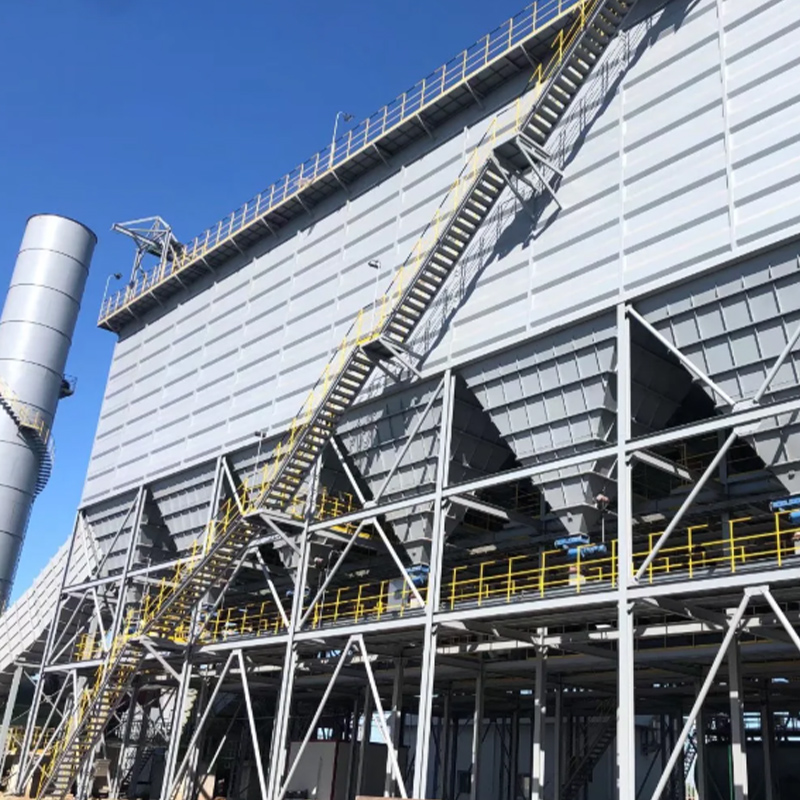
A long bag pulse jet baghouse dust collector with multi-compartment design represents a significant advancement in industrial dust collection technology. Unlike single-chamber systems, these collectors feature multiple isolated compartments that enable offline maintenance without halting production.
The system operates through a straightforward yet highly effective process:
Contaminated flue gas enters the baghouse through large-diameter inlet ducts
Gas passes through the filtration bags, with particulate matter captured on filter surfaces
Clean air exits through the discharge outlet into the atmosphere
Accumulated dust falls into collection hoppers at the bottom of each compartment
Periodic pulse jet cleaning regenerates filter bags using short bursts of compressed air
Dislodged particles settle into storage hoppers for removal
The compartmentalized design divides the baghouse into separate filtration zones. While some compartments operate normally, others can be isolated for maintenance, cleaning, or filter replacement without interrupting the production process. This architectural innovation proved transformative for industries requiring continuous operation.
The multi-compartment architecture transforms industrial dust collection from a necessary interruption into a seamless operational component. This design addresses the most pressing concerns of metallurgical facility operators.
Steel production cannot afford extended equipment shutdowns. Multi-compartment baghouse systems isolate individual filtration zones, allowing maintenance on one compartment while others continue operating at full capacity. This offline maintenance capability eliminates the production stoppages that plague older single-chamber systems.
Modern pulse jet baghouse technology achieves collection efficiencies exceeding 99.97 percent. This level of performance satisfies even the most stringent environmental regulations while protecting downstream equipment from abrasive particulate matter. The combination of high-efficiency filter media and optimized compartment sizing ensures consistent performance across all operational scenarios.
Pulse jet cleaning mechanisms regenerate filter bags through controlled compressed air bursts rather than continuous mechanical action. This gentle cleaning approach minimizes fiber damage, extending filter lifespan significantly compared to alternative dust collection methods. Reduced filter replacement frequency directly translates to lower operational costs and reduced maintenance complexity.
Metallurgical flue gas presents conditions that would rapidly damage standard equipment. Long bag filter designs, combined with specialized filter media selection, handle:
High-temperature gas streams without performance degradation
Chemically corrosive particulate matter
Extreme dust loading conditions
Rapid temperature fluctuations
Every steel mill operates under unique conditions. Multi-compartment baghouse systems feature modular construction that allows precise customization based on specific gas flow requirements, particulate characteristics, and facility constraints. Engineers can configure compartment numbers, filter bag dimensions, and cleaning parameters to match exact operational demands.
Large-scale multi-compartment baghouse systems designed for metallurgical applications typically handle:
| Parameter | Value Range | Notes |
|---|---|---|
| Gas Flow Capacity | 50,000 to 300,000 m3/hr | Customizable based on mill size |
| Inlet Gas Temperature | Up to 200 degrees Celsius | Media selection dependent |
| Collection Efficiency | 99.95 to 99.99 percent | Meets strictest regulations |
| Dust Loading Capacity | 10 to 50+ g/m3 | Handles severe metallurgical dust |
| Pulse Cleaning Interval | 30 to 120 seconds | Optimized for filter condition |
The choice of filter media fundamentally determines baghouse performance under extreme conditions. Metallurgical applications require specialized materials:
Polyester base: Excellent chemical resistance and temperature stability for general mill applications
Aramid blends: Superior high-temperature performance for steel melting operations
PTFE membrane coatings: Outstanding resistance to acidic gases and moisture in sintering operations
Specialty felt constructions: Engineered for extreme dust loading scenarios
System pressure drop directly impacts operational energy consumption. Modern designs maintain inlet pressure differentials between 1000 and 1500 Pa under normal operating conditions, optimizing the balance between filtration efficiency and fan power requirements. Efficient pulse cleaning algorithms minimize compressed air consumption while maintaining filter surface cleanliness.
Traditional single-chamber baghouses force facilities to choose between production and maintenance. Multi-compartment systems eliminate this dilemma through isolation valves that allow individual compartments to be taken offline while others continue filtration. This architectural advantage transforms maintenance from an operational burden into a manageable task.
Daily: Visual inspection of pressure gauges and filter condition indicators
Weekly: Pulse jet system verification and air supply pressure checks
Monthly: Isolation valve testing and individual hopper inspection
Quarterly: Filter bag physical inspection for tears or deterioration
Annually: Complete system pressure testing and seal verification
When filter bags require replacement, operators isolate the affected compartment, relieve internal pressure, and access the filter bags for removal. No production shutdown necessary. This modular maintenance capability reduces downtime from days to mere hours, dramatically improving overall equipment effectiveness and facility productivity.
The fundamental sizing parameter for any baghouse system is gas flow rate. Calculate total volumetric flow from all dust source points in your facility, convert to cubic meters per hour, and add a safety margin of 10-15 percent. This determines the minimum filtration capacity your system requires. Undersizing risks inadequate filtration; oversizing wastes capital and energy resources.
Metallurgical flue gas temperatures vary significantly by process type. Sintering operations may discharge gas at 180 degrees Celsius, while blast furnace gas enters at slightly lower temperatures. Understanding your specific temperature profile determines filter media selection and cooling requirements. Gas conditioning equipment may be necessary if temperatures exceed filter media ratings.
Steel mill dust exhibits diverse properties depending on source equipment:
Particle size distribution: Ranges from ultrafine to coarse, affecting media porosity requirements
Chemical composition: Iron oxide, lime, carbon, and other compounds influence media resistance specifications
Moisture content: Humidity levels affect dust adhesion and cleaning effectiveness
Bulk density: Heavier dust may require more robust hopper designs and discharge systems
Not all facilities require continuous operation, but most steel mills do. Honestly evaluate your production requirements. If your facility can tolerate brief shutdowns, single large compartments might suffice. If continuous operation is mandatory, multi-compartment systems justify their additional investment through sustained productivity.
Physical footprint matters in existing facilities. Modular multi-compartment designs can be configured horizontally or vertically depending on available space. Work with system suppliers to develop layouts that integrate seamlessly with existing infrastructure and future expansion plans.
While multi-compartment systems carry higher initial capital cost, comprehensive lifecycle analysis typically shows superior economics. Lower maintenance costs, reduced downtime expenses, extended filter life, and improved production continuity combine to deliver better value over the system's 10-15 year operational lifespan.
Blast furnace gas treatment represents one of the most demanding baghouse applications. The combination of high flow rates, extreme dust loading, and continuous operation makes coke drying wet scrubber systems and advanced dry collection equipment essential. Multi-compartment pulse jet baghouses excel in these environments, capturing fugitive emissions while maintaining the robust gas flow required for furnace operation.
Electric arc furnace operations generate intense, brief dust emissions during melting cycles. The rapid pressure changes and temperature spikes demand systems with fast response capabilities. Multi-compartment designs with variable pulse timing accommodate these dynamic conditions effectively, maintaining collection efficiency across all operational phases.
Sintering produces voluminous, fine particulate matter laden with moisture and chemical compounds. The combination of high volume and extreme dust character makes sintering exhaust one of the most challenging applications for industrial dust collection. Modern baghouse systems purpose-built for sintering incorporate specialized filter media, optimized pulse cleaning patterns, and robust hopper designs to handle these severe conditions.
Steel rolling operations generate entrained dust and fume emissions across multiple process points. Distributed baghouse systems capturing emissions from individual rolling stands provide superior overall facility performance compared to single central collection point approaches.
Coke oven waste gases contain complex mixtures of particulates and chemical compounds. Treatment through multi-compartment pulse jet systems achieves the emission standards required by modern environmental regulations while recovering valuable process energy through heat exchange.
Modern environmental regulations impose strict limits on industrial particulate emissions. Most jurisdictions require demonstrating compliance with emission standards that typically range from 10 to 30 milligrams per cubic meter. Modern multi-compartment baghouse systems routinely achieve outlet concentrations below 5 milligrams per cubic meter, providing substantial safety margins above regulatory requirements.
Advanced baghouse systems integrate with continuous emission monitoring equipment that provides real-time performance data. This capability satisfies regulatory requirements while providing early warning of system degradation. Should filter integrity deteriorate, automated alerts prompt maintenance intervention before emissions exceed allowable limits.
Recovered dust from baghouse collection hoppers often contains valuable materials that can be recycled back into production processes. Iron oxide recovered from blast furnace or electric arc furnace emissions frequently returns to furnace charge materials, reducing raw material consumption and waste disposal requirements. This circular economy approach improves environmental profiles while reducing operational costs.
Comprehensive system data logging supports regulatory compliance documentation. Modern baghouse monitoring systems automatically generate reports demonstrating continued compliance with applicable environmental regulations, simplifying regulatory agency interactions and reducing compliance uncertainty.
Offline compartment maintenance eliminates production shutdowns
Superior collection efficiency exceeding 99.95 percent
Extended filter service life due to gentle pulse cleaning
Excellent performance across diverse dust particle sizes
Lower total cost of ownership over system lifespan
Proven reliability in metallurgical applications for decades
Electrostatic Precipitators: These devices collect particles through electrical charges rather than mechanical filtration. While offering some advantages in specific applications, ESP technology struggles with the high dust loading and challenging particle characteristics typical of metallurgical operations. Capital costs often exceed pulse jet baghouse systems for equivalent capacity.
High-Energy Scrubbers: Wet scrubbing systems can achieve excellent collection efficiency but introduce water handling and disposal challenges. The consumables (makeup water, drain disposal) and maintenance complexity typically result in higher operating costs compared to dry baghouse collection, particularly for large-scale metallurgical applications.
Cartridge Collectors: Smaller pleated cartridge elements offer advantages for light-duty applications but generally cannot match the capacity and extended service life of large industrial bag filters in severe metallurgical duty. Cartridge replacement frequency typically exceeds bag filter frequency, driving higher lifecycle costs.
For large-capacity metallurgical applications requiring near-continuous operation, multi-compartment pulse jet baghouse systems consistently emerge as the optimal choice, balancing collection performance, operational reliability, maintenance efficiency, and lifecycle economics superior to all alternative approaches.
Multi-compartment baghouses divide the filtration area into separate, isolated sections. Individual compartments can be taken offline for maintenance while others continue filtering, allowing continuous operation. Single-chamber designs require complete shutdown for any maintenance, making multi-compartment systems superior for facilities requiring continuous production.
Yes, modern pulse jet baghouse systems are specifically engineered for continuous 24/7 operation. The multi-compartment architecture enables scheduled maintenance on individual sections while the overall system continues processing flue gas. Facilities worldwide operate such systems continuously for extended periods without interruption.
Several variables impact filter longevity: inlet gas temperature affects fiber degradation rates; dust chemical composition influences chemical attack on filter media; pulse cleaning intensity determines mechanical stress on fibers; incoming dust concentration affects overall filtration load; and humidity levels influence dust adhesion patterns. Proper media selection and system tuning optimize all these factors to maximize service life.
Pulse cleaning frequency varies based on dust loading and system design but typically occurs every 30 to 120 seconds. System control algorithms monitor pressure differentials and adjust cleaning frequency automatically to maintain optimal filter surface conditions while minimizing compressed air consumption and unnecessary mechanical stress on filter media.
State-of-the-art multi-compartment pulse jet baghouses routinely achieve collection efficiencies of 99.95 to 99.99 percent. This superior performance satisfies the most stringent environmental regulations while ensuring minimal environmental discharge and protection of downstream equipment from abrasive particulate matter.
Offline maintenance capability eliminates the production shutdowns required by single-chamber systems. Rather than losing days of production value during maintenance events, facilities continue operating at reduced capacity while servicing one compartment. Over a baghouse system's 10-15 year lifespan, these avoided shutdowns typically justify the additional capital investment in multi-compartment design.
Polyester provides excellent performance for most metallurgical applications; aramid blends handle higher temperature steel melting operations; and PTFE membrane coatings offer exceptional resistance to acidic gases in sintering applications. Specialized felt constructions address extreme dust loading scenarios. Material selection depends on your specific flue gas characteristics and temperature profile.
Most multi-compartment baghouse systems feature modular construction enabling retrofit installation into existing plants. Engineers work with your facility team to develop configurations that integrate with existing ductwork and foundation infrastructure. Customizable sizing accommodates various spatial constraints while delivering required collection capacity.
Steel mills and metallurgical facilities face relentless pressure to manage enormous volumes of dust-laden flue gas while maintaining continuous production. Single-chamber dust collection systems cannot satisfy these competing demands. Multi-compartment pulse jet baghouse technology represents the proven solution, combining exceptional collection efficiency, offline maintenance capability, and superior lifecycle economics.
The architectural innovation of compartmentalized filtration directly addresses the fundamental challenge of modern industrial dust control: achieving world-class environmental performance without compromising production continuity. By enabling selective offline maintenance, these systems eliminate the false choice between environmental compliance and operational efficiency that plagued earlier technologies.
Decades of successful installations across the steel and metallurgical industries confirm the practical reliability of this approach. Modern pulse jet cleaning mechanisms, specialized filter media for extreme conditions, and automated system monitoring combine to deliver exceptional performance across all operational scenarios. The result justifies investment in multi-compartment technology through measurable improvements in facility productivity, regulatory compliance, and bottom-line profitability.
Whether your facility operates blast furnaces, electric arc furnaces, sintering equipment, or rolling mills, a properly sized and maintained multi-compartment pulse jet baghouse system delivers superior results compared to available alternatives. Contact experienced system providers for detailed technical consultation, system sizing analysis, and installation planning tailored to your specific metallurgical operation requirements.