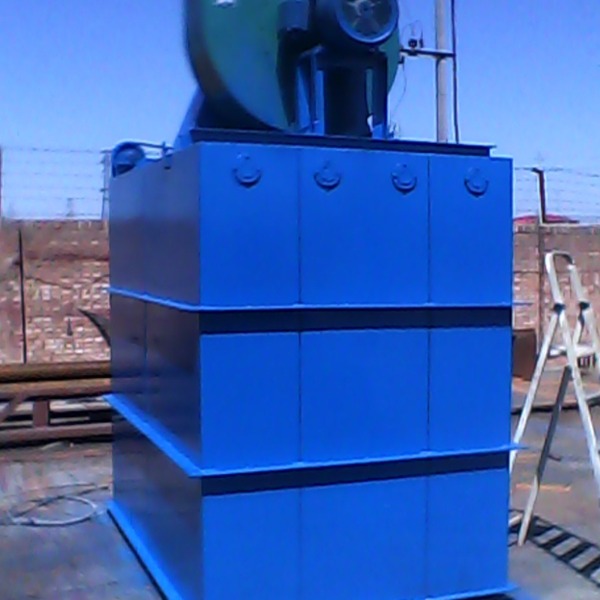
Coke ovens, charging, pushing and quenching all release flue gas that is hot, humid and loaded with tar-coated fine particles. In many plants, a conventional baghouse that performs well on cement or steel dust starts to struggle within months. Filter bags blind, pressure drop climbs, and emissions drift above limits. This article looks at why coking dust behaves so differently, how to choose between cleaning methods, and how to design a system that keeps running between maintenance windows.
The core problem is rarely the dust concentration alone. It is the combination of stickiness, moisture and changing load. A dust collector designed around the average condition will often fail during the peaks, and those peaks are exactly when the plant needs the system most. Understanding the physical behaviour of the dust is the first step toward a coking plant dust removal system that works in practice, not only on paper.
Special Challenges of Coke Oven Flue Gas and Sticky Dust
Sticky dust with tar and volatile components
Coking dust carries condensable tar and volatile organic fractions. At ambient or slightly elevated temperatures these components wet the particle surface and turn the dust into a cohesive layer. The result is a baghouse problem that is qualitatively different from dry industrial dust. Normal cleaning energy may dislodge loose particles but leave a thin film that keeps accumulating on the fabric.
Practical signal: If the pressure drop recovers only partially after each cleaning cycle and the residual value keeps rising over several weeks, the dust is likely bonding to the fabric rather than simply accumulating on it.
High humidity and dew point corrosion risk
Flue gas from coke ovens often contains significant water vapour. When the gas temperature drops below its dew point inside the shell, hopper or ductwork, moisture condenses on the bags and the dust cake. Condensate combined with acidic compounds attacks metal parts and fabric fibres, while the wet cake hardens into a plate that cannot be cleaned. Designers therefore treat condensation prevention as a system requirement rather than a feature of the filter media.
Fluctuating working conditions across the coking cycle
Charging, pushing and quenching each produce a different flow rate, temperature and dust loading. Within a single cycle the baghouse may see a sharp load spike followed by a long low-load period. A control strategy that works at steady state can fail during these transitions, which is why operating data from several cycles should inform the design.
Charging periods typically bring the highest tar-laden particle load.
Pushing introduces hot gas and short bursts of high volume flow.
Quenching adds steam and moisture that raises the dew point risk.
Pulse Jet vs Mechanical Vibration Baghouse for Sticky Dust
Choosing the cleaning mechanism is the most consequential decision for a sticky dust application. Pulse jet and mechanical vibration systems both remove dust from filter bags, but they apply energy in very different ways, and each has a clear operating boundary.
Working principle of a mechanical vibration cleaning bag dust collector
A mechanical vibration cleaning bag dust collector shakes the filter bags at a controlled frequency and amplitude. The mechanical motion breaks the cake away from the fabric without relying on a high-pressure air pulse. For sticky, cohesive dust that does not release easily under a short air jet, vibration offers a more predictable cleaning action. The trade-off is that vibration works in batches and is less suited to very high continuous gas volumes, so it fits best where the load is moderate but the dust is difficult.
When a pulse jet baghouse works for coking plant applications
A pulse jet baghouse uses short compressed air bursts to flex the bags and dislodge the cake while the filter stays online. It is efficient for drier dust with reasonable flowability and supports high continuous gas volumes. When tar content is high, however, a pulse jet alone can lose cleaning effectiveness, because the air pulse fails to break a bonded film. In such cases the pulse jet is usually paired with heating, conditioning or fabric upgrades rather than used as a stand-alone solution.
Selection boundary comparison
Criterion
Mechanical vibration
Pulse jet
Dust stickiness
Suitable for high stickiness
Best for low to medium stickiness
Tar content
Tolerates moderate tar with proper design
Performance drops at high tar fractions
Gas volume
Moderate, batch-oriented
High, continuous operation
Maintenance focus
Drive and mechanical linkage
Compressed air and valves
A practical decision checklist
Measure dust stickiness and tar fraction in the actual flue gas, not from a generic sample.
Record the flue gas humidity and dew point across the full coking cycle.
Estimate the continuous and peak gas volume, including quenching periods.
Confirm whether the residual pressure drop after cleaning stays stable over at least four weeks.
Select mechanical vibration where stickiness dominates, and pulse jet where volume and flowability dominate.
Filter Bag Selection for Coke Oven Flue Gas
Fabric selection determines how long a bag survives in a hot, wet and chemically active environment. The fibre must resist temperature, moisture and acid attack, and the surface finish must help the dust release. No single material suits every coking application, so the choice should follow the measured gas conditions.
Fabric type
Main strength
Typical limitation
Polyphenylene sulfide felt
Good chemical and heat resistance
Sensitive to strong oxidizing conditions
Polyimide felt
High temperature tolerance
Higher cost and moisture sensitivity
PTFE membrane composite
Surface release for sticky dust
Requires careful specification of base fabric
Glass fibre with coating
Strong thermal stability
Vulnerable to flex abrasion and acid
A membrane-coated surface helps because it reduces the depth of penetration by sticky particles. Dust sits on the surface and releases more readily, which lowers the residual pressure drop after each cleaning cycle. However, a membrane cannot compensate for condensation. If the bags operate below the dew point, even the best fabric will blind.
Air-to-cloth ratio: For sticky coking dust, keep the filtration velocity conservative. Lower velocities reduce compaction of the cake and give the cleaning mechanism a better chance of restoring permeability.
Anti-Condensation Design for Coking Plant Baghouse System
Condensation control is an engineering discipline, not a single component. A complete anti-condensation design addresses the shell, the seals, the gas path and the discharge system, so that no surface drops below the dew point during operation or shutdown.
Thermal insulation and trace heating of the dust collector shell
Insulating the shell reduces heat loss to the surroundings, while trace heating maintains a minimum surface temperature during low-load periods. Heating should be controlled by temperature sensors on cold spots, not run at constant power. Corners, roof panels and the lower hopper are the typical locations where condensation first appears.
Air leakage control at manholes, flanges and ash hoppers
Leakage of ambient air introduces cold, moist air into the hot gas stream and creates localized condensation. Gasketed manholes, sealed flanges and properly designed rotary valves reduce this effect. A leak test during commissioning is a simple way to confirm that the envelope performs as designed.
Flue gas preheating and balanced air distribution
Preheating the inlet gas raises its temperature above the dew point before it reaches the filter. Even distribution across the compartments prevents local hot and cold zones. Computational or physical airflow checks are valuable here, because a maldistributed inlet can cause one compartment to run cold while others remain dry.
Ash discharge design to avoid secondary moisture
Ash left in the hopper can absorb moisture and form a hard mass that blocks discharge. Hoppers should be steep enough to prevent bridging, insulated and heated where necessary, and fitted with an air lock. Frequent, small discharge intervals keep the hopper from accumulating wet material.
Insulate the shell and heat the cold surfaces at low load.
Seal all openings and verify tightness at commissioning.
Preheat inlet gas and balance flow between compartments.
Discharge ash frequently through a properly sealed valve.
Auxiliary System and Engineering Recommendations for Coking Dust Removal
A reliable installation depends on the systems around the baghouse as much as the baghouse itself. Ducting, fans, monitoring and safety features all influence how well a coking plant dust collection engineering project performs over its service life.
Duct insulation
Keeps the gas above dew point along the entire route to the filter.
Explosion protection
Organic volatiles require venting, flame arrestors and appropriate relief design.
Differential pressure monitoring
Online readings reveal blinding early and guide cleaning intervals.
Variable speed fan control
Matches airflow to the coking cycle and limits unnecessary energy use.
For plants planning new installations or upgrades, a project that combines a tailored dust collector with matching fabric, insulation and controls usually delivers the most stable result. Engineering teams can evaluate the local flue gas data and recommend a design sized to the real operating cycle, and you can learn more about the available dust collector options on our product page.
Frequently Asked Questions
Q1: Why does coking plant dust stick so strongly to filter bags?
Tar and volatile organic components in the flue gas condense on dust particles and create a cohesive film. This film resists normal cleaning energy and gradually builds into a layer that reduces airflow through the fabric.
Q2: When should a mechanical vibration system be preferred over pulse jet cleaning?
Mechanical vibration is generally preferred when dust stickiness and tar content are high and the gas volume is moderate. Its batch-based mechanical action removes cohesive cake more reliably than a short air pulse in these conditions.
Q3: How can condensation be prevented inside a coking baghouse?
Prevention relies on a combination of insulation, trace heating, sealed openings, preheated inlet gas and frequent ash discharge. Each measure keeps surface temperatures above the dew point during both operation and shutdown.
Q4: Does a membrane filter bag solve all sticky dust problems?
A membrane surface improves dust release and lowers residual pressure drop, but it cannot overcome condensation. Moisture control and correct cleaning selection remain essential for stable performance.



 English
 Français
 عربى
 简体中文