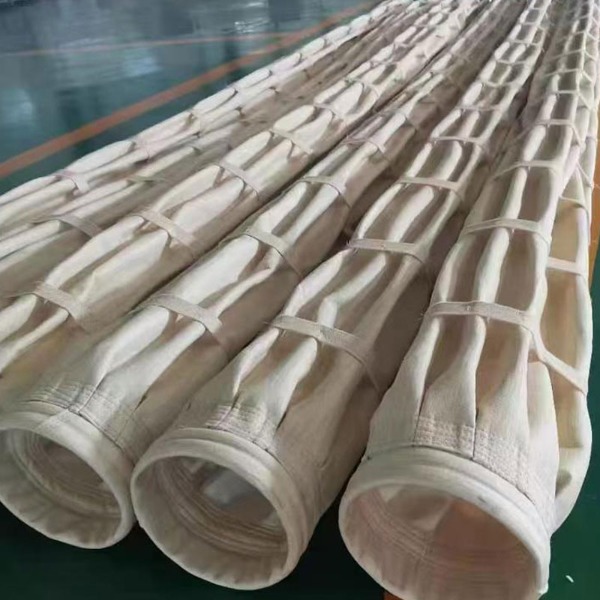
The global industrial air filtration landscape is undergoing a silent but significant revolution. At the heart of this transformation lies the industrial dust bag, a component often described as the “heart” of any baghouse system. As environmental regulations tighten and production processes become more complex, the role of the dust collector filter bag has shifted from a simple consumable to a strategic asset in operational compliance and cost management.
The Erosion of Traditional Boundaries: From Replacement Part to Core Technology
Historically, purchasing decisions for a dust collector filter bag were based largely on price and basic dimensions. However, 2026 is witnessing a paradigm shift. End-users in steel, cement, chemical processing, and incineration are now demanding engineering-driven solutions.
The modern high temperature filter bag, for instance, is no longer just a piece of felt. It is a sophisticated composite structure. For a cement kiln or a coal-fired boiler, a standard polyester bag fails quickly. Instead, plants require a high temperature filter bag made of PPS, P84, or PTFE membranes. These materials allow the dust bag to operate continuously at 200°C to 260°C while resisting hydrolysis and acid corrosion.
| Application Sector |
Critical Dust Bag Requirement |
Typical Material Solution |
| Cement Manufacturing |
High temperature resistance, alkali corrosion protection |
Fiberglass / PTFE membrane |
| Iron & Steel Smelting |
High mechanical strength, anti-static properties |
PPS / Aramid blend |
| Chemical Processing |
Acid resistance, anti-hydrolysis |
PTFE / P84 |
| Waste-to-Energy |
Ultra-high temperature, dioxin suppression |
E-glass with Scrim / PTFE |
Furthermore, the concept of a dust collector filter bag has expanded to include “smart” features. We are now seeing the rise of the anti-static dust collector bag, which is mandatory in explosive environments like coal grinding or grain processing. Similarly, the water and oil repellent dust collector bag has become standard in high-humidity processes, such as spray dryers or certain food ingredient lines, preventing the dreaded “muddy cake” that blinds filters.
Long-Tail Technology: Customization as the New Standard
While the generic dust bag still has a place in simple dust control (e.g., woodworking or bin vents), the high-value market has fragmented into highly specific long-tail applications. Industry professionals are no longer searching merely for “dust bag” but for precise solutions like “round type polyester dust filter bag for cement mill” or “ptfe coated filter bag for incinerator.”
This demand for precision has led to the development of niche products that dominate specific sub-sectors:
- The Anti-Static Dust Collector Bag: Used extensively in petrochemicals and plastics. These bags incorporate conductive fibers (e.g., stainless steel or carbon) to dissipate static charge, preventing spark ignition in explosive dust atmospheres (like polyethylene or sulfur dust).
- The Water and Oil Repellent Dust Collector Bag: Treated with fluorocarbon finishes, these are vital for processes with sticky particulate matter, such as asphalt mixing or metalworking fluid mist collection. They prevent the dust bag from losing permeability due to moisture bridging.
- The Pulse Jet Dust Collector Filter Bag: Designed specifically for high-energy cleaning systems, these bags must withstand violent flexing. The cage and felt must be perfectly matched to prevent abrasion at the creases.
A recent survey of plant maintenance managers revealed that 67% prefer a single source for their baghouse needs. However, they are not looking for a generic seller; they are looking for a technical partner who can diagnose a high pressure drop or a broken dust bag stitch line without requiring a site visit. This pushes suppliers to innovate not just in fabric, but in digital support tools.
Installation and Maintenance: The Hidden Cost of Ownership
The purchase price of a dust collector filter bag accounts for only 15-20% of its total lifecycle cost. The rest is installation labor, downtime, fan energy (due to pressure drop), and disposal. Consequently, the industry is seeing a surge in content related to “dust bag replacement” and “dust bag installation method video.”
Proper installation is critical. A single misaligned dust bag can lead to venturi wear, tube sheet dusting, and ultimately, stack emissions violation. Technologies such as “snap-band” tops and “quick-release” grommets are reducing installation time by up to 40%. Furthermore, predictive maintenance is entering the baghouse arena. By monitoring the differential pressure trend line, operators can predict exactly when a dust collector filter bag needs replacement, shifting from reactive to predictive O&M.
Top 5 Causes of Premature Dust Bag Failure (2026 Data):
Chemical Attack: Hydrolysis or acid condensation below the dew point.
Abrasion: High inlet velocities or misaligned baffles.
High Temperature: Spike events above the fabric’s continuous operating temperature.
Poor Installation: Cage burrs or loose fit causing friction holes.
Cleaning Mismanagement: Excessive pulse pressure tearing the felt structure.
This is where the value of the “dust filter bag replacement” service is moving. Suppliers who offer ultrasonic leak detection (to find holes in bags or seals) and installation training are commanding premium pricing, even in commoditized markets.
The Export and Compliance Landscape
For suppliers targeting international markets, compliance is a labyrinth. A dust bag sold in the EU must comply with ATEX directives for explosive atmospheres, requiring specific anti-static properties. In the US, EPA MACT standards dictate maximum achievable control technology, pushing for high efficiency (H13 or H14) filtration.
The global search for “industrial dust collector filter bag” has shifted towards Asia and the Middle East, where new mega-projects in steel and cement are under construction. However, these buyers are sophisticated. They often request certification tests like VDI 3926 (standard for filter media testing) or EN 60335-2-69.
Technological Innovations on the Horizon
The future of the dust bag is intrinsically linked to sustainability and digitization.
- Dual-Layer Filtration: Newer bags feature a “graded density” structure where the fibers are finer on the surface and coarser at the backing. This allows the dust collector filter bag to capture surface dust while maintaining a low pressure drop for longer periods.
- ePTFE Membranes: Expanded PTFE membranes are becoming more affordable. These are laminated onto a felt backing, creating a surface-loading dust bag that achieves “near-zero” emissions (sub-1 mg/Nm³) and is easy to clean.
- Recycled Materials: The industry is grappling with how to recycle used dust bags (which are often a mix of melted synthetic fibers and captured waste). Several pilot projects are successfully converting old PPS and polyester bags into plastic lumber or energy pellets.
Furthermore, the “smart bag” is emerging. Researchers are embedding conductive threads that act as sensors. If a tear occurs or if the temperature exceeds the limit, the thread breaks or changes resistance, sending an immediate alert to the control room. This transforms the dust collector filter bag from a passive filter into an active process sensor.
Frequently Asked Questions (FAQ)
To assist plant engineers and procurement specialists, here are the most common technical queries regarding dust bag selection and maintenance in 2026.
Q1: How do I choose between a water and oil repellent dust collector bag and a standard one?
A: If your gas stream contains any mist, sticky oil, or moisture condensation potential (common in winter start-ups or cement mills), choose the repellent treatment. Without it, the dust collector filter bag will “mud” or “blind,” causing a drastic pressure increase. Standard bags are only suitable for bone-dry dusts like limestone or flour.
Q2: What is the difference between a pulse jet dust collector filter bag and a shaker bag?
A: The dust bag used in a pulse jet system is typically a felt (needle felt) that is caked on the outside and cleaned by a high-pressure air burst. It is heavy-duty and sewn with anti-wear seams. In contrast, a shaker bag is usually a woven fabric that relies on mechanical shaking; it is lighter and cannot withstand the flexing of pulse jet cleaning. Using the wrong type leads to rapid seam failure.
Q3: How often should I replace my dust filter bag?
A: There is no universal timeline. A high temperature filter bag in a stable cement kiln baghouse might last 4 years. An anti-static dust collector bag in a carbon black process might last 18 months. You should replace when the pressure drop is consistently 20-30% above baseline even after pulsing, or when visible emissions appear in the stack.
Q4: Can I wash and reuse a dust collector filter bag?
A: Generally, no. Washing a dust bag for industrial applications destroys the fiber structure and the pre-coat layer. However, for niche applications (e.g., food grade or certain pharmaceutical processes), some suppliers offer “off-line cleaning” using compressed air and gentle vibration, but this extends life by months, not years. Replacement is almost always more cost-effective than washing.
Q5: What is the “magic” of the ptfe coated filter bag for incinerator?
A: PTFE (Teflon) coating creates a smooth, non-stick surface. For an incinerator burning municipal waste, the gas is highly acidic and sticky. The ptfe coated filter bag for incinerator prevents the sticky ash from adhering to the dust bag surface, ensuring that pulse cleaning works effectively. Additionally, PTFE is chemically inert and can handle 260°C peaks, making it the gold standard for difficult thermal processes.
Conclusion: The Strategic Value of the Dust Bag
As we progress through 2026, the industrial dust bag is no longer an afterthought. It is a critical component that bridges environmental compliance and operational uptime. The market is moving away from generic products towards verified, specialized solutions: from the anti-static dust collector bag for explosive coal dust to the water and oil repellent dust collector bag for sticky asphalt fumes.
For operators, the message is clear: treat the dust collector filter bag as a precision engineered component. For suppliers, the opportunity lies in education—helping the market understand that the true cost of a cheap dust bag is not the purchase price, but the unplanned shutdown and environmental fine. The evolution of the baghouse filter continues, one fiber at a time.



 English
 Français
 عربى
عربى 简体中文
简体中文