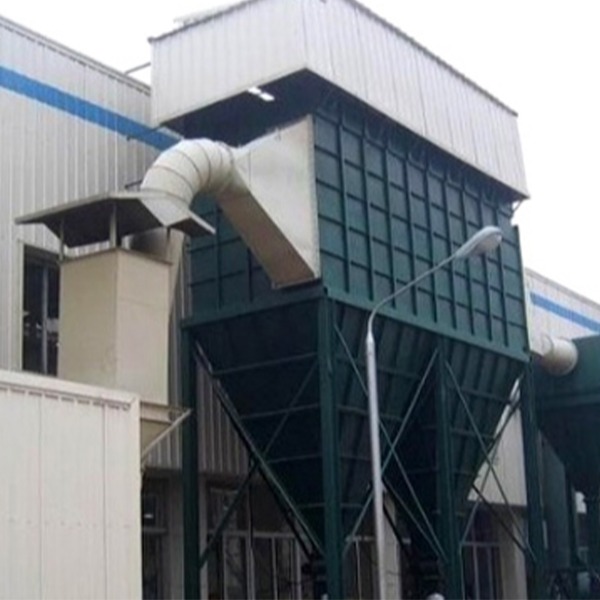
For decades, the baghouse dust collector has been the backbone of industrial air pollution control in steel mills worldwide. But a challenger is quietly gaining ground: the low-pressure pulse jet filter cartridge dust collector.
With ultra-low emission standards now demanding outlet concentrations below 8mg/Nm³, plant managers are re-evaluating their dust collection strategies. The key question: Is the traditional baghouse becoming obsolete?
The short answer is no. But the longer answer reveals a significant shift – one where cartridge dust collectors are increasingly the preferred choice for specific, high-value applications within steel mills.
Why Cartridge Dust Collectors Are Winning in Steel Mills
The core advantage of a cartridge dust collector lies in its filtration element. A single pleated filter cartridge offers a substantially larger filtration area than a filter bag of the same physical size. According to technical specifications from Anhui Tiankang Environmental Technology Co., Ltd., this design delivers several critical benefits:
- Smaller Footprint: Less floor space and lower engineering costs
- Ultra-Low Emission: Achieves discharge concentration <8mg/Nm³ – meeting the most stringent environmental regulations
- Low Resistance Operation: Maintains pressure drop below 1200Pa
- Unattended Mode: Automated pulse jet cleaning requires minimal manual intervention
For steel mill applications such as grinding, polishing, and coal conveying systems – where dust is dry, non-caking, and free-flowing – the cartridge dust collector is proving to be an excellent fit.
The Critical Limitations: When Baghouses Still Win
However, the same technical literature that highlights these advantages also contains clear warnings. The filter cartridge dust collector is not a universal replacement. It has three major limitations that every engineer must understand:
| Limitation |
Specification |
Consequence if Exceeded |
| Moisture Content |
≤10% by volume |
Dust becomes hygroscopic and hardens, causing cartridge failure |
| Gas Temperature |
<150°C (302°F) |
Higher temperature cartridges are still under development |
| Dust Properties |
Dry, non-caking, free-flowing |
Sticky or fibrous dust cannot be removed by pulse jet cleaning |
Verdict: For high-moisture flue gas (>10% RH), high-temperature exhaust (>150°C), or corrosive/acidic gas streams, the traditional baghouse dust collector remains the more reliable choice.
Side-by-Side Comparison: Baghouse vs. Cartridge Dust Collector
| Parameter |
Cartridge Dust Collector |
Baghouse Dust Collector |
| Emission Level |
<8mg/Nm³ |
Typically 10-30mg/Nm³ (can be lower with high-end bags) |
| Filtration Speed |
0.6-1.0 m/min (recommended ≤0.8) |
1.0-2.0 m/min |
| Footprint |
Smaller (larger area per element) |
Larger |
| Moisture Tolerance |
≤10% |
Higher (depending on bag material) |
| Temperature Tolerance |
<150°C |
Can exceed 200°C with specialty bags |
| Maintenance |
Cartridge replacement is simpler, less dust exposure |
Bag replacement is more labor-intensive |
Real-World Application: Where Cartridge Dust Collectors Excel in Steel Mills
Based on field data and manufacturer specifications, the low-pressure pulse jet filter cartridge dust collector is ideal for:
Grinding and Polishing Operations – Fine, dry particulate requiring high collection efficiency
Coal Conveying and Crushing – Dry coal dust that is easily dislodged by pulse jet cleaning
Raw Material Handling – Dry, free-flowing powders like limestone, coke dust
Handling Large Air Volumes: For steel mills requiring high throughput, these dust collectors can be configured in a compartmentalized design, treating flue gas volumes from 50,000 up to 1.2 million m³/h. While one compartment undergoes cleaning, others continue operating – ensuring continuous system performance.
The Balanced Conclusion: Coexistence, Not Replacement
“The low-pressure pulse jet filter cartridge dust collector is a technological innovation that expands the boundaries of dust control, but it is not a complete replacement for traditional technology.”
— Technical white paper, Tiankang
The most accurate conclusion is this: Baghouse dust collectors are not obsolete. Rather, the cartridge dust collector has carved out a specialized niche where its unique advantages – ultra-low emissions, small footprint, low resistance – deliver superior value.
For plant engineers and environmental managers, the optimal strategy is to evaluate both technologies based on:
- Dust characteristics (dry vs. sticky, hygroscopic vs. free-flowing)
- Flue gas conditions (temperature, moisture, corrosivity)
- Space constraints and budget
- Emission reduction targets
About the Technology Provider
Anhui Tiankang Environmental Technology Co., Ltd. (established 2002) manufactures both baghouse and cartridge dust collector systems. The company serves steel mills, power plants, cement plants, and food processing facilities, offering customized designs for complex flue gas conditions.
For applications requiring ultra-low emission (<8mg/Nm³) with dry, free-flowing dust, the low-pressure pulse jet filter cartridge dust collector is worth serious consideration. For high-moisture, high-temperature, or corrosive environments, the baghouse remains the proven workhorse.



 English
 Français
 عربى
عربى 简体中文
简体中文