The global metallurgy industry is currently standing at a critical crossroads. As nations intensify their commitment to carbon neutrality and environmental stewardship, steel plants are facing unprecedented pressure to modernize their production processes. The challenge is twofold: managing the massive amounts of particulate matter generated during raw material handling and addressing the complex chemical compositions of flue gases.
The Regulatory Horizon and Industrial Evolution
For decades, the image of a steel plant was inseparable from billowing smoke and soot. However, contemporary environmental standards such as OSHA dust control compliance in the United States and similar ultra-low emission mandates in Europe and Asia have rewritten the operational playbook. For the metallurgy industry, failing to meet these standards results in more than just heavy fines; it can lead to the total suspension of operations.
Modern steel production requires a holistic approach that targets both visible dust and invisible gaseous pollutants. By integrating advanced industrial dust collector units with sophisticated chemical treatment phases, manufacturers are now achieving air quality levels that were once considered technically impossible in a heavy industrial setting.
Precision Dust Control Across the Production Chain
In a sprawling steel plant, dust generation is not localized to a single point but occurs across a multi-stage logistics and thermal chain. Leading engineers now advocate for a tiered suppression and collection strategy.
At the beginning of the process, particularly in raw material stockyards and conveyor transfer points, dry fog dust suppression has emerged as a premier solution. Unlike traditional water sprays that can compromise the quality of iron ore or coal, dry fog uses ultrasonic nozzles to create water droplets smaller than 10 microns. these droplets attach to dust particles without wetting the bulk material, effectively knocking them out of the air. For larger, open-air areas like demolition sites or vast slag heaps, mist cannons provide the necessary reach to suppress airborne particles before they migrate beyond the facility perimeter.
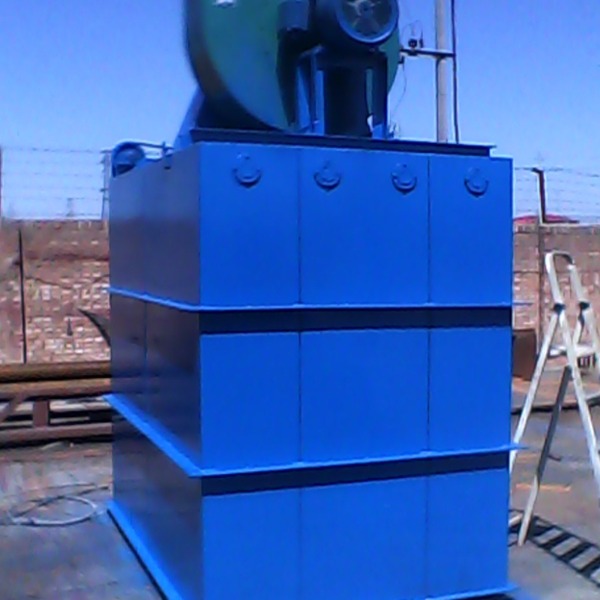
As the material moves into the furnace, the nature of the particulate changes. The high-heat environment of a blast furnace or electric arc furnace produces extremely fine, hazardous fumes. Here, the automatic pulse jet baghouse system for steel plants is the workhorse of choice. These systems utilize specialized fabric filters that capture fine particulates with extreme efficiency. The “pulse jet” mechanism ensures that the filters remain clear by periodically blasting them with compressed air, allowing for continuous, 24/7 operation without manual cleaning breaks.
Specialized Safety and Advanced Purification
Beyond general air quality, the metallurgy industry must contend with the high-risk reality of combustible dust management. Many metal powders, including aluminum and certain alloys, can become explosive when suspended in the air at specific concentrations. To mitigate this, facilities are increasingly investing in explosion-proof dust collection systems for metalworking. These systems are engineered with spark detection, explosion venting, and fire suppression features to ensure that a minor ignition does not escalate into a catastrophic industrial accident.
Parallel to dust collection is the critical task of exhaust gas purification. The smelting process releases sulfur dioxide, nitrogen oxides, and heavy metals. To address these, plants often deploy a scrubber system. Wet scrubbers are particularly effective because they can simultaneously cool hot gases, neutralize acidic components, and trap residual dust that might have escaped dry filtration stages.
Equipment Performance and Selection Matrix
Choosing the correct technology depends heavily on the specific moisture content, temperature, and chemical nature of the pollutants. The following table summarizes the primary equipment used in modern metallurgical environmental management.
| Technology |
Primary Keyword |
Application Scenario |
Efficiency Level |
Maintenance Requirement |
| Dry Fog Suppression |
Dry Fog Dust Suppression |
Conveyor transfer, crushers |
90% - 95% (PM10) |
Low (No secondary waste) |
| Baghouse System |
Baghouse Filter |
Blast furnace, electric arc furnace |
99.9% + (Fine dust) |
Moderate (Filter bag replacement) |
| Mist Cannon |
Mist Cannon |
Open stockyards, demolition |
70% - 85% (Large particles) |
Low (High mobility) |
| Wet Scrubber |
Scrubber System |
Acidic gas, high-temp flue gas |
95% - 98% (Multi-pollutant) |
High (Water treatment needed) |
| HEPA Vacuum Unit |
HEPA Vacuum System |
Laboratories, toxic dust areas |
99.97% + (0.3μm) |
Moderate (Filter cost) |
The Role of Digitalization in Air Quality
The next frontier for the dust control system is the integration of the Industrial Internet of Things (IIoT). Modern steel plants are no longer relying on static filtration; they are moving toward “smart” air management. Sensors placed throughout the facility monitor dust concentration levels in real-time. If a specific conveyor line shows a spike in particulate matter, the dry fog dust suppression system can be automatically activated or scaled up.
Furthermore, these smart systems allow for predictive maintenance. By monitoring the pressure drop across a baghouse filter system, software can predict exactly when a filter will fail, allowing for scheduled replacements during planned downtime rather than responding to emergency failures. This not only improves environmental compliance but also optimizes the energy consumption of the massive fans required to move industrial air volumes.
Conclusion: A Clean Future for Metallurgy
The transformation of the steel plant from a major polluter to a model of environmental efficiency is well underway. By leveraging high-efficiency misting systems for conveyor belt transfer points and robust exhaust gas purification units for thermal processes, the metallurgy industry is proving that heavy production and clean air are not mutually exclusive. As OSHA compliant silica dust control solutions for construction and metallurgy become the standard, the industry is not just protecting the planet, but also ensuring the long-term health and safety of its most valuable asset: its workforce. The investment in advanced dust control technology is, ultimately, an investment in the future viability of the global steel industry.



 English
 Français
 عربى
عربى 简体中文
简体中文