English
 Français
 عربى
عربى 简体中文
简体中文


How to Choose the Right ESP Electrostatic Precipitator for Industrial Air Pollution Control
HOME / NEWS / Industry News / How to Choose the Right ESP Electrostatic Precipitator for Industrial Air Pollution Control
 By Admin
Content
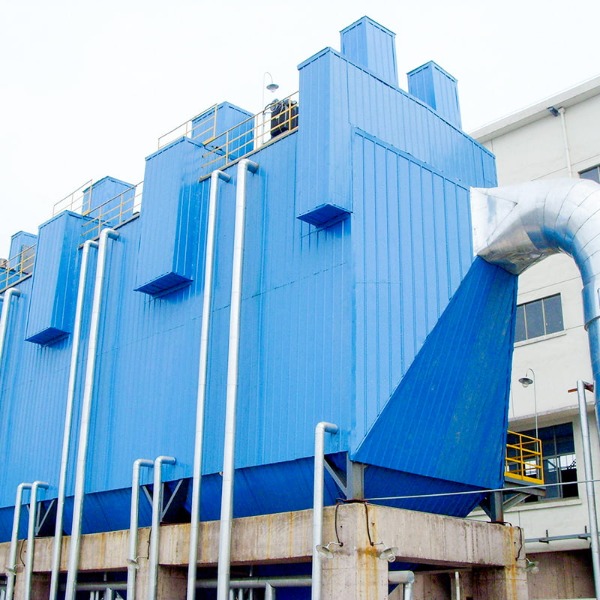
In modern industrial environments, controlling airborne pollutants has become a fundamental requirement for maintaining regulatory compliance and ensuring sustainable operations. Among the most widely used technologies for particulate control is the ESP electrostatic precipitator, which is designed to remove fine particles from gas streams through electrostatic charging and collection mechanisms.
However, selecting the right electrostatic precipitation system is not a simple decision. The performance of an electrostatic precipitator system depends on multiple technical and operational variables, including airflow conditions, particle characteristics, gas temperature, and long-term maintenance requirements. A structured selection process is therefore essential to ensure stable efficiency and cost-effective operation.
One of the most critical factors in selecting an ESP electrostatic precipitator is the gas flow rate. The system must be capable of handling both peak and average airflow conditions without causing pressure instability or reduced collection efficiency.
When airflow is not properly matched, several issues may occur:
A properly designed industrial air filtration system should maintain stable performance even when airflow fluctuates.
| Factor | Importance in ESP Performance |
|---|---|
| Maximum flow rate | Prevents overload conditions |
| Average flow rate | Ensures stable daily operation |
| Flow uniformity | Improves particle collection efficiency |
| Pressure stability | Reduces energy loss |
A well-balanced airflow design is essential for achieving reliable gas purification system performance in continuous industrial applications.
The efficiency of an electrostatic precipitator system is strongly influenced by the physical and electrical properties of particulate matter. Among these, particle size distribution and electrical resistivity are the most important factors.
Larger particles are generally easier to capture due to their higher mass and stronger response to electrostatic forces. In contrast, ultra-fine particles require more precise control of electric fields and collection surfaces.
Particle resistivity defines how easily particles can hold or release electrical charges. This directly affects their behavior in the ESP electrostatic precipitator environment.
High resistivity conditions often require enhanced system configuration to maintain stable emission control technology performance.
Beyond particle properties, the characteristics of the gas stream also play a major role in system efficiency.
Gas temperature directly impacts ionization behavior and electrical field stability inside the ESP system. Elevated temperatures may reduce charging efficiency and alter particle behavior, affecting overall dust removal equipment performance.
The presence of corrosive or reactive compounds in the gas stream can significantly influence system durability. In such cases, material selection becomes an important factor in ensuring long-term operational stability.
A properly designed flue gas treatment system must therefore account for both thermal and chemical conditions to ensure consistent performance.
Different industrial applications require different electrostatic precipitator configurations. The choice of system type depends on particle characteristics, gas volume, and operational conditions.
| ESP Type | Application Characteristics | Key Advantage |
|---|---|---|
| Plate-type ESP | High-volume dry dust collection | High efficiency for large airflow |
| Wire-plate system | Mixed particle environments | Strong electrostatic field generation |
| Wet ESP system | Sticky or fine particles | Improved capture and self-cleaning capability |
| Compact ESP design | Space-limited installations | Simplified structure and operation |
Plate-wire configurations are often used in environments requiring high airflow processing, while wet systems are more suitable for challenging particulate conditions.
The selection of the correct industrial dust collector type ensures optimal performance under specific operational demands.
While performance is critical, long-term cost efficiency is equally important when selecting an ESP electrostatic precipitator.
Initial installation cost is only one part of the overall evaluation. A complete assessment must include long-term maintenance requirements and energy consumption.
Regular maintenance is essential for stable operation. Key tasks typically include:
A well-designed system should minimize downtime while maintaining high operational stability.
| Cost Category | Description |
|---|---|
| Initial investment | Equipment and installation |
| Energy consumption | Long-term operational cost |
| Maintenance cost | Cleaning and component replacement |
| Downtime cost | Production interruption impact |
A balanced approach between capital cost and operational efficiency is essential for sustainable air pollution control systems.
The effectiveness of an electrostatic precipitation system is primarily measured by its collection efficiency and adaptability.
Collection efficiency determines how effectively the system removes fine particles from the gas stream. High efficiency is especially important in applications requiring strict emission control standards.
Modern ESP systems must be able to adapt to changing operating conditions, including variations in:
Flexible systems provide more stable long-term performance and reduce the risk of operational failure.
A reliable ESP electrostatic precipitator must maintain consistent performance over extended operating cycles. Stability depends on proper system design, optimized airflow distribution, and effective maintenance scheduling.
Key performance indicators include:
These factors collectively determine the reliability of industrial air filtration systems in real-world applications.
Selecting the right ESP electrostatic precipitator requires a comprehensive understanding of airflow conditions, particle characteristics, gas properties, system configuration, and lifecycle costs. No single factor determines performance; instead, optimal results come from balancing all operational variables.
By carefully evaluating these parameters, industries can achieve efficient particulate matter control, improved air quality, and long-term operational stability. A well-designed electrostatic precipitator system not only enhances emission control technology performance but also ensures sustainable and cost-effective industrial operation.
1. What is the main function of an ESP electrostatic precipitator?
It removes fine particles from industrial gas streams using electrostatic charging and collection principles.
2. What factors affect ESP efficiency the most?
Airflow rate, particle resistivity, gas temperature, and system design all significantly influence performance.
3. Can ESP systems handle different particle types?
Yes, but performance depends on particle size, composition, and electrical properties.
4. Why is maintenance important for ESP systems?
Regular maintenance ensures stable operation, consistent efficiency, and extended equipment lifespan.