English
 Français
 عربى
عربى 简体中文
简体中文


What Is a Fume?
What Is a Fume?
 By Admin
Content
- 1 Understanding Fumes and Their Impact
- 2 How Are Fumes Managed?
- 3 What is a Dust Filter?
- 4 Components of a Bag Filter Dust Collector
- 5 How Does a Bag Filter Work?
- 6 Advantages of Bag Filters in Waste Gas Treatment
- 7 Applications of Dust Filters
- 8 Choosing the Right Dust Filter
- 9 Common Challenges in Dust Filter Systems
- 10 Maintaining Dust Filter Systems
- 11 Conclusion
- 12 FAQ
Fumes, particularly those generated in industrial environments, are tiny particles suspended in the air that result from various processes such as combustion, welding, and chemical reactions. These particles are often made up of a mixture of gases and solid particulates that can pose significant health risks and environmental hazards. In industries dealing with heavy manufacturing, waste treatment, or chemical production, controlling fumes is vital for maintaining air quality and meeting environmental regulations.
Understanding Fumes and Their Impact
Fumes can originate from a variety of sources, including:
- Industrial processes such as metalworking, combustion, and chemical manufacturing
- Waste gas treatment systems where gases and particulates are released
- Natural processes like volcanic eruptions or wildfires, though these are less common in industrial contexts
Fumes contain substances that, when inhaled, can cause respiratory diseases, eye irritation, or long-term health problems such as lung cancer. Additionally, airborne particulate matter can contribute to environmental pollution and damage ecosystems, especially when these particles are released into the atmosphere unchecked.
How Are Fumes Managed?
Effective air pollution control requires efficient systems to remove harmful particles from industrial emissions. One such system is the dust filter, a core component in ensuring that harmful particulates do not escape into the atmosphere. A bag filter dust collector is a common and highly effective solution in capturing airborne dust and particulates in industrial applications.
What is a Dust Filter?
A dust filter is an industrial filtration system designed to capture dust particles from air or gas streams. This system works by using a filter medium to trap the particulates as the air or gas flows through it, preventing the particles from being released back into the environment. Dust filters come in various forms, including bag filters, cyclone separators, and cartridge filters, with each type suited for specific applications and industries.
The bag filter dust collector is one of the most commonly used types in industries like metalworking, cement production, chemical processing, and waste incineration. The bag filter system uses large fabric bags made of durable materials to capture fine dust particles as the air or gas passes through the filter medium.
Components of a Bag Filter Dust Collector
Dust Collector Hopper: The lower part of the system where collected dust accumulates.
Filter Bags: The primary filtration element that traps dust particles. These bags are made from materials like polyester, polypropylene, or other synthetic fibers, depending on the type of dust and temperature of the air.
Cleaning Mechanism: A mechanism such as pulse-jet or shaker system used to clean the filter bags periodically to ensure optimal performance.
Fan: A fan or blower is used to move the air through the system and create the necessary airflow.
Dust Disposal System: A system designed to safely dispose of or recycle the captured dust.
How Does a Bag Filter Work?
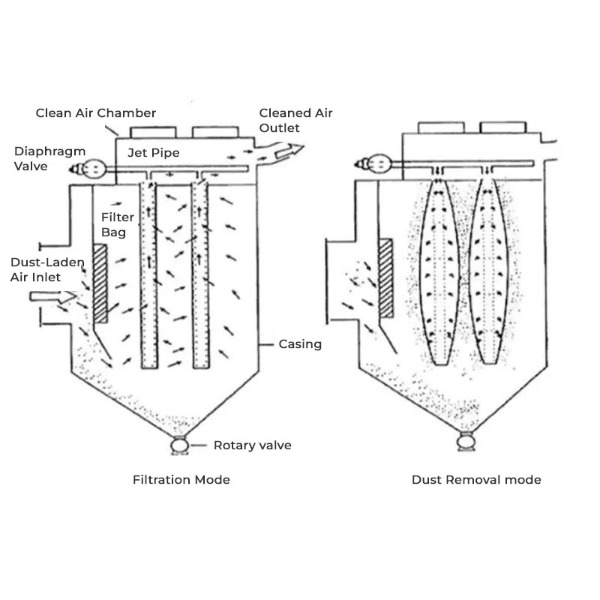
The working principle of a bag filter dust collector involves the process of filtration. Air or gas that contains dust particles enters the system and is directed through a series of filter bags. As the air flows through the filter bags, the dust particles are trapped on the surface of the bag, while the clean air passes through the fabric and exits the system.
To ensure the bags do not become clogged with dust, a cleaning mechanism is used to remove the dust from the filter bags at regular intervals. This is typically done using compressed air, which blasts the dust off the filter bags, sending it into the hopper for disposal.
Advantages of Bag Filters in Waste Gas Treatment
- Efficient Dust Collection: Bag filters are highly effective in trapping small particles, even those smaller than 1 micron in size, ensuring that the air released is free from harmful dust.
- High Durability: The materials used in bag filters are designed to withstand harsh conditions, such as high temperatures and corrosive gases.
- Cost-Effective: Bag filters are relatively easy to maintain and provide long-term savings compared to other filtration systems.
- Environmental Protection: By preventing the release of harmful dust into the environment, bag filters play a significant role in complying with air quality standards and promoting sustainable practices.
Applications of Dust Filters
Dust filters find their place in various industries where air quality is of concern:
- Waste Gas Treatment: In industries such as waste incineration, energy production, and chemical processing, dust filters are essential in controlling the release of particulate matter into the atmosphere.
- Air Pollution Control: In urban settings or industrial zones, these filters are used to minimize the harmful effects of industrial emissions, thereby improving air quality and reducing the risk of respiratory illnesses among workers and the public.
- Mining and Cement Manufacturing: These industries often produce large amounts of airborne dust, making effective filtration systems crucial for maintaining safe and healthy working environments.
Choosing the Right Dust Filter
When selecting a dust filter for a specific application, it’s important to consider factors like:
- Type of Dust: The chemical composition and size of the dust particles will determine the most suitable filter material and design.
- Temperature and Humidity: Extreme conditions may require specialized filter materials that can withstand heat or moisture.
- Airflow Requirements: The filtration system must be capable of handling the volume of air or gas that needs to be processed.
Types of Dust Filters and Their Applications
| Type of Dust Filter | Application | Best For |
|---|---|---|
| Bag Filter Dust Collector | General industrial applications like cement, mining, and waste treatment | Fine dust, chemical dust, and large air volumes |
| Cyclone Dust Collector | Pre-filtration or for bulk dust collection | Coarse dust and larger particles |
| Cartridge Filter | High-efficiency applications in smaller facilities | Fine particles, smaller air volumes |
Common Challenges in Dust Filter Systems
Despite their effectiveness, dust filter systems can face challenges, such as:
Clogging of Filters: If the dust is not removed regularly, it can build up on the filter, reducing efficiency.
Wear and Tear: The high operational demands can wear down filter components, particularly in harsh environments.
Energy Consumption: Some filtration systems, especially those with high airflow requirements, can consume significant amounts of energy.
Maintaining Dust Filter Systems
Proper maintenance of a dust filter is critical to ensure its long-term effectiveness. Maintenance tasks include:
- Regular cleaning and replacement of filter bags
- Checking the system for leaks or cracks
- Ensuring the fan and cleaning mechanisms are functioning properly
Conclusion
Fumes and dust emissions are an inevitable byproduct of many industrial activities, but with the right air pollution control systems in place, their impact can be minimized. Dust filters, particularly bag filter dust collectors, are proven solutions for capturing harmful particulates from industrial emissions and improving air quality. By understanding their function and applying them correctly, industries can comply with environmental standards, protect the health of workers, and contribute to a cleaner, safer environment.
FAQ
1. What is a dust filter used for?
A dust filter is used to capture airborne dust and particulates from air or gas streams, preventing harmful particles from being released into the environment. It’s commonly used in industrial settings to maintain air quality and comply with environmental regulations.
2. How does a bag filter dust collector work?
A bag filter dust collector works by forcing air or gas through filter bags, which trap dust particles. The cleaned air passes through the bags while the dust accumulates on the outside of the fabric, which is periodically cleaned using compressed air.
3. Can dust filters be used in all industries?
Yes, dust filters are versatile and can be used in various industries such as manufacturing, mining, waste gas treatment, and chemical processing to capture particulate matter and control air pollution.
4. How do you maintain a dust filter system?
Maintaining a dust filter system involves regular cleaning of the filter bags, checking for leaks or damage, and ensuring that the fan and other components are working efficiently.
5. Why is air pollution control important?
Air pollution control is essential for protecting the environment and public health. By using systems like dust filters, industries can reduce emissions, comply with regulations, and contribute to cleaner air and healthier communities.