English
 Français
 عربى
عربى 简体中文
简体中文


Introduction: The Evolution of Industrial Dust Control
Industrial processes generate airborne particulate matter that poses significant risks to worker health, environmental compliance, and equipment longevity. The demand for efficient air pollution control has driven the evolution of dust collection technologies from simple settling chambers to highly engineered filtration systems. Among these, the pulse jet pleated cartridge filter stands out as a transformative solution. It combines high-efficiency media with an intelligent, self-cleaning mechanism that enables continuous operation under heavy dust loads.
Unlike traditional baghouse filters, which rely on fabric bags, the pleated cartridge filter uses a compact, cylindrical element with pleated media. This design dramatically increases the filtration area within a smaller footprint. The integration of pulse-jet cleaning technology ensures that this media can be regenerated online, minimizing downtime and maintaining stable pressure drops. Understanding these systems is essential for plant engineers, facility managers, and environmental compliance officers seeking reliable, cost-effective dust control.
What Is a Pulse Jet Pleated Cartridge Filter?
A pulse jet pleated cartridge filter is a cylindrical filtration element used in industrial dust collectors. It features a pleated filter media wrapped around a central core, with the entire assembly designed to withstand periodic pulses of compressed air for cleaning. The term "pulse jet" refers to the cleaning method: a short, high-pressure burst of air is directed into the cartridge interior, flexing the media and dislodging accumulated dust cake.
These filters are fundamental components of cartridge dust collector systems, which are widely used across industries such as metalworking, woodworking, pharmaceuticals, food processing, and chemical manufacturing. Their primary function is to capture fine particulates from exhaust air streams, protecting both personnel and the environment while enabling the recovery of valuable materials.
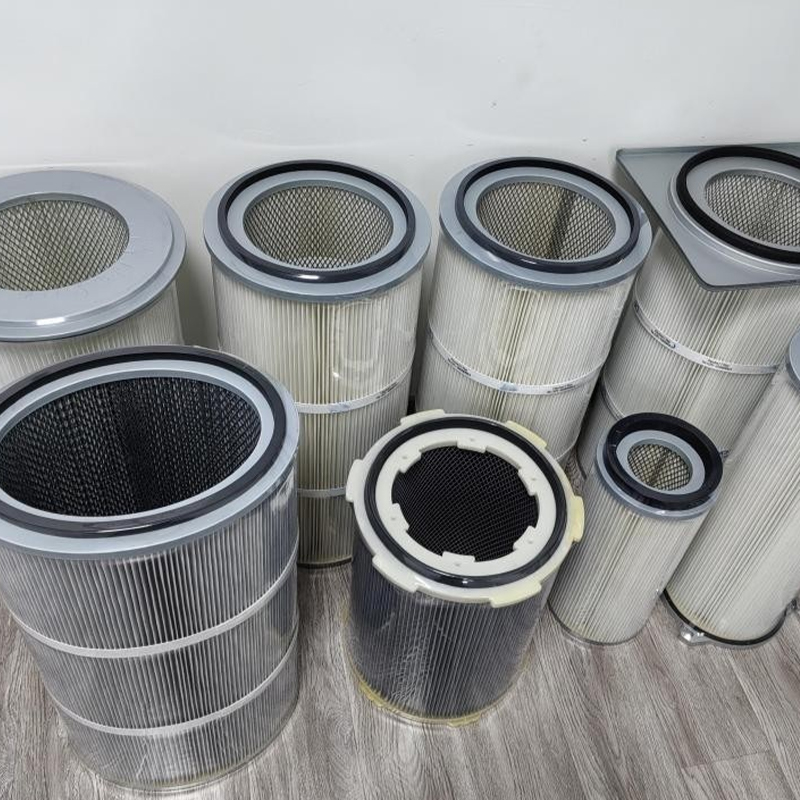
Anatomy of a Cartridge Dust Collector Filter
To understand the performance advantages of the dust collector cartridge filter, it is helpful to examine its key components. A typical industrial dust collector filter comprises several critical elements, each contributing to its overall functionality and durability.
Filter Media
The media is the heart of the filter. It is typically a nonwoven fabric made from cellulose, polyester, or specialized synthetic blends. The choice of media depends on the application's operating temperature, dust chemistry, and moisture content. For example, polyester is common for dry applications up to 180 degrees Fahrenheit (82 degrees Celsius), while PTFE-coated or nanofiber media offer enhanced efficiency for submicron particles. The media is pleated to increase the surface area available for dust capture.
Pleat Geometry and Spacing
The pleat structure is a defining feature of a pleated cartridge filter. Pleat height, density, and shape directly influence filtration resistance and cleaning effectiveness. Traditional triangular pleats are susceptible to dust bridging and clogging in the pleat valleys. Advanced designs, such as trapezoidal or wide-pleat configurations, address this issue by maintaining open channels that allow dust to release more easily during pulse cleaning. Some premium filters use synthetic bead separators to hold pleats evenly apart, ensuring full media utilization.
Inner Cone and Support Structures
Many high-performance cartridge dust collector filters include an inner cone or additional pleated pack at the base. This cone increases the total filtration area and improves the distribution of pulsed cleaning air, ensuring that the lower portions of the cartridge are effectively cleaned. The cartridge also features a metal or plastic end cap at the top for mounting and a gasket to seal against the tube sheet, preventing dust bypass.
How Pulse-Jet Cleaning Works
The defining operational feature of these filters is the pulse-jet cleaning mechanism. This process allows the dust collector to operate continuously, maintaining a relatively stable pressure drop without requiring shutdown for manual cleaning. The effectiveness of this cleaning cycle is what distinguishes a high-performing industrial dust collector filter from a conventional one.
The Cleaning Cycle
During normal operation, dust-laden air passes through the filter media from the outside in. Particles are deposited on the outer surface, forming a dust cake. This cake actually aids filtration but also increases resistance, or pressure drop, across the filter. When the pressure drop reaches a predetermined set point, or after a timed interval, the pulse-jet system activates.
Compressed Air Pulse: A diaphragm valve releases a short burst of compressed air, typically lasting 100 to 450 milliseconds, from a header pipe into a blow tube.
Induced Airflow: This primary pulse of air travels down the center of the cartridge. As it exits the nozzle, it induces a secondary flow of air, approximately 5 to 8 times the volume of the primary pulse, due to the venturi effect. This induced air is drawn from the clean air plenum.
Media Flexing and Dust Release: The combined airflow creates a compression wave that rapidly pressurizes the cartridge interior. This causes the pleated media to flex outward, expanding the cartridge. The sudden expansion breaks the bond between the dust cake and the media surface. The dislodged dust falls into the hopper below.
Cleaning typically occurs in rows, with only a fraction of the cartridges pulsed at any given time. This "online" cleaning approach allows the system to maintain continuous airflow, avoiding costly process interruptions.
Key Advantages Over Baghouse Filters
While both cartridge and baghouse filters are used for industrial dust collection, the cartridge dust collector filter offers several distinct advantages. Understanding these differences is crucial when selecting a system for a specific application.
| Feature | Pulse Jet Pleated Cartridge Filter | Traditional Baghouse Filter |
|---|---|---|
| Filtration Area per Footprint | High (up to 2-3 times more than bags in same space) | Lower |
| Cleaning Efficiency | Superior dust release due to media rigidity and pleat geometry | Moderate; fabric bags are more flexible but prone to incomplete cleaning |
| Pressure Drop | Lower and more stable over time | Higher; tends to rise more rapidly |
| Maintenance and Replacement | Easier; cartridges are typically changed from a clean-air side | More labor-intensive; bags require cages and more handling |
| Filtration Efficiency for Fine Dust | High, especially with advanced media (PTFE, nanofiber) | Good but often requires higher pressure drop to achieve comparable efficiency |
Research has demonstrated that trapezoidal pleated cartridge filters can maintain more stable performance over multiple cleaning cycles compared to standard triangular pleated designs, with significantly lower residual pressure drop growth rates. This stability translates directly to energy savings and extended filter life.
Performance Metrics and Data
The performance of a cartridge dust collector filter can be quantified through several key metrics. These parameters help engineers and operators evaluate system health, optimize cleaning cycles, and predict maintenance needs.
Design Innovations That Enhance Performance
Recent engineering advances have addressed historical limitations of pleated filters, particularly regarding cleaning effectiveness and pressure drop stability. Two significant innovations are worth examining: pleat geometry optimization and advanced cleaning nozzle designs.
Optimized Pleat Geometry
The triangular pleat structure of traditional cartridge filters is susceptible to dust accumulation in the pleat valleys, leading to irreversible clogging. A newer design, the trapezoidal pleated cartridge filter (TPCF), features alternating long and short pleats. This configuration increases the effective filtration area by approximately 5.4 percent while providing more open channels for dust release during pulse cleaning. In comparative tests, the TPCF exhibited a residual pressure drop growth rate of only 33.37 percent, compared to over 62 percent for standard PCFs, indicating significantly more stable long-term performance.
Enhanced Nozzle and Pulse Delivery
The nozzle design plays a critical role in distributing cleaning energy uniformly along the cartridge length. Conventional round nozzles create a high-pressure zone at the cartridge top but a weak pulse at the bottom. Innovations such as intensive injection nozzles and diffusion nozzles have been developed to mitigate this issue. These designs improve the pressure distribution on the filter surface, ensuring that the entire media pack, from top to bottom, receives adequate cleaning energy. Some advanced systems even employ an opposing pulse-jet configuration, where a second nozzle at the cartridge base creates a colliding airflow that enhances cleaning intensity and uniformity.
Which Industries Use Cartridge Filters?
The versatility of the industrial dust collector filter makes it suitable for a wide range of applications. Selection depends on dust characteristics, loading rates, temperature, and required emission limits.
Metalworking and Fabrication: Capturing welding fumes, plasma cutting smoke, grinding dust, and metal fines. These applications benefit from flame-retardant or spark-resistant media.
Woodworking: Collecting wood dust and shavings, which are combustible. Cartridge filters with anti-static properties are often used to mitigate fire and explosion risks.
Pharmaceuticals and Nutraceuticals: Collecting active pharmaceutical ingredients (APIs) and powders. High-efficiency media (MERV 15 or higher) is required to meet stringent purity and worker safety standards.
Food Processing: Capturing flour, sugar, spices, and other food-grade dusts. Filters must comply with FDA regulations and often use media that is washable or resistant to moisture.
Chemical and Bulk Powder Handling: Collecting various powders and granular materials. The filter media must be chemically compatible with the dust being handled.
Mining and Mineral Processing: Controlling silica and other mineral dusts to protect worker health and meet environmental regulations.
Maintenance Best Practices
Proper maintenance is essential to maximize the service life and performance of a dust extraction cartridge filter. A proactive maintenance program can prevent unexpected downtime and ensure continuous regulatory compliance.
Regular Inspection
Inspect cartridges periodically for signs of wear, damage, or blinding. Visual inspection through the clean-air plenum can reveal tears in the media, failed gaskets, or excessive dust accumulation. Monitoring pressure drop trends provides valuable diagnostic information. A sudden increase in pressure drop may indicate a cleaning system malfunction, while a decrease could signal a leak.
Pulse-jet System Tuning
The pulse-jet cleaning system should be calibrated to the specific application. Factors to consider include pulse pressure, pulse duration, and cleaning frequency. Over-cleaning can shorten filter life by causing excessive media flexing, while under-cleaning leads to high pressure drops and reduced airflow. Most manufacturers provide guidelines for initial settings, which can be fine-tuned based on operational data.
Proper Changeout Procedures
When replacing cartridges, ensure that the new filters are properly seated and sealed against the tube sheet. Even a small leak can allow dust to bypass the filter, leading to emissions violations and potential damage to downstream equipment. Always use genuine replacement parts from a reputable pulse jet pleated cartridge filter manufacturer to guarantee fit and performance.
Environmental and Economic Benefits
The adoption of advanced cartridge dust collector filters delivers measurable environmental and economic benefits. These systems contribute to cleaner air, reduced energy consumption, and lower total cost of ownership.
Energy Savings: The lower and more stable pressure drop of pleated cartridge filters reduces the energy required to move air through the system. Depending on the application, energy savings of 15-30 percent have been reported compared to conventional baghouse systems.
Reduced Emissions: High-efficiency media, particularly with PTFE or nanofiber coatings, can achieve outlet dust concentrations below 1 milligram per cubic meter, meeting even the strictest environmental regulations.
Extended Filter Life: Improved cleaning effectiveness and durable media construction result in longer service intervals, reducing the frequency of filter replacements and the associated waste disposal costs.
Frequently Asked Questions
Q1: What is a pulse jet pleated cartridge filter?
A pulse jet pleated cartridge filter is a cylindrical filtration device used in industrial dust collectors. It features pleated media to maximize surface area and uses short bursts of compressed air to clean the filter surface, allowing continuous operation without shutdown.
Q2: How does a pulse jet cartridge filter work?
During operation, dust-laden air passes through the pleated media from outside to inside, where particles are captured on the outer surface. When the pressure drop reaches a set point, a pulse of compressed air is directed into the cartridge, flexing the media and releasing the accumulated dust cake into the hopper below.
Q3: How to clean a pleated cartridge filter?
Cleaning is automated through the pulse-jet system. Compressed air pulses are delivered to the cartridge interior, creating a shock wave that flexes the media outward and breaks the dust cake adhesion. The system operates online, cleaning individual rows of cartridges while the collector continues to run.
Q4: What is the difference between a bag filter and a cartridge filter?
Bag filters use long fabric bags supported by cages, while cartridge filters use rigid, pleated cylindrical elements. Cartridge filters offer higher filtration area per footprint, lower and more stable pressure drop, and easier maintenance compared to baghouse systems.
Q5: Which industries use cartridge filters?
Cartridge filters are used across a broad range of industries, including metalworking, woodworking, pharmaceuticals, food processing, chemical manufacturing, mining, and mineral processing. They are suitable for applications requiring high efficiency and continuous operation.