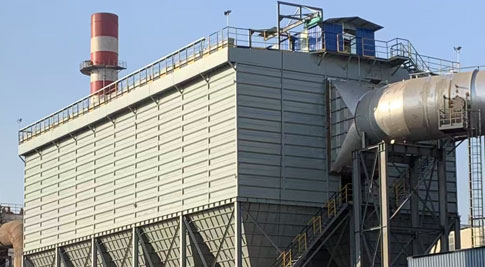
Why Boiler Flue Gas Needs a Purpose-Built Dust Control System
Coal-fired boilers and thermal power plants push enormous volumes of hot flue gas through the stack every hour. The particulate load in that gas changes with fuel quality, combustion stability and load swings. A dust removal unit in this setting has to capture fine particles reliably, keep pressure drop under control and keep running for long periods without constant manual attention. Engineers evaluating equipment for this duty rarely look for a general-purpose solution. They want to know how the unit behaves at their gas temperature, how it handles their specific dust and what it will cost to operate over a ten-year life.
A dust collector built on a plenum pulse baghouse design can meet these demands when it is sized and configured for the specific boiler. This article walks through the operating conditions, design choices and selection logic that determine whether a baghouse performs as intended, so that buyers can compare proposals on technical grounds rather than on headline claims.
High gas volumeElevated temperatureContinuous duty
How a Plenum Pulse Baghouse Works
A baghouse, also known as a bag filter in many specifications, removes particulate by passing dirty gas through rows of fabric filter bags. Dust is captured on the outer surface of each bag, and clean gas passes through the fabric and exits through the top of the housing. As the dust cake thickens, resistance to flow rises, so the system must remove the cake periodically without interrupting gas flow to the boiler.
In a plenum pulse design, a shared compressed-air chamber, called the plenum, sits above the bag rows and feeds a pulse valve for each row or group of bags. When a valve opens, a short burst of air flexes the bag and knocks the dust cake loose into the ash hopper below. Because all valves draw from one common chamber, pressure is more even across the full filter area, and valves and bag tops are easier to reach during inspection.
The illustration above shows the main gas path. Dirty gas enters at the bottom, passes through the bag rows from outside to inside, and leaves the top as clean gas. Dust released by each pulse falls into the hopper for discharge.
Plenum Pulse Versus Standard Pulse Jet
Feature
Plenum pulse
Standard pulse jet
Cleaning air distribution
One shared chamber feeds all valves
Separate air lines or tanks per row
Typical gas volume range
Large, high-volume duty
Small to medium duty
Pressure uniformity
Consistent across rows
Can vary with row length
Inspection access
Valves and bag tops reachable from the top
Depends on layout and housing design
The practical difference is scale. A standard pulse arrangement works well for modest flows, but as the gas volume climbs into the range typical of utility boilers, a common plenum keeps cleaning energy more uniform and simplifies valve maintenance.
Operating Conditions That Shape the Design
Before any model or bag material is chosen, the design team needs an accurate picture of the operating conditions. Most performance problems in the field trace back to a mismatch between the design basis and the real flue gas, so the following inputs deserve careful attention.
Gas volume and temperature: Designers should use the maximum continuous flow, not the average. Many projects add a margin of roughly 10 to 15 percent to cover peak load and future upgrades.
Dust loading and particle size: Inlet concentration and the size distribution of fine particles determine the filtration area, cleaning frequency and final emission levels.
Moisture and acid dew point: If flue gas cools below its acid dew point, condensation can blind the fabric and corrode the housing. Insulation and temperature control are essential in these cases.
Fuel sulfur and chlorine content: These components influence corrosion risk and the chemical resistance required from the filter media.
Load variation: Boilers rarely run at a single steady load. The design must handle start-up, turndown and transient conditions without bag damage.
Gathering these inputs early avoids expensive redesign later. A supplier who asks detailed questions about fuel analysis and gas temperature profiles is usually taking the design seriously, which is a good sign when comparing proposals.
Choosing Filter Media for Temperature and Chemistry
The filter bag is the component that most directly determines how long the system will perform well. Its material must withstand the gas temperature without shrinking or degrading, resist the chemical environment and maintain its filtration efficiency over thousands of cleaning cycles.
Common Media Options
Media type
Typical continuous limit
Main strength
Key watch-out
Polyphenylene sulfide felt
About 190 degrees Celsius
Good chemical resistance at moderate cost
Limited under strong oxidizing conditions
Polyimide felt
About 240 degrees Celsius
Strong performance at higher temperatures
Sensitive to moisture and hydrolysis
PTFE membrane laminate
About 260 degrees Celsius
Very low emissions and easy cleaning
Higher material cost
Coated glass fiber
About 260 degrees Celsius
Excellent heat tolerance
Brittle if flexed; sensitive to acid attack
Felt media captures dust deep within its structure and is widely used for general boiler duty. Membrane laminates place a thin expanded PTFE layer on the surface, so dust stays on the outside and releases more easily during pulse cleaning. This often lowers pressure drop and can help reach stricter emission targets, although the higher material cost must be justified over the life of the bags.
A useful rule in specification work is to choose media for the worst realistic condition rather than the normal one. Short excursions above the rated temperature can shorten bag life far more than the average temperature suggests.
Pulse Cleaning System and Compressed Air Requirements
The pulse cleaning system is the heartbeat of a baghouse. Its job is to remove dust cake effectively while avoiding excessive flexing that wears the fabric. Three elements control how well it works: the pulse pressure, the pulse timing and the quality of the compressed air.
Pulse pressure: Typical systems operate in the range of 0.4 to 0.6 MPa at the header, with valve sizing matched to the bag diameter and length.
Pulse control: Many installations trigger cleaning based on differential pressure across the filter, so cleaning occurs only when the resistance reaches a set point rather than on a fixed timer.
Air quality: The compressed air should be dry and clean. Moisture in the air supply can cake dust onto the bags and reduce valve reliability.
Operators should also plan for compressor capacity. A system that cleans frequently will consume more compressed air, which carries an ongoing energy cost. Matching cleaning intervals to actual dust loading usually produces the best balance between bag life and operating expense.
Applications in Power and Thermal Plants
Baghouse technology serves a wide range of boiler applications. Each sector places different demands on the design, but the core principle of fabric filtration remains the same.
Coal-Fired Boiler Flue Gas
Coal combustion produces a high dust load with a significant fraction of fine particles. Fabric filtration is often preferred for these units because it captures fine particles efficiently across a broad range of conditions. Electrostatic precipitators remain common in many plants, but tightening emission limits and changing fuel quality have pushed many operators toward fabric filtration or hybrid arrangements.
Biomass and Mixed-Fuel Units
Biomass fuels bring different challenges, including higher alkali content, variable moisture and sticky ash. These properties affect bag blinding and corrosion risk. Designers typically select media with appropriate chemical resistance and set cleaning parameters conservatively during the first operating period, then refine them using real performance data.
Retrofit and Ultra-Low Emission Upgrades
Many plants are upgrading existing equipment to meet stricter limits. A retrofit may replace an aging dust removal unit within the existing footprint or expand capacity to handle additional gas flow. Retrofit projects demand careful measurement of the existing ductwork, fan capacity and temperature profile, because small layout changes can have large effects on performance.
The chart illustrates how concentration targets have fallen over time. Each step down requires more filtration area, better sealing and tighter control of cleaning, which is why early engineering decisions matter so much for compliance.
How to Select the Right Configuration for a Boiler
Selection works best as a sequence. Each decision narrows the options and makes the next one easier. The four steps below provide a practical framework for specification work.
Determine gas volume and temperature. Work backward from boiler capacity, fuel type and load profile to establish the design flow and the highest temperature the filter will see.
Choose the filter media. Match the bag material to temperature, chemical environment and abrasion. Confirm that the selected media remains stable under the worst realistic conditions.
Configure the pulse cleaning system. Define cleaning pressure, valve count, pulse interval logic and compressed air capacity based on the expected dust load.
Plan for maintenance and bag replacement. Estimate bag life, spare parts strategy and access requirements so that the unit can be serviced during planned outages.
When preparing a specification, the most useful information to share with a supplier includes the boiler capacity, fuel analysis, flue gas temperature range, dust loading and target emission limit. With these details, a supplier can propose a configuration that reflects real conditions. Engineers comparing offers can also refer to general guidance on dust collection equipment to confirm that each proposal addresses the same design basis.
Maintenance, Bag Life and Operating Cost
Total cost of ownership is often more important than purchase price. For a large boiler installation, the largest recurring costs usually come from bag replacement, compressed air consumption and fan power needed to overcome filter resistance. Understanding how each factor behaves allows operators to plan budgets and schedules with greater confidence.
Cost driver
Typical influence
What to monitor
Bag replacement
Largest recurring expense
Bag life trend and failure pattern
Compressed air
Ongoing energy cost
Pulse frequency and valve leakage
Pressure drop
Fan power demand
Differential pressure trend over time
Hopper and discharge
Reliability of ash handling
Seal condition and discharge blockage
Bag life commonly ranges over several years, but it depends heavily on temperature control, cleaning settings and the presence of acid or moisture. A steady rise in differential pressure often signals blinding, while an abrupt drop can point to torn bags. Trend data from the control system is one of the most valuable diagnostic tools available to operators.
Planned inspection during outages is another key practice. Checking tube sheets, gaskets, hopper seals and valve diaphragms allows small problems to be corrected before they become emission events or unplanned shutdowns.
Quality, Standards and Verification
Industrial buyers reasonably expect proof that a dust removal system will perform as specified. The most credible suppliers demonstrate this through documented quality management, recognized standards and verifiable performance data.
Quality management: Certification to ISO 9001 indicates a documented process for design, fabrication and inspection.
Conformity marking: CE marking may apply for projects in regions that require it, and buyers should confirm which conformity requirements their project needs.
Performance verification: Emission testing, leak checks and pressure drop measurements should be defined in the contract, with clear acceptance criteria.
Material traceability: Filter media and structural steel should be supplied with certificates that match the specified grades.
Field experience from numerous boiler retrofit and new-build projects consistently shows that the most reliable installations are those where the design basis was documented in detail and verified during commissioning.
Frequently Asked Questions
Q1: What is the maximum flue gas temperature a pulse baghouse can handle?
The answer depends on the filter media. Felt materials such as polyphenylene sulfide typically operate continuously around 190 degrees Celsius, while higher-temperature felts and membrane laminates can reach roughly 240 to 260 degrees Celsius. Short peaks above the rated limit should be designed for separately.
Q2: How often do filter bags need replacement?
Bag life varies with temperature, chemistry, cleaning settings and dust characteristics. Many well-operated systems run for several years before replacement, but a rising differential pressure trend or increased emissions are the best indicators that bags need attention.
Q3: Can a pulse baghouse meet ultra-low emission standards?
Yes, when the filter media, filtration area and cleaning system are designed for the target concentration. Membrane media, proper sealing and accurate control of cleaning cycles are typically needed to achieve very low outlet levels consistently.
Q4: What information is needed to prepare a quotation?
A useful quotation requires boiler capacity, fuel type, flue gas flow and temperature range, dust loading, target emission limit and site layout constraints. Fuel analysis, including sulfur and chlorine content, helps the supplier recommend suitable media.
Q5: Is installation and commissioning support available?
Support typically includes installation supervision, start-up assistance and operator training. Buyers should confirm the scope of commissioning in the contract, including performance testing and handover documentation.



 English
 Français
 عربى
عربى 简体中文
简体中文