English
 Français
 عربى
عربى 简体中文
简体中文


Industrial Bag Filter Dust Collectors: Selection, Sizing, and Maintenance Guide
HOME / NEWS / Industry News / Industrial Bag Filter Dust Collectors: Selection, Sizing, and Maintenance Guide
 By Admin
Content
A sinter plant's off-gas line does not announce a baghouse problem politely. First the differential pressure creeps above 1.8 kPa, then the fan speed climbs to hold process draft, and finally the stack opacity reading starts to spike during pulse cleaning. By the time the outlet emission alarm sounds, bags that should have lasted four years are already on an emergency replacement schedule. The equipment at the center of this scenario (the industrial bag filter dust collector) is one of the most dependable, and one of the most commonly mis-specified, pieces of air pollution control hardware in heavy industry.
An industrial bag filter dust collector is a dry particulate control system that removes dust from process or exhaust gas by passing it through fabric filter bags. With correct specification it holds outlet emissions below 10 mg/Nm3 at collection efficiency above 99.9%. Whether a plant gets five smooth years or five years of repeated trouble depends on cleaning system selection, conservative sizing, filter media chemistry, and disciplined commissioning.
Core definition: An industrial bag filter dust collector (baghouse) passes dust-laden gas through woven or felted bags. Particles are captured on the bag surface as a dust cake, and the cake is periodically dislodged into a hopper by compressed air or mechanical action. The cake, not the fabric alone, is the true filtration layer.
Filtration happens in five predictable stages, and the same physics governs every baghouse once the gas enters the housing. A closer look at working plants in this field review of baghouse operation shows the same principles holding across different industries.
Dust-laden gas enters through the hopper inlet, where the abrupt velocity drop lets coarse particles fall out by gravity.
Fine particles are carried upward and deposited on the outside of the bags as the gas passes through the fabric.
A dust cake forms on the fabric; once it stabilizes, even submicron particles are captured with near-total efficiency.
Cleaned gas moves through the bag mouths into the clean-air plenum and exits through the outlet stack.
At a differential-pressure setpoint (normally 1.0-1.5 kPa), the cleaning system pulses, flexes the bags, and drops the cake into the hopper.
Each stage is a point of failure if mismanaged. A flooded hopper re-entrains coarse dust, an over-pulsed bag never forms a stable cake, and a plugged clean-air plenum blocks flow long before the bags fail. The twin advantages of the baghouse (high efficiency at any scale and tolerance to variable dust loads) materialize only when all five stages stay in balance.
Pulse-jet cleaning is the default first choice for continuous industrial processes because it cleans bags on-line with compressed air and holds pressure drop constant without shutting down any compartment. The three other cleaning mechanisms remain commercially important for specific conditions, and each has a distinct maintenance signature.
| Cleaning mechanism | Cleaning energy | Mode | Best suited for | Maintenance focus |
| Low-pressure pulse-jet | Compressed air, 0.2-0.4 MPa | On-line | High-volume, 24/7 processes | Dry oil-free air, pulse valves |
| Rotary jet | Compressed air via rotating manifold | On-line | Very large bags, continuous duty | Drive seal, manifold rotation |
| Mechanical vibration | Motor-driven shaker | Off-line | Light, non-adhesive dust | Moving parts, bag tension |
| Negative-pressure back-blowing | Low-pressure reverse fan | Off-line | High-temperature woven fabrics | Damper controls, extra bag area |
Low-pressure pulse-jet units cover the majority of cement, steel, and chemical applications, and specifying them with a conservative air-to-cloth ratio usually delivers years of trouble-free service. Rotary jet designs reduce compressed-air consumption on bag lengths above six meters and are worth evaluating for very large collectors.
Anhui Tiankang Environmental Technology Co., Ltd. builds all four configurations, and its baghouse product range includes pulse-jet units sized for the continuous-duty conditions typical of steel and cement plants.
Selection rule: if the process runs continuously and the dust is dry, choose pulse-jet. If gas temperature stays above 200 °C and a woven glass or aramid fabric is required, reverse-air provides the gentlest cleaning and avoids mechanical stress on brittle media.
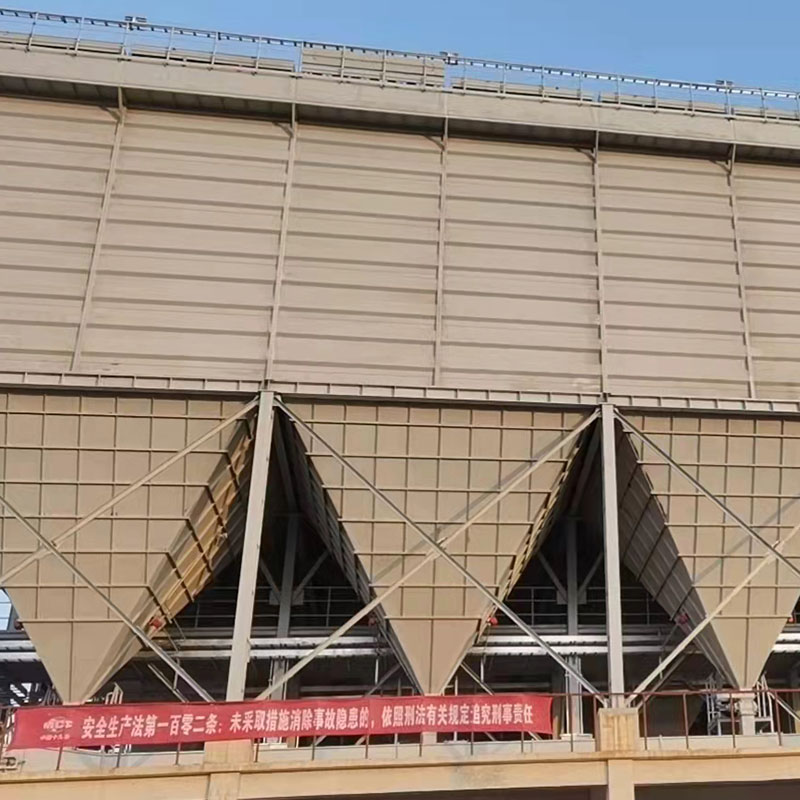 Low-Pressure Pulse Jet Bag Dust Collector for Emission ComplianceThis collector suits continuous dry-dust processes where pulse-jet cleaning is preferred. It handles large gas volumes and keeps outlet emissions below 8 mg/Nm³, making it relevant when selecting fabric area based on air-to-cloth ratio.View Product →
 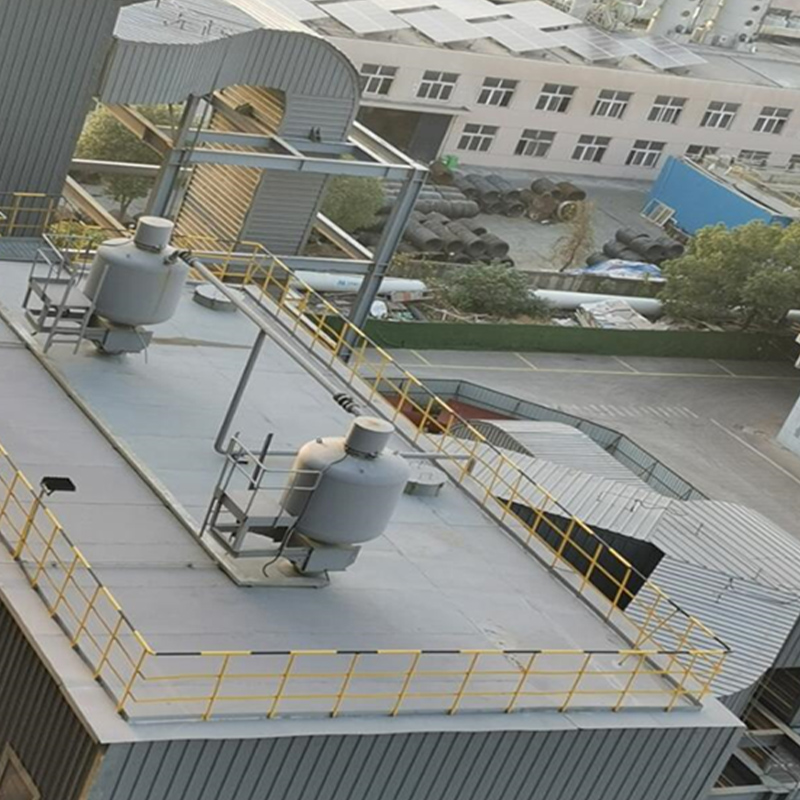 Rotary Jet Cleaning Bag Dust Collector for High Dust LoadsDesigned with rotating blow arms and elliptical bags, this unit excels at high dust concentrations, such as after lime semi-dry desulfurization. It operates at low pressure and suits flue gas temperatures of 120–250°C, aligning with the selection rule for pulse-jet systems.View Product →
The most common cause of premature bag failure and emission non-compliance is an air-to-cloth ratio that ignores the actual particle size, moisture content, and gas temperature of the stream. The air-to-cloth ratio (A/C) is the volumetric gas flow divided by the total fabric area, and in a pulse-jet unit it normally lands between 0.8 and 1.8 m/min depending on dust fineness.
Typical conservative filtration velocities for pulse-jet units
Design values in m/min for new pulse-jet baghouses; verify each number against media supplier data for your specific dust.
Filtration velocity is the single number that most directly controls pressure drop, bag life, and emission stability. Running a fine fume at a velocity meant for coarse wood dust can double the pressure drop within a year, because the dust cake compresses faster than the pulse can detach it.
Sizing rule of thumb: for dust with a mass median diameter below 10 micron, or any moisture risk, start at the conservative end of the range and add 10-15% more bag area. Extra fabric costs a fraction of the price of one failed compliance test.
Media selection, more than the baghouse brand, decides whether a bag lasts 18 months or six years. The governing factors are temperature, gas chemistry, moisture level, and the abrasiveness of the dust.
Polyester (PET) felt: up to 135 °C continuous, the low-cost standard for dry, non-acidic dust.
Acrylic (PAN): up to 140 °C, tolerates moisture and mild acid, suits waste incineration and dryer exhausts.
PPS: up to 190 °C, resists sulfur oxides, the default for coal-fired boiler ash.
P84: up to 240 °C, strong on fine particulates, sensitive to hydrolysis.
PTFE membrane laminates: highest efficiency, lowest pressure drop, 260 °C limit, highest cost.
Replacement filter bags must match not only the fabric chemistry but also the original dimensions, seam construction, and collar gasket. A 5 mm deviation in bag length can cause bag-hugging, premature abrasion, or a poor seal at the tube sheet.
The economics favor the right mid-price media: a bag that costs 30% more but lasts twice as long cuts per-year bag cost by about 35% and halves the outage labor spent on change-outs.
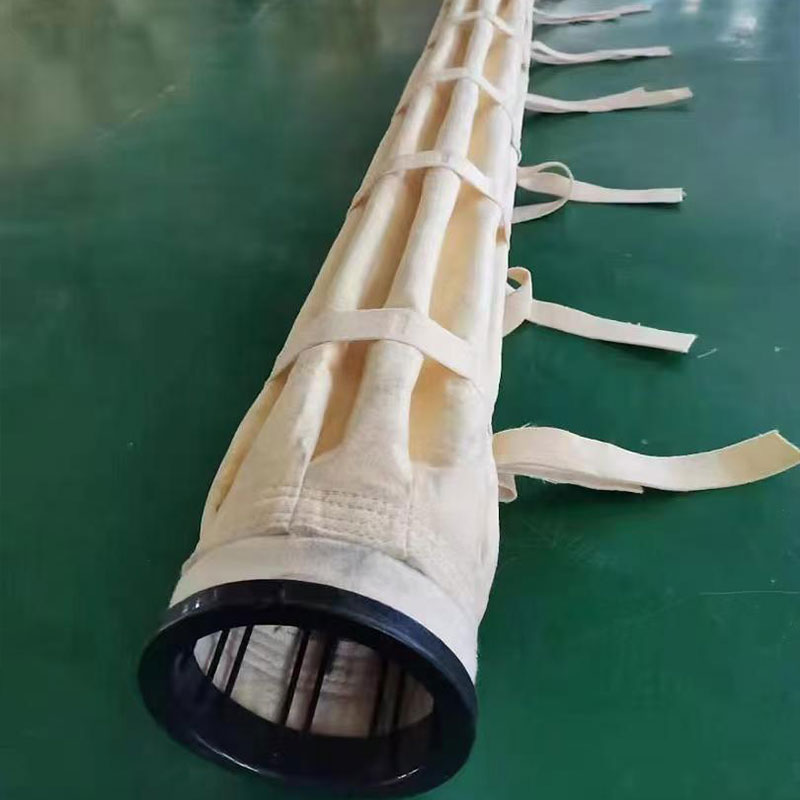 Custom Dust Bag from Tiankang Environmental TechnologyTiankang manufactures diverse filter bags tailored to various industries, emphasizing durability to reduce replacement frequency. Proper startup and pre-coating affect bag life, so selecting the right media here helps avoid premature failures and lowers annual bag costs.View Product →
The first 48 hours of operation determine whether a bag set lasts three years or six. Most premature failures begin with startup mistakes (rapid heating, no pre-coat, over-pulsing from the first hour) rather than with steady-state wear.
Maintenance reality: plants that track differential pressure weekly and inspect bags twice a year consistently report bag service life two to three times longer than plants that react only to alarms. The cleaning controller and the differential pressure transmitter deserve the same attention as the bags themselves.
An industrial bag filter dust collector is a dry particulate control system that filters dust-laden gas through fabric bags, achieving collection efficiency above 99.9% and outlet emissions typically below 10 mg/Nm3. It is the most widely used technology for high-volume dust control in steel, cement, foundry, and chemical plants.
For most dry industrial dusts, design between 1.0 and 1.5 m/min. Fine fume, high moisture, or sticky dust calls for 0.8-1.0 m/min, while coarse dust such as sander dust can run up to 1.8 m/min. A conservative ratio protects emissions compliance and bag life.
With correct media chemistry and a stable cleaning cycle, bags commonly last 3-6 years in continuous duty. The factors that shorten life are over-pulsing, condensation, temperature spikes, abrasive dust, and poor gas distribution at the inlet.
Conditionally. Bags work if the gas stays above its dew point, the hopper and ductwork are insulated and traced, the cleaning energy is sufficient, and the media surface is treated to reduce adhesion. If condensation is unavoidable, a wet dust collector or a membrane-coated bag with stronger pulse settings is the safer route.
Final specification tip: put the guaranteed outlet emission, maximum differential pressure, and bag warranty in writing in the tender document. Verbal assurances are not enforceable at commissioning.