English
 Français
 عربى
عربى 简体中文
简体中文


Converter Secondary Flue Gas Dust Control: Off-line Pulse Baghouse Selection & Price Guide
HOME / NEWS / Industry News / Converter Secondary Flue Gas Dust Control: Off-line Pulse Baghouse Selection & Price Guide
 By Admin
Content
Industrial dust rarely becomes a crisis overnight. A grinding station, a packing line, or a material transfer point can run for years with an undersized or aging dust collector, and the warning signs are easy to dismiss: a film of fine powder on overhead beams, a fan that sounds louder than it did last year, or filters that need changing a little sooner each season. Most facilities only take a serious look at their filtration equipment after an inspection notice, a neighbor's complaint, or a production bottleneck caused by clogged media.
The underlying problem is rarely a single failure. More often, it is a gap between how a plant has changed and how its dust control system was originally designed. Production rates increase, new materials are introduced, extra shifts are added, and the collector is asked to handle more air and finer particles than its specification ever considered. Because the system still appears to work, the gap grows quietly until an audit or an operator complaint exposes it.
A well-chosen dust collector addresses three goals at once: keeping particulate out of the workplace, protecting downstream equipment from abrasive buildup, and recovering material that has commercial value. Achieving all three depends on matching the collector type, filter media, and cleaning method to the actual dust and airflow conditions rather than to a generic catalog description.
In a cartridge design, dust-laden air enters the housing and passes through pleated cylindrical elements that trap particles on their outer surface. Clean air moves through the media core and exits through the outlet plenum. The pleated geometry packs a large filtration area into a compact footprint, which is why cartridge units are common in facilities where floor space is limited.
The operating cycle that keeps the system running has four stages:
Dirty air enters the inlet section, where heavier particles drop out before reaching the filter.
Fine dust is captured on the outer surface of each cartridge as air flows through the pleats.
When pressure drop reaches a set threshold, a timed burst of compressed air lifts the dust cake off the media.
Dislodged dust falls into the hopper and is removed by an airlock or screw conveyor for disposal or reuse.
Many operators think of the cartridge filter as a passive element, but its performance depends heavily on how well each cleaning cycle restores surface permeability. A system that cleans too rarely lets the dust cake grow thick and raises resistance, while one that cleans too aggressively can damage media and shorten its life. Tuning the pulse interval and pulse duration is therefore one of the most important commissioning tasks.
Both designs are fabric filters, and both can meet strict emission limits when they are properly specified. The differences lie mainly in footprint, cleaning behavior, and the labor required for filter replacement. The comparison below summarizes the practical trade-offs that most plant engineers weigh.
| Factor | Cartridge Design | Traditional Bag Design |
|---|---|---|
| Filtration area per footprint | High, due to pleated media | Moderate, depends on bag count |
| Filter replacement | Whole cartridge swap, often from one side | Individual bag removal, more labor |
| Common cleaning method | Pulse jet | Pulse, reverse air, or shaker |
| Best fit | Compact plants and fine dust | Very high temperatures or very large volumes |
| Dependence on media selection | Very high | High |
Neither design is universally superior. Cartridges usually win where space is tight and particles are fine, while bag systems remain attractive for hot gas streams and very large air volumes where proven, simple hardware matters most.
Media selection is where many projects succeed or fail. The filter fabric determines capture efficiency, pressure drop, cleaning response, and service life, so it should be chosen from the dust and gas characteristics rather than from habit.
Membrane-laminated media carries a thin fluoropolymer layer on its surface. Dust collects on top of the membrane rather than penetrating the fabric, so it releases more readily during pulse cleaning. This keeps pressure drop stable over long periods and provides strong capture of fine particles, including those in the submicron range. The trade-offs are higher material cost and the need to protect the membrane from abrasive dust, installation damage, and sticky particles that can smear across its surface.
Polyester is an economical choice for moderate temperatures and dry dust. Polyphenylene sulfide handles higher temperatures and many chemical environments, while aramid fibers offer strong heat resistance for hot gas streams. Each fiber has its own temperature ceiling, hydrolysis behavior, and chemical tolerance, so the operating envelope should be checked against the worst conditions the plant will experience, not only the normal running profile.
Surface finishes that repel oil and water help when dust is hygroscopic, oily, or generated by wet processes. Treatments reduce the tendency of particles to bond to fibers and improve release during cleaning. They do not compensate for condensation inside the housing, so insulation, heat tracing, and temperature margin still matter.
Media selection should begin with the dust itself. Temperature, moisture, chemical composition, and particle size distribution usually determine the outcome far more than any single product feature.
Before choosing media, the following inputs should be documented:
Gas temperature during normal operation and during process upsets
Moisture content and the margin above the dew point
Dust chemistry, including acidic, alkaline, and oily residues
Particle size distribution and abrasiveness
Required outlet concentration and the applicable regulatory basis
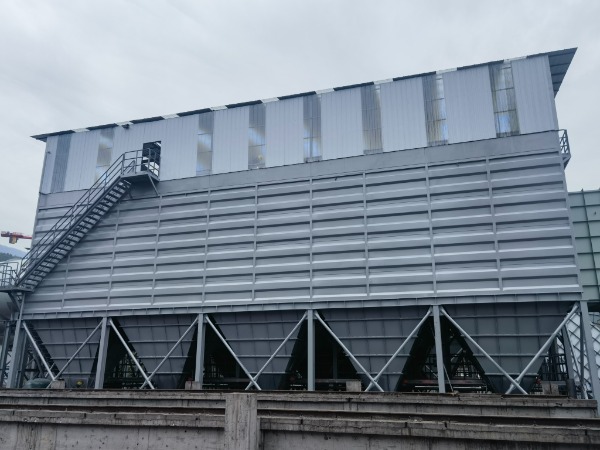
Sizing starts with the volumetric flow rate and the filtration velocity that the media can sustain over time. Filtration velocity, often called the air-to-cloth ratio, describes how many meters of air pass through each square meter of media per minute. Lower velocities reduce the load on each cartridge and generally extend life, but they also increase the required filter area and the physical size of the collector. Designers balance these factors against budget and available space.
Real plants rarely operate at a single steady condition. Sizing should consider peak production, planned expansion, and periods when a hood or duct section is partially open. Undersizing the collector for the worst case is one of the most common causes of chronic high emissions, because the system is forced to run above its design velocity.
Pressure drop is the resistance a collector imposes on the fan system. It rises as the dust cake builds and falls after each cleaning pulse. The average resistance across a cycle is what drives fan energy, so the cleaning strategy has a direct effect on electricity consumption. A collector cleaned at the right intervals can operate with a lower average pressure drop than one allowed to load heavily and then cleaned hard.
Fan power and filter life are closely linked. Reducing resistance saves energy every hour the system runs, but only if the media and cleaning settings still control emissions. Operators who focus solely on energy sometimes discover later that a small saving has cost them shorter cartridge life.
Practical levers for better energy performance include:
Selecting media with low initial resistance and stable release behavior
Tuning pulse pressure and interval using measured differential pressure trends
Repairing leaks in ductwork and housings before increasing fan speed
Verifying that inlet hoods capture at design velocity rather than drawing excess air
Good maintenance is mostly a matter of consistency, and nowhere is that more visible than in the timing of pulse cleaning. Most early cartridge failures trace back to preventable conditions rather than to defects in the media itself. A simple routine catches these conditions before they become expensive.
Record differential pressure daily and compare it with the commissioning baseline.
Inspect the compressed air supply for moisture and oil, which can blind the media and damage cartridges.
Check pulse valve timing and diaphragm condition at scheduled intervals.
Verify hopper discharge so that collected dust does not rebound into the clean side.
Replace cartridges as a complete set when performance falls across a section, which keeps airflow distribution even.
Keep a log of replacement dates, pressure readings, and emission results. Over several cycles, this record reveals whether a recurring problem lies in the media, the cleaning system, or the process upstream.
The following examples are anonymized but reflect operating outcomes commonly reported in similar applications.
A metal casting facility struggled with visible emissions from its charging and tapping areas. The original collector had been sized for an earlier production schedule. After the plant added shifts, the system ran close to its velocity limit, and filters clogged within two months. A retrofit with a larger cartridge bank, membrane media rated for the gas temperature, and a revised pulse sequence brought outlet readings well below the local limit and extended change intervals to more than a year.
A furniture manufacturer experienced heavy fine dust carryover from several sanders. Differential pressure rose steadily because the cleaning cycle had been set once and never revisited. After operators adopted a monthly review of pressure trends and adjusted the pulse interval, average resistance dropped by roughly one fifth, and fan current fell accordingly. Visible dust in the production area decreased noticeably within the first week.
At a bagging station, fine powder escaped during filling. The root cause was the hood design rather than the collector itself. Adding a sealed enclosure and correcting inlet velocity allowed a smaller, correctly matched collector to outperform a larger unit that had been capturing poorly.
Most collector problems announce themselves before they become serious. Learning to read these early signals is one of the most cost-effective skills a maintenance team can develop.
Rising pressure drop that does not recover after pulsing, often caused by moisture, oil, or a blinded media surface
Dust leakage on the clean side, usually from a damaged cartridge or a poorly seated gasket
Short cartridge life despite normal airflow, often linked to abrasive dust or incorrect cleaning pressure
Hopper bridging, which stops discharge and causes the dust level to climb
Uneven performance across tube sheet sections, pointing to distribution or pulse valve problems
A thorough specification prevents most of the disputes that arise after commissioning. The following items are worth confirming before equipment is ordered.
Confirm normal and peak gas temperatures, with a safety margin above the highest expected value
Define the required outlet concentration and the regulatory basis for it
Document dust chemistry, moisture content, and particle size distribution
Specify the cleaning method and the compressed air quality available on site
Plan access for cartridge replacement and hopper inspection
Request performance commitments tied to measurable pressure drop and emission results
It is usually a strong option when dust is fine, floor space is limited, and emission limits are tight. Confirm the choice against your dust characteristics and temperature profile before committing.
Replacement timing depends on dust loading, cleaning effectiveness, and media type. Trend pressure drop and emission readings rather than relying on a fixed calendar interval alone.
Sometimes, especially when the existing media is mismatched to the dust or temperature. Often, however, the cleaning system, airflow distribution, or hood design also needs attention.
Common causes include moisture condensation, oily mist in the gas stream, contaminated compressed air, or a failed pulse valve that leaves the dust cake in place.
Not necessarily. More area lowers velocity and usually extends life, but it increases cost and footprint. The best design balances required emission performance against practical operating limits.