English
 Français
 عربى
عربى 简体中文
简体中文


How to Specify a Heavy-Duty Industrial Bag Filter System That Lasts Longer
HOME / NEWS / Industry News / How to Specify a Heavy-Duty Industrial Bag Filter System That Lasts Longer
 By Admin
Content
When a 220 t/h sinter strand's dust collector trips its high-pressure-drop alarm at every second sintering cycle, the standard reflex is to order new bags. When the replacements climb to the same 1,800 Pa ceiling within nine months, the real cause emerges: the unit was undersized from day one. The air-to-cloth ratio runs above 1.6 m/min for a dust load that a heavy-duty system should filter at 1.0–1.2 m/min, and every extra pascal shows up in fan energy. That gap is the usual entry point into evaluating a heavy-duty industrial bag filter system — not a worn part, but a design margin that never existed.
A system quoted at 1.5 m/min gross air-to-cloth ratio instead of 1.2 m/min typically repays its lower initial price within 18–24 months through fan energy and bag replacement costs — at which point the cheaper option has become the expensive one.
A heavy-duty industrial bag filter system must hold outlet dust below 10 mg/Nm³ — in many jurisdictions below 5 mg/Nm³ — while keeping differential pressure stable across the full production cycle, not just at nameplate conditions. This stability is the practical definition of heavy duty: the system absorbs swings in gas flow, temperature, and dust load without leaning on spare fan capacity to mask a deficit.
Gross air-to-cloth ratio is gas flow in cubic metres per minute divided by total installed filter area in square metres. For continuous heavy-duty service, pulse jet baghouses stay between 1.0 and 1.4 m/min gross; abrasive or very fine dusts call for 1.0 or lower. The net ratio must additionally be calculated with one compartment offline for cleaning.
Four input conditions separate heavy duty from light duty: inlet dust load above roughly 10 g/Nm³, gas temperature above 120°C, acid-dew-point constituents, and continuous rather than batch operation. Each raises the required filter area, media grade, or cleaning frequency.
The cleaning mechanism decides how quickly the unit recovers pressure drop and how hard the media is stressed; for continuous heavy-duty service, off-line pulse jet cleaning is the default, while reverse air is reserved for conditions that demand very low media stress.
Off-line cleaning with 4–6 bar compressed air
Sustains gross A/C ratios of 1.0–1.4 m/min
Handles inlet dust loads above 10 g/Nm³
Requires dry, oil-free compressed air
Low-pressure fan air, gentle bag flexing
Usually limited to 0.5–0.8 m/min gross
Needs large filter area and many compartments
Used when media cannot tolerate pulse stress
Mechanical shaker units remain a practical option where compressed air is unavailable. Rotary jet cleaning distributes pulses through a rotating manifold, which cuts the number of pulse valves and simplifies service on very large housings — a real advantage beyond roughly 200,000 m³/h.
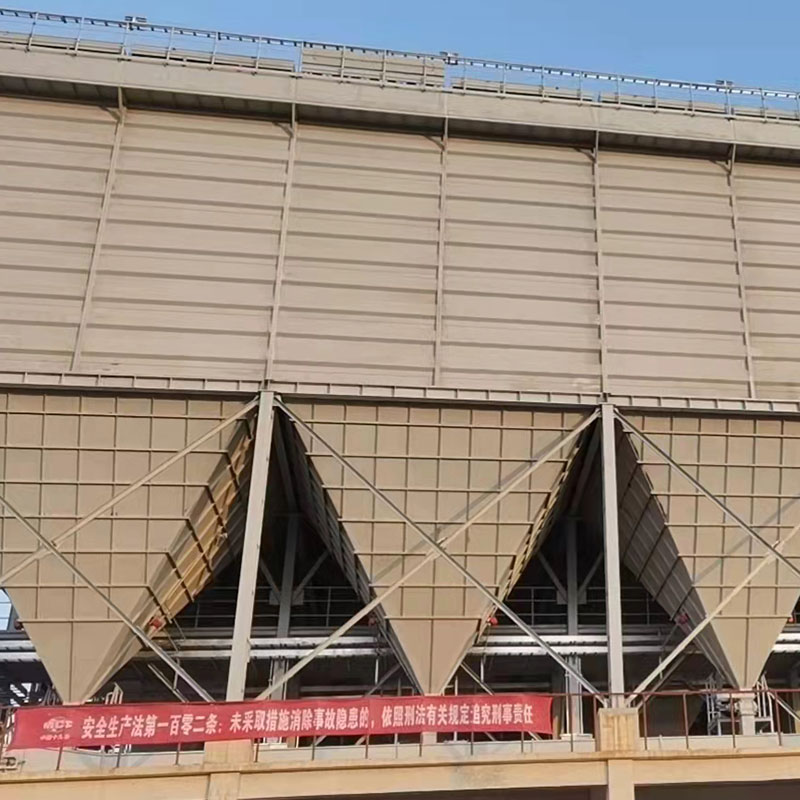 Low-Pressure Pulse Jet Bag Dust Collector for High-Volume FiltrationThis collector uses low-pressure pulse jets to clean filter bags, achieving outlet emissions under 8 mg/Nm³. It suits steel, power, cement, and waste incineration plants with air volumes up to 1.2 million m³/h, making it relevant for large-scale operations considering cleaning efficiency.View Product →
 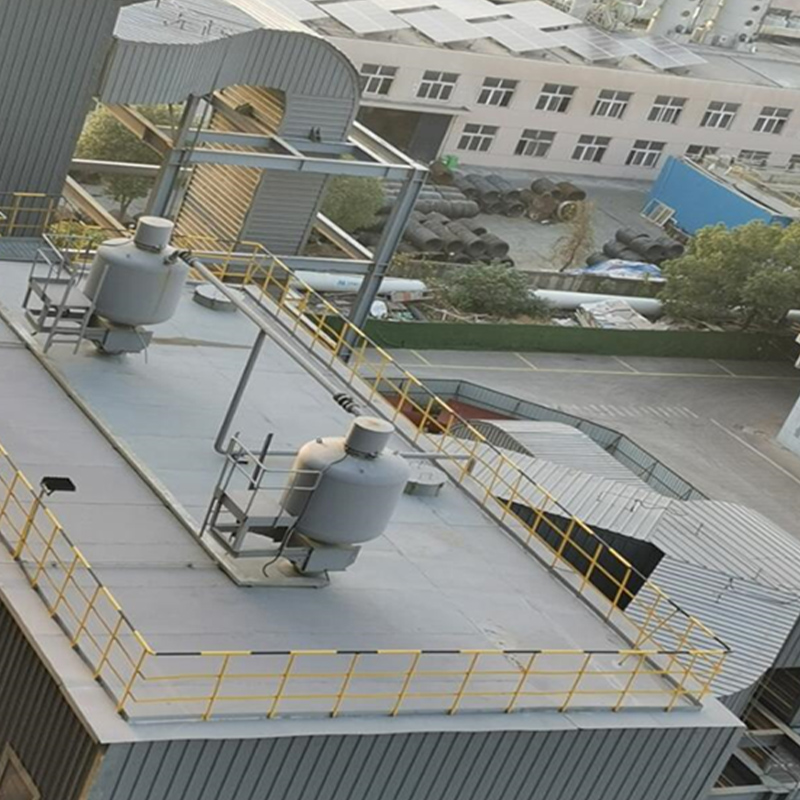 Rotary Jet Cleaning Bag Dust Collector with Low-Pressure High-Flow BlowingFeaturing filter bags arranged in rings around a rotating shaft, this collector uses 0.01 MPa high-flow air to clean bags. It handles high dust concentrations, such as after lime semi-dry desulfurization, and supports air volumes from 200,000 to 1.2 million m³/h, ideal for large plants.View Product →
Isolating one compartment during cleaning lets the dislodged dust cake fall into the hopper instead of being re-captured by neighbouring bags. Online cleaning at high velocity pushes the dust straight back onto adjacent fabric, producing a pressure drop that never fully recovers.
Bag life in heavy-duty service is set by three factors in order: media temperature rating, chemical resistance, and cleaning stress. Get the first two right and a baghouse runs three to four years between bag changes; get them wrong and the same unit fails in six months.
| Media | Continuous temp | Moisture resistance | Acid resistance | Cost index |
| Polyester | 130°C | Fair | Moderate | 1.0 |
| Acrylic | 130°C | Good | Good | 1.3 |
| PPS | 190°C | Excellent | Excellent | 2.0 |
| Meta-aramid | 200°C | Poor | Good | 2.2 |
| P84 | 240°C | Fair | Good | 2.8 |
| PTFE | 250°C | Excellent | Excellent | 4.0 |
The table is a first screen, not a full specification. A sinter or electric-arc-furnace application with sulfur oxides at 150–180°C moves straight to PPS or a PPS/PTFE blend; a cement kiln with spikes above 200°C needs P84 or fiberglass-based media. Polyester is the right economic choice only when gas stays reliably below 130°C and moisture is controlled.
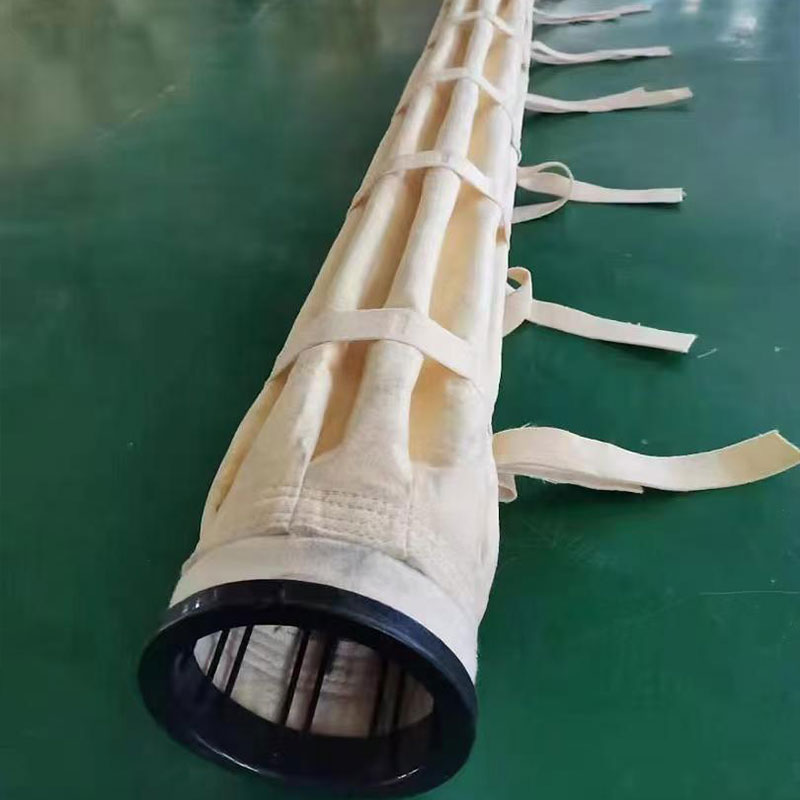 Dust Bag for High-Temperature and Corrosive Gas ApplicationsThis filter bag is selected based on gas temperature and chemistry, with options like PPS, P84, or fiberglass for conditions up to 250°C. The surrounding text emphasizes choosing media that withstands spikes, making this bag critical for cement or steel applications with challenging flue gases.View Product →
Sustained operation 10–15°C above the media rating roughly halves bag service life. Spike duration matters more than spike height: a 30-minute excursion to 180°C is tolerable for PPS; an eight-hour excursion is not.
Demand a design summary that states the net air-to-cloth ratio with the cleaning compartment offline, the can velocity, the inlet dust load, and the guaranteed outlet emission. If the supplier cannot produce these four numbers, the design is not heavy duty.
At 1.2 m/min gross, 100,000 Nm³/h (1,667 Nm³/min) needs 1,389 m² of filter area. Adding 15% for an offline compartment gives about 1,600 m². A 160 mm diameter and 6 m long bag provides 3.0 m², so the housing needs roughly 530 bags — not the 420 a vendor quoting 1.5 m/min would propose. That 100-bag difference is the real margin of a heavy-duty system.
Can velocity — the upward gas speed in the space between bags — should stay below 1.5 m/s for heavy dust loads; above that, fine particles stop settling and re-enter the cake. Pulse pressure should be measured at the header, after the filter regulators, not at the compressor; a 1 bar gap between the two points means undersized piping.
Every 250 Pa of avoidable pressure drop costs roughly 5–8% of fan energy, and bag replacement — not electricity — is normally the largest maintenance line item in a heavy-duty baghouse.
On a 100,000 m³/h system with a fan operating at 1,500 Pa and 60% efficiency, fan draw is about 70 kW. At 1,800 Pa this rises toward 84 kW. Over 8,000 hours a year, 14 kW of extra fan load is a five-figure annual cost before the first bag is changed.
Trend differential pressure and pulse frequency, not single readings
Replace pulse valves when pressurisation time stretches beyond spec
Audit false air at hoppers and inspection doors — every leak raises can velocity
Keep hopper discharge sealed and ash flow continuous
Run a pressure-logging check of each cleaning sequence every quarter
In steel and cement service, a correctly sized system should deliver two to four years of bag life, a differential pressure stable within 10% of design, and pulse consumption below 0.5 Nm³ per 1,000 m³/h. Continuous deterioration in any of the three points to an upstream cause, not to the bags themselves.
A heavy-duty system is engineered for continuous operation at high dust load, elevated temperature, and aggressive chemistry. The practical differences are a lower gross air-to-cloth ratio, media with a higher temperature or chemical rating, and offline cleaning capacity that isolates compartments without stopping production.
Off-line pulse jet cleaning is the best default for heavy duty because it recovers pressure drop quickly while one compartment is isolated. Reverse air is chosen when the media cannot tolerate pulse stress or when cleaning energy per bag must be minimal.
The three usual causes are temperature excursions above the media rating, moisture condensing into the cake and blinding the fabric, and a pulse system delivering too little pressure at the header. A combined pressure and temperature log distinguishes these cases within the first weeks of operation.
Ask for the net air-to-cloth ratio at maximum continuous gas flow with one cleaning compartment offline. In practice this means 10–15% additional area over the gross figure. A supplier that refuses to state both gross and net ratios has not sized the system for heavy duty.
Send the gas flow, temperature, dust load, and target emission limit to an engineering-oriented supplier. A properly engineered heavy-duty system comes back as gross and net air-to-cloth ratios, media selection, and pulse-system design — not as a price per square metre.
Specify the gross and net air-to-cloth ratios, verify the media against actual gas chemistry, and monitor the differential pressure trend. A vendor that will not put those numbers in writing is not selling a heavy-duty industrial bag filter system; it is selling a baghouse you will be upsizing twice in the next decade.
The manufacturers that stand behind turnkey dust-control projects put these numbers in writing before they put a price on paper. Start the review with gas flow, temperature, dust load, and target emission limits — and let the system size follow from the process, not from a budget line.