English
 Français
 عربى
عربى 简体中文
简体中文


Custom Engineered Baghouse Filtration Systems: Design, Selection & Compliance
HOME / NEWS / Industry News / Custom Engineered Baghouse Filtration Systems: Design, Selection & Compliance
 By Admin
Content
A stainless steel foundry replaced its baghouse twice in three years before anyone measured the particle size distribution of the dust. The first unit blinded in 11 months. The second exceeded the local emission limit at half its rated gas flow. The root cause was the same in both cases: the plant bought a catalog baghouse, but the process required a custom engineered baghouse filtration system.
A custom engineered baghouse filtration system is a dust collector in which the filter media, cleaning sequence, can velocity, hopper angle, and inlet baffle geometry are calculated from the actual gas flow and dust chemistry of a single production line. It is not a modified standard machine. It is engineered from the dust backward.
Anhui Tiankang Environmental Technology Co., Ltd., a manufacturer and turnkey contractor with a production base it describes as more than 72 acres, builds equipment this way. Its line runs from low-pressure pulse-jet bag collectors to fume extraction hoods, filter bags, and turnkey dust control projects, so the company treats the baghouse as one link in a wider system.
A custom engineered baghouse filtration system changes three outcomes that show up at the stack and on the electricity bill: emission concentration, fan energy, and bag service life. Each one traces back to a specific design decision.
Emission concentration depends on the filter cake. When the fabric matches the dust's particle size and cohesion, the cake releases cleanly and the outlet stays below 10 mg/Nm³. Fan energy depends on pressure drop; a system engineered around the measured dust load holds the differential in a predictable band. Bag life depends on cleaning intensity; pulse pressure tuned to the real cake can extend bag life from 18 to over 36 months.
For a steel plant, the custom engineered baghouse filtration system is one link in a capture-to-stack chain. The fume extraction hood at a blast furnace taphole or converter front must match the plume momentum; otherwise the baghouse receives cold leak air and condensation risk. Hood geometry and transport velocity are engineered together with the filter, not bolted on afterwards.
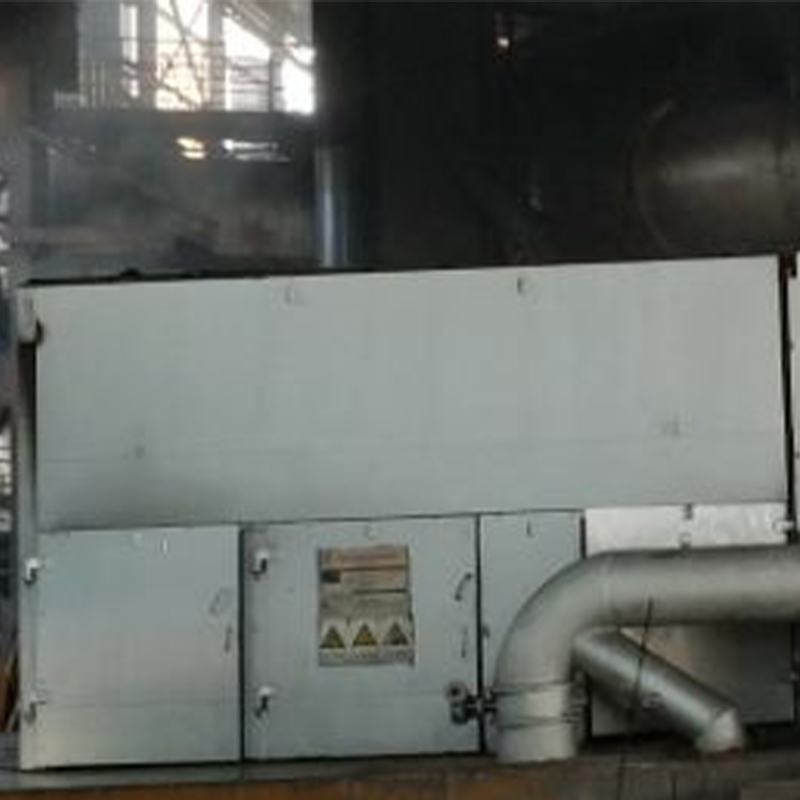 Fully Enclosed Blast Furnace Taphole Capture Hood with Movable DoorThis custom hood encloses the taphole to capture 95% of tapping smoke, withstands molten iron splash, and includes a movable top door for maintenance access without disrupting production.View Product →
The specification of a custom engineered baghouse filtration system is only as accurate as five process measurements. Skipping any one of them forces the designer back to generic assumptions, and that is exactly how catalog-level failures get built into custom-looking equipment.
| Design input | Why it drives the system | How to measure it in the plant |
| Particle size distribution | Sets the media pore size, surface finish, and cleaning interval. Sub-micron fines blind a coarse felt quickly. | Laser diffraction on a fresh process dust sample |
| Inlet dust concentration | Determines net cloth area, hopper volume, and the need for a pre-separator. | Isokinetic sampling in the duct plus a production mass balance |
| Gas temperature profile | Selects fiber chemistry: PPS below 190 °C, PTFE media to 220 °C, fiberglass to 260 °C. | Thermocouple logging over a full production cycle |
| Moisture and dew point | Condensation in the hopper is the leading cause of bag blinding. | Humidity logging at minimum-load conditions |
| Gas and dust chemistry | Acidic or abrasive components set the fabric coating, bag cage material, and housing finish. | Gas analysis and a dust assay from the process line |
A plant that skips the particle size test and orders a standard polyester felt is betting its compliance budget on a guess. The test costs less than one day of baghouse downtime.
Once the five measurements are on the table, the designer works with three levers: filter media, cleaning mechanism, and housing geometry. Each lever directly affects the contract guarantee.
For abrasive dust such as alumina or silica, a singed and glazed polyester felt resists fines penetration better than standard needled felt. For gas with acid components, a PTFE membrane over a fiberglass backing protects both fiber and cake release. Media selection also fixes the cleaning window: a fabric that tolerates 0.2 to 0.5 MPa pulse pressure is a prerequisite for pulse-jet service.
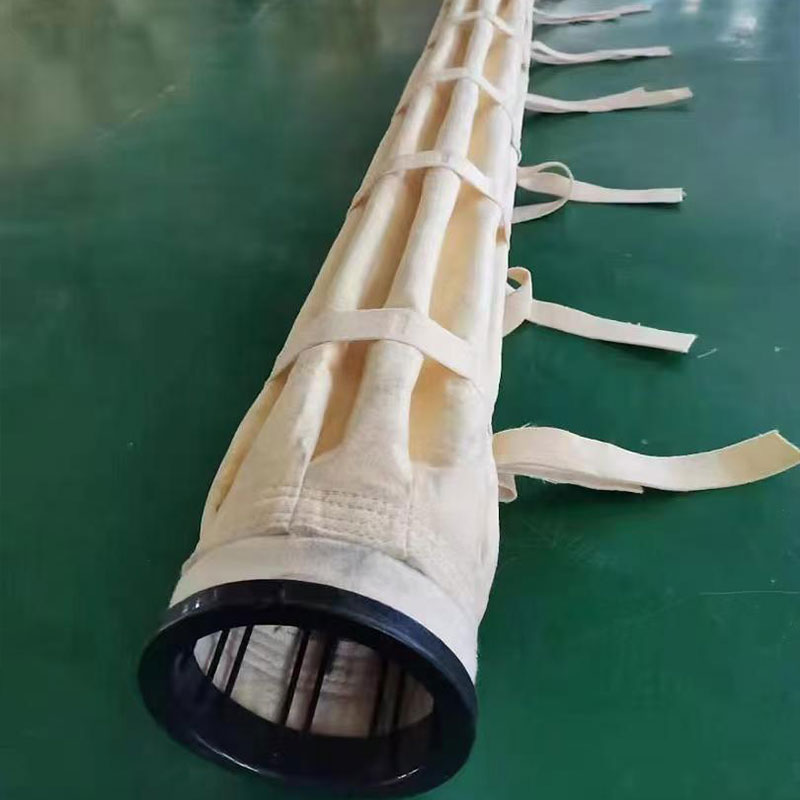 Custom Dust Filter Bags for Pulse-Jet Baghouse SystemsFabric selection for abrasive or acidic gas streams is critical here; the right filter media resists fines penetration and supports effective cleaning, directly affecting pressure drop and emission control.View Product →
The low-pressure pulse-jet mechanism dominates high-load applications because it cleans on line with no moving parts in the gas stream. A custom system calculates pulse pressure, duration, and row sequencing from the measured cake adhesion rather than a preset table. Under-pulsing leaves a dense cake that pushes pressure drop up; over-pulsing drives dust deeper into the fabric.
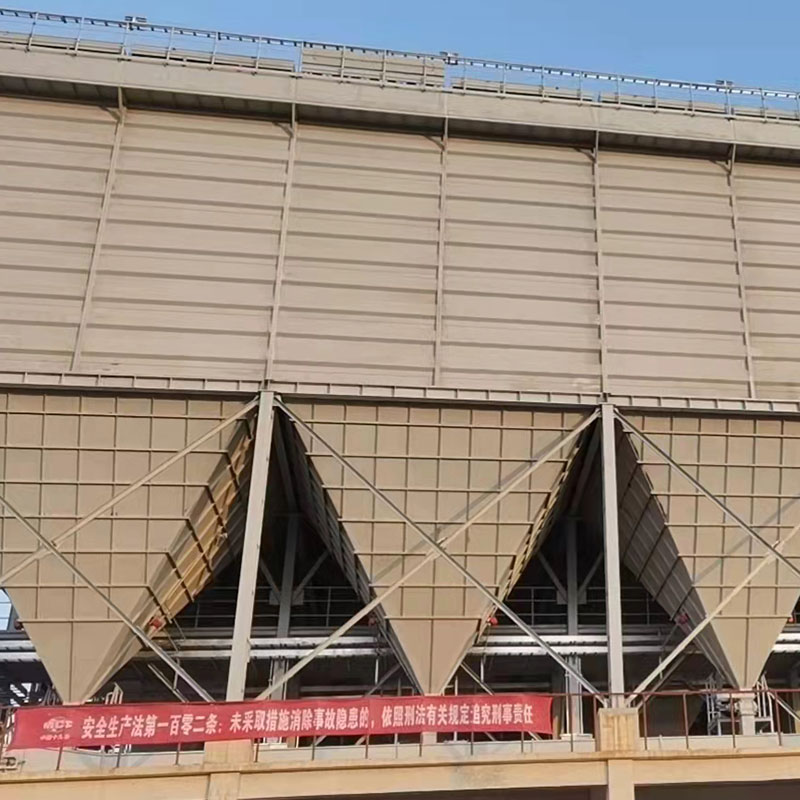 Low-Pressure Pulse-Jet Baghouse Dust Collector for High-Load ApplicationsThis collector uses precise pulse cleaning to maintain low emissions below 8 mg/Nm³, built for steel, power, cement, and waste incineration plants, with custom chamber designs for large gas volumes.View Product →
Can velocity, the upward gas speed between bags, must stay below 1.5 m/min for most fine dusts; above 2 m/min, re-entrainment raises the outlet emission even with new bags. Hopper angle follows the angle of repose: 60 degrees for free-flowing material, 70 degrees or more with vibrators for sticky fines. An inlet baffle is not an option; it keeps the first bag row from being sandblasted.
Each lever has a price, but so does a wrong guess. The 10 to 25 percent custom engineering premium is spent exactly here: fabric grade, pulse tuning, and geometry that keep the baghouse inside its guarantee.
The operating cost of a baghouse is the cost of pushing process gas through a filter cake. Custom engineering controls the thickness and porosity of that cake, and the consequence over two years is visible in Figure 1.
The comparison assumes the same 100,000 m³/h gas flow and inlet dust concentration. The catalog unit runs on a fixed timer and climbs from 1,000 Pa past 2,000 Pa as the cake densifies. The custom engineered system, cleaned by pressure-drop setpoints with matched media, sits near 1,200 Pa. Since fan power is proportional to pressure drop, holding the differential 800 to 900 Pa lower at month 24 means about 30 kW less fan power, roughly 240 MWh saved per 8,000-hour operating year.
Compliance in a custom engineered baghouse filtration system is not achieved at the stack test; it is achieved at the drawing board. The emission limit is converted into a media specification, a can-velocity limit, and a cleaning setpoint before fabrication starts.
For dust classes with explosion risk, engineering extends beyond the filter fabric. Three requirements drive the hardware specification:
a pressure-shock-resistant housing designed for the reduced explosion pressure of the dust class
antistatic filter media with a continuous grounding path through the cage and shell
a venting layout that fits the location: flameless venting indoors, conventional explosion panels on outdoor roofline discharge
In plastic pneumatic conveying, a 304 stainless steel baghouse with ATEX-compliant flameless venting is a common configuration because the system must resist high vacuum and contain ignition at the same time.
Emission guarantees should name a test method: EN 13284-1 or EPA Method 5. A guarantee without a test method is a statement of hope, not an engineering commitment.
A stack test only measures the day it runs. Custom engineering spreads the compliance margin across the load range, which is why a correctly designed pulse-jet baghouse can hold outlet dust below 10 mg/Nm³ while the process fluctuates.
Ten to sixteen weeks from confirmed process data to delivery is realistic for a custom engineered baghouse filtration system, depending on media availability and fabrication load. A standard unit ships in four to six weeks, but without the same performance guarantee.
The premium is usually 10 to 25 percent above a catalog unit. Most of it funds engineering, media selection, and tighter fabrication tolerances. In retrofit projects, the premium is recovered within one bag-change cycle when fan energy, bag life, and downtime are counted.
Yes, if the housing shell is structurally sound. Common retrofits include media matched to the measured dust, pressure-drop-triggered cleaning, an inlet baffle, and hopper heat. Full replacement is needed when the housing cannot take the required pressure class or the can velocity cannot be corrected.
A well-designed pulse-jet baghouse with PTFE membrane media can hold outlet dust below 10 mg/Nm³, and below 5 mg/Nm³ in many services, across normal process fluctuations. The guarantee should be written against a defined stack test method, not the filter area alone.