English
 Français
 عربى
عربى 简体中文
简体中文


How Do Bag Filters Compare to Electrostatic Precipitators for Dust Removal?
HOME / NEWS / Industry News / How Do Bag Filters Compare to Electrostatic Precipitators for Dust Removal?
 By Admin
Content
Dust removal is a critical process in industries such as manufacturing, metallurgy, and mining, where fine particulate matter can pose health risks and equipment damage. Two of the most widely used technologies for dust removal are bag filters and electrostatic precipitators. Both systems have their distinct advantages and limitations depending on the specific needs of an industrial process.
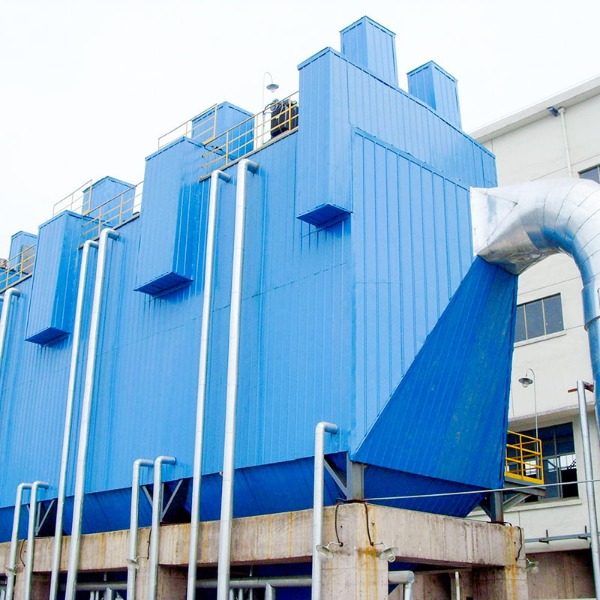
A bag filter is a mechanical filtration system designed to remove dust particles from the air. It consists of a series of fabric bags that collect dust from a gas stream. The filtration process works by trapping particles on the surface of the fabric as air passes through, allowing cleaner air to exit the system. Bag filters are commonly used in various industries such as cement production, metalworking, and chemical processing.
An electrostatic precipitator (ESP) is an air filtration device that uses electrical fields to capture dust and particulate matter from the air. The system charges particles electrically as they pass through an ionization field. The charged particles are then attracted to and collected on grounded plates. ESPs are widely used in power plants, steel mills, and cement plants.
One of the main factors in choosing between a bag filter and an electrostatic precipitator is efficiency and operating parameters. Bag filters are highly effective at capturing fine particulate matter. Electrostatic precipitators also offer very high efficiency but their performance is highly dependent on dust properties like resistivity.
| Factor | Bag Filter | Electrostatic Precipitator |
|---|---|---|
| Particle Size Range | Fine to ultrafine | Fine to coarse (efficient down to 0.01 µm) |
| Typical Removal Efficiency | Up to 99.9%+ | Over 99% (condition dependent) |
| Initial Investment | Moderate | High |
| Operating Energy Consumption | Moderate to High (higher system pressure drop) | Low (low system resistance) |
| Maintenance Core | Periodic bag replacement | Electrical system & rapping mechanism upkeep |
| Key Limitation | Temperature & moisture sensitivity of filter media | Sensitivity to dust resistivity and stickiness |
Each technology excels in specific environments. Bag filters are highly versatile and are used across a wide range of industries, from power plants to food processing. Their ability to handle varying dust types and particle sizes makes them a preferred choice for many industrial applications.
On the other hand, electrostatic precipitators are ideal for large-scale, high-temperature (up to 350-400°C) operations with suitable dust resistivity, particularly in industries like coal-fired power generation or metallurgy, where high volumes of flue gas need to be treated. They offer long service life (10-20 years) without filter media replacement.
The initial investment for an electrostatic precipitator is typically higher due to the cost of the large steel structure and high-voltage power equipment. However, its long-term operational costs can be lower, primarily due to significantly reduced energy consumption and the absence of recurring filter media replacement costs. Bag filters generally have a lower initial cost but incur ongoing costs for compressed air (for cleaning) and periodic bag replacement.
Both systems play a role in reducing industrial pollution, but their environmental impact can vary. Bag filters are highly effective at capturing fine particulates that contribute to air pollution, particularly in environments where strict air quality regulations are in place.
Electrostatic precipitators also offer significant environmental benefits, particularly in reducing airborne particulates from high-temperature sources. Their low energy consumption during operation also contributes to a lower indirect carbon footprint compared to high-pressure-drop systems.
The choice between a bag filter and an electrostatic precipitator depends largely on the nature of the dust (size, resistivity, stickiness), the scale and temperature of the operation, and the specific requirements for initial budget versus long-term operating costs. For industries dealing with varied dust types, lower temperatures, and where maintenance cycles can be managed, bag filters may be the preferred option. For large-scale, high-temperature applications with suitable dust properties where minimizing operational energy use is critical, electrostatic precipitators can be a more efficient solution.
1. What industries benefit most from using bag filters?
Bag filters are widely used in industries like cement manufacturing, metalworking, and chemical processing due to their high efficiency in capturing fine dust particles.
2. Are electrostatic precipitators energy-efficient?
Yes, electrostatic precipitators are highly energy-efficient in operation. They have very low gas flow resistance (100-300 Pa), leading to lower fan energy consumption, which is often only 1/5 to 1/10 of that required by a bag filter system handling the same gas volume.
3. How often do bag filters need maintenance?
Bag filters require regular maintenance to ensure optimal performance, including periodic cleaning and replacement of filter bags.
4. Can electrostatic precipitators capture fine particulate matter?
Yes, electrostatic precipitators are capable of capturing very fine particles, down to 0.01 microns, and can achieve high removal rates for PM2.5. However, their efficiency for the finest particles is more susceptible to the electrical properties (resistivity) of the dust compared to bag filters.
5. Which system is more cost-effective in the long run?
The answer depends on the application. Electrostatic precipitators have a high initial cost but very low operating energy costs and no filter media to replace, favoring them in large, suitable applications over a long lifespan. Bag filters have a lower initial cost but recurring media replacement costs, which may be more economical for smaller systems or where dust properties are unsuitable for ESPs.