English
 Français
 عربى
عربى 简体中文
简体中文


Industrial WET Type Dust Collector: A Comprehensive Solution for Dust and Fume Filtration
HOME / NEWS / Industry News / Industrial WET Type Dust Collector: A Comprehensive Solution for Dust and Fume Filtration
 By Admin
Content
The industrial sector faces increasing challenges in managing air quality, especially in environments where flue gas and dust particles are present in high volumes and moisture content. For many industries, including steel plants, chemical manufacturing, and metal processing, traditional dry-type dust collectors may not be effective in treating dusty flue gas due to high water content. In these cases, the industrial WET type dust collector emerges as a reliable and efficient solution.
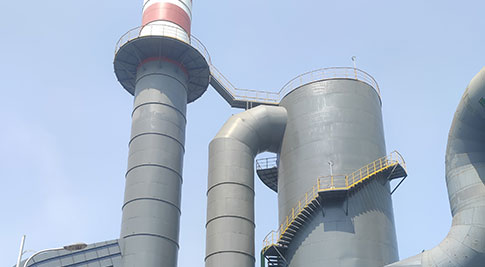
A WET type dust collector is designed to handle flue gases that contain significant amounts of water vapor, making it unsuitable for traditional bag or cartridge dust collectors. The WET dust collector utilizes multi-stage filtration methods, including water film adsorption, water bath flushing, and demisters, to ensure the removal of particulate matter from the gas stream. This not only improves the quality of the air but also reduces the temperature of high-temperature, dusty flue gases.
The working principle behind the WET type dust collector involves a series of filtration steps:
Primary Flushing: The flue gas enters the primary flushing layer, where bubbles are created to remove part of the dust particles.
Water Mist Washing: The flue gas is directed upward, and the particles are removed as they come into contact with a fine mist of water sprayed from nozzles positioned within the collector tower.
Demisting: After the dust removal process, the mist in the flue gas is removed using a demister.
Final Emission: The cleaned flue gas is discharged through the chimney, ensuring that the particulate concentration complies with emission standards.
The WET gravity spray dust collector is one of the most commonly used variations, particularly when dealing with gases that have high moisture content. The spray mist coverage rate generally needs to be greater than 300% to ensure effective dust removal.
WET gravity spray dust collectors employ water as the primary medium for dust removal. As flue gas flows upward through the collector, it passes through several layers of water spray, which effectively captures and removes particulate matter. This design is particularly effective for treating dust-laden flue gases that contain a large amount of water vapor.
These collectors can handle a wide range of dust concentrations, typically up to 100 g/Nm³ at the inlet, with the outlet gas concentrations generally dropping to less than 10 mg/Nm³. The key components of a WET gravity spray dust collector include:
WET gravity spray dust collectors are ideal for environments where flue gases contain a large amount of water vapor, such as in steel slag treatment or dust removal processes in steel plants.
Fume filtration is a critical component of air quality management in industrial settings. Fumes, often containing a mix of gases and fine particulate matter, pose serious health risks to workers and can lead to environmental pollution. WET type dust collectors play a significant role in fume filtration by removing both particulate matter and harmful gases from the exhaust stream.
One of the key benefits of using a WET type dust collector for fume filtration is its ability to effectively treat toxic or hazardous gases. The water bath flushing process helps to reduce the toxicity of the flue gas by washing and cooling it before it is released into the atmosphere. This is particularly beneficial in industries such as metal processing, where toxic gases such as sulfur dioxide and nitrogen oxides are common.
Flue gas cleaning is essential for meeting stringent environmental regulations and ensuring that industrial facilities operate sustainably. WET type dust collectors are particularly well-suited for cleaning flue gases with high moisture content. These systems not only remove dust but also help to reduce the temperature of the flue gas, making it easier to handle and release safely.
In addition to dust removal, WET type dust collectors can also reduce the emissions of harmful gases, such as carbon dioxide (CO₂), sulfur compounds, and nitrogen oxides (NOx), through the use of water to neutralize these pollutants. This makes WET dust collectors an environmentally friendly solution for industries that produce large volumes of flue gas.
1. What is a WET type dust collector?
A WET type dust collector is a filtration system designed to remove particulate matter from flue gases with high moisture content. It uses multi-stage filtration, including water film adsorption and water mist washing, to ensure effective dust removal.
2. How does a WET gravity spray dust collector work?
A WET gravity spray dust collector works by spraying water mist onto the flue gas, capturing the dust particles. The cleaned gas is then passed through a demister to remove excess moisture before being discharged.
3. What industries benefit from using WET type dust collectors?
Industries such as steel manufacturing, chemical production, power generation, cement production, and mining benefit from using WET type dust collectors to control dust and fume emissions.
4. Can WET type dust collectors handle toxic gases?
Yes, WET type dust collectors are effective in reducing the toxicity of flue gases by washing and cooling the gases, which is especially useful in industries that deal with hazardous materials.
5. What is the typical dust concentration for WET type dust collectors?
WET type dust collectors typically handle inlet dust concentrations up to 100 g/Nm³, with the outlet concentration usually less than 10 mg/Nm³.