English
 Français
 عربى
عربى 简体中文
简体中文


How Do You Choose the Right Industrial Dust Collector for Your Facility?
HOME / NEWS / Industry News / How Do You Choose the Right Industrial Dust Collector for Your Facility?
 By Admin
Content
In industrial environments, the importance of effective dust collection cannot be overstated. Industrial dust collectors are essential for ensuring air quality, protecting workers, and maintaining the long-term performance of machinery. The key component of any dust collection system is the filter media, which separates dust from the air and ensures cleaner air is either returned indoors or safely exhausted outside.
While components like the housing, fan, and ductwork are often the focal points of dust collector selection, it is equally important to consider the filters. Neglecting this crucial element can lead to increased maintenance costs, inconsistent airflow, and a potential risk to worker safety. When selecting a dust collector, it is essential to factor in a variety of considerations that will ensure optimal air quality and system performance over time.
Before selecting a dust collector, it’s essential to understand the application at hand. Different industrial processes generate different types of dust, which directly influence the choice of dust collector filter.
Steel Plant: Generates fine particulates and coarse dust.
Metallurgy Industry: Produces heavier dust and fumes.
Coking Plant: Typically handles fine coal dust.
Casting Processes: Generate a mix of metal dust and particles.
Understanding your application helps determine which type of filter media is best suited for the task, the expected efficiency, and the service life of the system.
Key takeaway: The application plays a pivotal role in determining the filter type, efficiency, and expected service life.
Dust can vary widely in size, texture, moisture content, and behavior. Understanding these properties helps in selecting the most suitable dust filter.
Particle Size: Fine dust particles tend to stay airborne longer and can be captured effectively by pleated cartridge filters. Coarser dust may be more efficiently handled by baghouse systems.
Moisture Content: Damp dust can stick to the filter media, making it harder to clean. In these cases, filters with special finishes or bag-style filters are often used.
Texture and Behavior: Sticky, fibrous, or abrasive dusts require different approaches. Sticky dust may bridge in pleats, while fibrous dust may mat, reducing airflow and filter efficiency.
Combustible Dust: Materials like wood, grain, plastics, and metals can pose significant risks when finely divided, becoming combustible. Special precautions are necessary when handling these types of dust.
Key takeaway: Dust characteristics directly impact the efficiency, cleaning performance, and maintenance frequency of dust collectors.
The size of your dust collector is not just about choosing between “small” or “large.” The key factor here is the air-to-cloth ratio, which refers to the airflow in cubic feet per minute (CFM) divided by the total square footage of filter media.
If the air-to-cloth ratio is too high: Air moves through the filters too quickly, embedding dust deeply, which results in increased pressure drop and more frequent filter replacements.
If the ratio is too low: The system may become unnecessarily large, leading to increased costs without corresponding efficiency benefits.
Proper sizing strikes a balance between airflow requirements, dust loading, and filter media efficiency.
Key takeaway: Accurate sizing of the dust collector ensures the filter operates efficiently and maintains its performance over time.
The rate of dust generation is a critical factor in selecting an appropriate dust collector. Consider:
Number of machines and shifts: More machines or extended hours mean more dust generation.
Dust handling periods: Some processes may involve periodic surges in dust production.
Material or recipe changes: A change in materials can lead to a variation in dust types and volumes.
Higher dust production rates require a larger filter area and greater cleaning capacity to maintain system efficiency. Understanding the dust generation pattern is crucial for setting realistic maintenance expectations and filter replacement schedules.
Key takeaway: Higher dust generation leads to the need for more filter area and robust cleaning capabilities to avoid premature filter failure.
The location of your dust collector can influence safety, maintenance, and efficiency. Factors to consider include:
Safety: It’s important to follow industry standards and best practices for ventilation, explosion protection, and separation distances to minimize risks and maintain a secure working environment.
Maintenance Access: Ensure that there is clear and safe access to filter doors and other maintenance areas.
Space and Layout: The layout should allow for effective airflow and easy access for filter replacement.
The installation location impacts both the filter’s performance and its ease of maintenance. Proper planning here can extend the lifespan of the system and ensure operational safety.
Key takeaway: The dust collector’s location is critical for ensuring safety and making routine maintenance easy and effective.
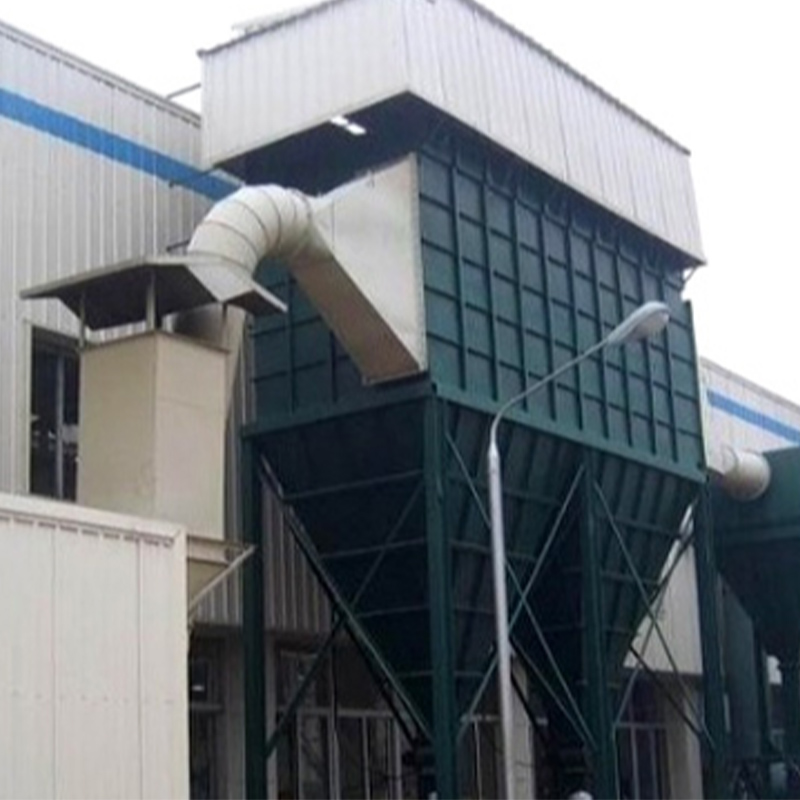
Choosing whether to install your dust collector indoors or outdoors has significant implications for both performance and practicality.
Indoor Installation: Offers protection from weather, reduces the risk of condensation, and can help retain conditioned air. However, it may add noise and occupy valuable floor space.
Outdoor Installation: Frees up indoor space and can simplify safety measures like explosion venting. However, outdoor units may require weather protection, insulation, and considerations for cold-weather operation.
Key takeaway: Indoor and outdoor installations each have their benefits and challenges, which should be evaluated based on your facility’s climate and layout needs.
The performance and longevity of a dust collection system are influenced by the quality of its installation. Key considerations include:
Power Supply: Ensure fans and controls receive the correct voltage and amperage.
Compressed Air Quality: Pulse-cleaning systems rely on clean, dry air to function properly.
Duct Design: Properly sized and routed ducts are essential for maintaining air velocity and filter efficiency.
Key takeaway: Proper installation is crucial for the performance and long-term efficiency of your dust collection system.
In conclusion, selecting a good dust collector involves understanding your specific application, dust type, and system requirements. The right dust collector is one that matches your process and filter media needs, ensuring long-term air quality and system efficiency.
For personalized guidance on choosing the right dust collector for your facility, contact Anhui Tiankang Environmental Technology Co., Ltd. Our team specializes in designing and building dust collection systems that support both performance and maintainability across various industries, including steel, metallurgy, and cement.
1. What is the best type of dust collector for welding fumes?
For welding applications, pleated cartridge filters are typically the best option due to their high surface area and compact design, which are ideal for fine particulate capture.
2. How do I calculate the right air-to-cloth ratio for my dust collector?
The air-to-cloth ratio is calculated by dividing the airflow (CFM) by the total square footage of filter media. Consult with a dust collection specialist to ensure optimal sizing for your application.
3. Can a dust collector be installed outdoors?
Yes, dust collectors can be installed outdoors, but you need to ensure proper weather protection and insulation to maintain system performance in harsh conditions.
4. How often should dust collector filters be replaced?
The frequency of filter replacement depends on the dust generation rate, filter media type, and maintenance practices. Typically, filters should be checked regularly to avoid premature failure.
5. What factors should be considered when choosing a dust collector for combustible dust?
For combustible dust, safety is a top priority. Choose a dust collector with explosion venting, proper grounding, and compatible filter media to handle the specific type of combustible dust generated by your process.