English
 Français
 عربى
عربى 简体中文
简体中文


Industrial Wet Spray Scrubber: Effective Wet Dust Removal Solution for Heavy Industry
HOME / NEWS / Industry News / Industrial Wet Spray Scrubber: Effective Wet Dust Removal Solution for Heavy Industry
 By Admin
Content
The industrial landscape demands increasingly sophisticated solutions for air pollution control. Among the most effective technologies available today, the wet dust collector stands as a cornerstone technology for heavy industries worldwide. These systems represent a fundamental shift in how manufacturing facilities manage airborne contaminants and hazardous emissions.
Wet spray scrubbers operate on a deceptively simple yet highly effective principle: water droplets contact and capture dust particles, rendering them harmless and removable. This technology has evolved significantly over decades, becoming indispensable for metallurgical operations, mining facilities, chemical plants, and power generation stations.
Unlike dry collection methods that rely solely on mechanical separation, wet scrubbing systems integrate chemical reactions and physical capture mechanisms. This dual-action approach ensures superior removal efficiency across a wider range of particle sizes and composition types.
The fundamental mechanism driving wet scrubber effectiveness involves intimate contact between water droplets and suspended particles. When waste gas passes through a spray zone, millions of water droplets create collision points where dust particles adhere through various physical and chemical mechanisms.
Particles ranging from 5 microns to several hundred microns are captured effectively. Smaller particles benefit from Brownian motion effects, where random molecular movement causes particles to collide with water droplets. Larger particles rely on inertial impaction, where their momentum causes them to separate from gas streams and contact droplet surfaces.
Many industrial applications require more than physical dust removal. Acidic or alkaline gases often accompany dust emissions in heavy industry. Modern wet scrubbing systems incorporate chemical scrubbing capabilities through additive injection systems that neutralize these gases before emission into the atmosphere.
For example, facility managers can introduce alkaline solutions to neutralize acidic fumes, or vice versa. This integration transforms a simple dust collection device into a comprehensive waste gas treatment system capable of handling complex emission profiles.
Industrial wet spray scrubber systems encompass several distinct design categories, each optimized for specific operational scenarios and emission characteristics.
Spray towers represent the most common configuration in industrial waste gas purification wet washing applications. These vertical vessels contain multiple spray nozzles positioned at different heights. Contaminated gas enters from the bottom and travels upward through cascading water spray zones.
The counter-current flow pattern maximizes contact time between gas and liquid phases, improving collection efficiency. Spray towers excel at handling moderate to high dust concentrations and deliver excellent gas cooling capabilities.
Packed bed designs incorporate random or structured packing media inside the scrubber vessel. Gas passes through this packing material while liquid flows downward, creating intensive contact surfaces. The packing significantly increases the effective surface area available for particle capture.
These systems achieve higher removal efficiencies than spray towers for certain applications, particularly when treating gases containing soluble components requiring extended contact time.
Venturi configurations accelerate contaminated gas through a converging duct section, creating high-velocity impacts with liquid droplets. The resulting high energy interactions enable exceptional particle capture, particularly for fine particulate matter.
However, this aggressive design approach increases pressure drop and energy consumption, making venturi systems suitable primarily for particularly challenging dust removal scenarios.
Understanding performance metrics enables facility managers to select appropriate systems for their specific operational requirements.
| Scrubber Type | Removal Efficiency | Pressure Drop | Capital Cost |
|---|---|---|---|
| Spray Tower | 85-95% | Low | Moderate |
| Packed Bed | 92-98% | Moderate | Moderate |
| Venturi | 95-99% | High | Higher |
Selection among these options requires balancing removal efficiency requirements against operational cost constraints. Most facilities require 95% or greater removal efficiency to meet environmental regulations, positioning packed bed and venturi systems as preferred choices for stringent applications.
The steel and non-ferrous metal industries generate substantial dust loads during ore processing, smelting, and metal refining operations. An industrial flue gas wet scrubber tower for metallurgical dust removal becomes essential infrastructure rather than optional equipment.
Metal facilities report significant improvements in worker safety, equipment longevity, and regulatory compliance after implementing comprehensive wet scrubbing systems. Dust-related equipment corrosion and maintenance issues diminish substantially when proper collection occurs upstream of process areas.
Chemical plants often release acidic or caustic vapors alongside particulate matter. Integrated wet dust collector systems equipped with chemical scrubbing capabilities address both challenges simultaneously, improving overall emission control effectiveness.
Crushing, grinding, and material handling operations in mining generate massive dust volumes. Metallurgy exhaust gas wet spray scrubber wet dust collector systems protect respiratory health for mining workers while enabling facilities to process materials more efficiently without excessive dust suppression water requirements.
Coal-fired and biomass-fueled power plants rely on sophisticated flue gas treatment systems where wet scrubbing plays a critical role. These installations demonstrate that industrial waste gas purification wet washing scrubber technology achieves environmental performance standards while maintaining operational reliability.
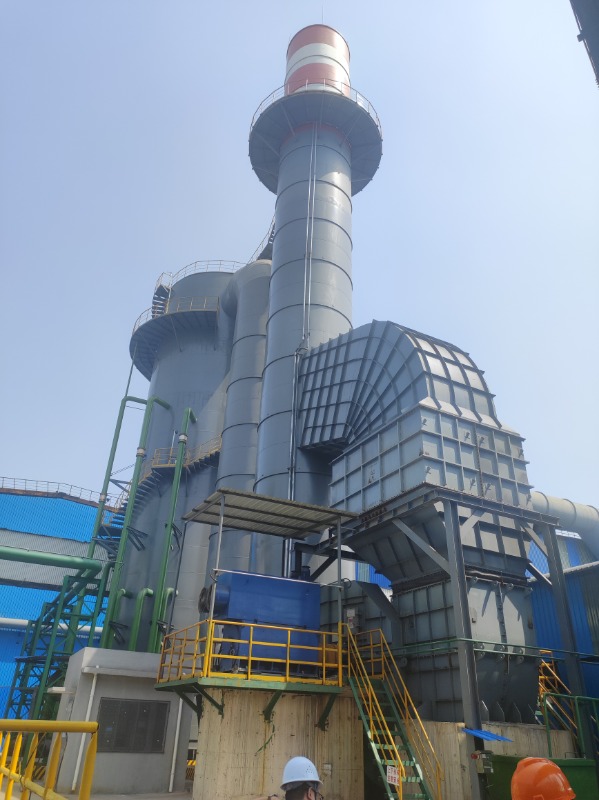
Proper scrubber sizing represents the foundation for reliable performance. Under-sized vessels force excessive gas velocities, reducing contact time and collection efficiency. Over-sized designs increase capital and operational costs unnecessarily. Design engineers calculate vessel dimensions based on expected gas volumetric flow rates, typically targeting approach velocities of 4 to 8 feet per second depending on scrubber type and application severity.
Water supply rates directly influence droplet size distribution and contact intensity. Increasing liquid flow improves collection efficiency but escalates operational costs and wastewater generation. Most industrial applications optimize liquid flow rates at 5 to 15 gallons per minute per 1000 cubic feet per minute of gas flow, balancing performance against resource consumption.
Closed-loop recirculation systems minimize water consumption while improving economic viability. Clarification tanks remove settled solids, allowing scrubbing liquid recycling. These systems require careful design to prevent solids accumulation and maintain particle suspension during recirculation cycles.
Scrubber internals face continuous exposure to corrosive liquids and abrasive particles. High-quality construction materials resist corrosion and erosion, ensuring extended equipment service life. Common material choices include specialized alloys, fiberglass-reinforced composites, and corrosion-resistant polymers selected based on specific operational chemistry.
Successful wet scrubber operation depends on consistent monitoring of key performance indicators. Facility operators should track differential pressure across the scrubber, which provides early warning of internal fouling or plugging conditions. Rising differential pressure indicates diminishing collection efficiency and necessitates prompt investigation.
Liquid level monitoring prevents dry conditions that eliminate collection effectiveness. Outlet gas temperature tracking reveals heat exchange performance and potential system scaling issues. pH monitoring in chemical scrubbing systems ensures proper neutralization conditions persist.
Nozzle plugging represents the most frequent operational challenge, typically caused by mineral precipitation or suspended solids settling. Installing pre-filtration stages or utilizing self-cleaning nozzle designs addresses this concern effectively.
Excessive foam generation indicates surfactant contamination or improper liquid chemistry. Defoaming additives provide temporary relief, but source elimination through liquid treatment modification proves more effective long-term.
Premature corrosion suggests material incompatibility with operating conditions. Consulting with corrosion specialists on material upgrades prevents catastrophic failures.
Environmental regulations governing industrial emissions grow increasingly stringent annually. Modern wet scrubbing systems exceed required removal efficiencies, providing compliance margins that buffer against stricter future standards. Facilities equipped with high-performance systems avoid expensive retrofitting expenses when regulations tighten.
Dust exposure represents a chronic health hazard in heavy industries, potentially causing respiratory diseases and reduced worker productivity. Effective dust collection dramatically improves workplace air quality, enhancing employee health outcomes and reducing occupational disease claims.
Dust infiltration accelerates degradation of downstream equipment, increasing maintenance frequency and capital replacement costs. Upstream dust removal through wet scrubbing extends equipment service life significantly, reducing total operational expenses despite scrubber system investment.
Cleaner operating environments enable process optimization that might otherwise prove impossible. Reduced dust fouling permits higher production rates, better product quality, and improved energy efficiency across manufacturing operations.
Wet scrubber systems require substantial vertical clearance for vessel height and maintenance access. Horizontal footprint needs depend on clarification tank sizing and recirculation equipment arrangement. Most facilities plan for 15-20% additional space beyond the scrubber itself to accommodate ancillary systems and maintenance operations.
Scrubber systems demand reliable electrical power for recirculation pumps, typically ranging from 2 to 10 kilowatts depending on system size. Water supply connections must deliver adequate volume at consistent pressure. Drain systems require capacity for liquid discharge during maintenance and emergency shutdown scenarios.
Proper ductwork design ensures efficient gas transport to and from the scrubber while minimizing pressure losses. Inlet sections should incorporate turning vanes and flow straighteners that promote uniform velocity distribution across the scrubber cross-section. Outlet ducting requires careful configuration to prevent liquid carryover into downstream systems.
Wet scrubbers inherently generate some liquid aerosol that must not escape into the atmosphere. Mist elimination stages utilizing chevron baffles or mesh pads remove these droplets with 98% efficiency or greater, preventing atmospheric discharge while recovering valuable liquid.
Next-generation spray nozzles produce more uniform droplet size distributions, improving collection efficiency and reducing required liquid flow rates. Some designs incorporate directional control that optimizes contact patterns within the scrubber vessel, enhancing performance per unit of operational input.
IoT-enabled scrubber systems provide real-time performance monitoring and predictive maintenance capabilities. These systems detect emerging problems before they cause performance degradation, enabling proactive maintenance scheduling that minimizes downtime and optimizes operational expenses.
Integration of wet scrubbing with other collection technologies addresses limitations inherent in any single approach. Combining wet scrubbers with electrostatic polishing stages or advanced filtration achieves ultra-high removal efficiencies required for the most sensitive applications.
Closed-loop systems with advanced solids separation enable dramatic reductions in water consumption. Some facilities achieve 95% liquid recirculation rates through comprehensive treatment and regeneration protocols, minimizing environmental impact and operational costs simultaneously.
Successful equipment selection begins with comprehensive characterization of your specific operational environment. This analysis should encompass gas volumetric flow rates under normal and peak conditions, dust particle size distribution, chemical composition of suspended and gaseous contaminants, incoming gas temperature, and required outlet emission standards.
Once operational parameters are understood, performance specifications should clearly define required removal efficiencies for various particle size ranges, maximum allowable pressure drop, and any special chemical scrubbing requirements. These specifications guide vendor selection and ensure purchased equipment genuinely addresses operational needs.
Evaluating systems requires considering far more than capital purchase price. Operating expenses including electricity, water consumption, maintenance labor, and replacement parts often dwarf initial equipment costs over the system lifetime. Proper analysis accounts for 10-15 year operational periods, incorporating realistic cost projections for utilities and labor.
Physical facility limitations often constrain equipment selection. Vertical height restrictions might eliminate spray tower options, favoring compact packed bed designs. Floor space availability influences clarification tank sizing and recirculation equipment placement. Early identification of these constraints prevents selection of incompatible systems requiring costly facility modifications.
Modern wet scrubbing systems effectively capture particles ranging from approximately 0.5 microns to several hundred microns. Capture efficiency varies with particle size, generally achieving 95%+ removal for particles larger than 2 microns. Particles smaller than 1 micron experience lower capture efficiency but still achieve significant removal due to diffusion and Brownian motion effects.
Water consumption varies substantially based on system design and operational approach. Once-through systems may consume 10 to 50 gallons per 1000 cubic feet of treated gas. Closed-loop recirculating systems dramatically reduce consumption, potentially using only 1 to 5 gallons per 1000 cubic feet when properly optimized, with most liquid recycled multiple times before disposal.
Direct wet scrubbing of very hot exhaust gases proves inefficient and potentially dangerous due to rapid evaporation and equipment thermal stress. Most applications utilize heat exchangers or quench towers that cool gases to 50-80 degrees Celsius before wet scrubber contact. This two-stage approach protects equipment while maintaining excellent collection performance.
Routine maintenance includes weekly nozzle inspections, monthly pump checks, and quarterly clarification tank draining. More intensive inspections occur semi-annually for internal components and annually for structural integrity. Total annual maintenance requirements typically consume 100-200 labor hours depending on system size and operational severity.
Sticky particles that challenge dry collection systems perform exceptionally well in wet scrubbers, where water wetting properties enhance adhesion to droplets. The liquid medium prevents re-entrainment that troubles dry systems, and liquid sump separation easily handles sticky material that would clog dry collectors.
Properly maintained wet scrubber systems typically operate reliably for 15-20 years. Some well-maintained installations exceed 25 years of service life. Key durability factors include material quality, maintenance consistency, and avoiding aggressive operational regimes that exceed design parameters.
Limited retrofit possibilities exist depending on facility configuration. Installing wet scrubbers upstream of existing dry collection systems proves more practical than replacing installed equipment entirely. This hybrid approach leverages existing infrastructure while gaining wet scrubber performance benefits.
Increasingly stringent emissions standards drive selection toward higher-efficiency systems like packed bed and venturi designs. Most new installations target 98%+ removal efficiency to ensure compliance margins as regulations tighten. Facilities should select systems exceeding current requirements to minimize future retrofitting costs.