English
 Français
 عربى
 简体中文


Why Baghouse Dust Collector Selection Decides Your Plant’s Compliance, Uptime and Total Cost
HOME / NEWS / Industry News / Why Baghouse Dust Collector Selection Decides Your Plant’s Compliance, Uptime and Total Cost
 By Admin
Content
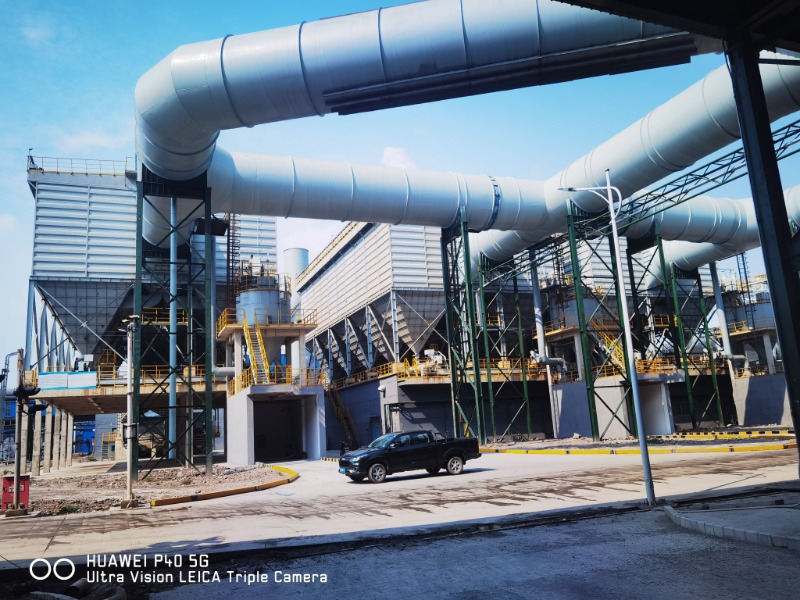
A baghouse, also called a fabric filter or bag filter dust collector, is a centralized gas cleaning unit that passes dust-laden air through woven or felted filter bags. Particles collect on the bag surface, and the cleaned air exits through the top of the unit. The design is built for high airflow, continuous operation and heavy particulate loads.
Electric arc and basic oxygen steelmaking furnace off-gas
Cement kiln, clinker cooler and raw mill exhaust
Rotary lime kiln and hydrated lime handling
Foundry, metallurgical and ferroalloy process ventilation
Small workshop or single-machine dust extraction
Very low airflow with infrequent cleaning needs
Sticky, hygroscopic dust that blinds filter media without pretreatment
Plants with airflows in the range of tens of thousands to several hundred thousand cubic meters per hour usually justify a centralized baghouse. Below that range, cartridge units or smaller point collectors often make more economic sense.
Most modern large systems use pulse-jet cleaning. Dirty gas enters the hopper, larger particles drop out by gravity, and finer dust deposits on the outside of the bags as the air flows inward and upward. When pressure drop across the filter reaches a set point, a timer or differential pressure controller triggers a short burst of compressed air through a venturi valve at the top of each bag row. The pulse flexes the bag and knocks the dust cake loose into the hopper below.
The single most important sizing variable is the air-to-cloth ratio, expressed as the volume of gas filtered per unit of bag surface area per minute. A ratio that is too high forces dust deeper into the media and shortens bag life. A ratio that is too low raises capital cost without a meaningful gain in performance. Experienced designers typically select the ratio based on dust characteristics, filter media and whether the system uses on-line or off-line cleaning.
Filter media: polyester for moderate temperatures, PTFE membrane for fine or sticky dust, aramid or glass fiber for hot gas
Cage design and spacing to prevent bag abrasion and allow even cleaning
Tubesheet and pulse valve layout for uniform cleaning across all rows
PLC control logic that adapts pulse frequency to actual pressure drop
Many plants find that a well-tuned controller saves more energy and bag replacement cost than any single hardware upgrade. Compressed air is often the largest running expense, so pulse frequency and pulse duration should be optimized rather than left at factory defaults.
Buyers evaluating a dust control project often compare three technologies. Each has a clear role, and the right answer frequently involves combining them rather than choosing one.
| Criteria | Baghouse | Cartridge Collector | Cyclone |
|---|---|---|---|
| Particle size range | Fine to coarse, including submicron | Fine, with good capture efficiency | Coarse particles only |
| Typical airflow capacity | Very large, centralized | Small to medium | Pretreatment stage |
| Temperature tolerance | High with suitable media | Moderate | High |
| Footprint per unit of airflow | Larger | Compact | Compact |
| Best role | Primary high-volume collection | Space-limited installations | Upstream protection for filters |
Many large plants install a cyclone or settling chamber ahead of the baghouse. This removes the heaviest load before it reaches the bags and can extend filter life noticeably, especially in high-dust processes such as clinker cooling.
If your plant has limited floor space or needs a compact retrofit, a cartridge design may be a better fit. For high-volume, continuous operations with heavier dust loads, a bag-type baghouse generally offers more robust long-term performance.
Two proposals for the same nominal airflow can differ by 35 to 60 percent, and the lower number is not always the better deal. Price differences usually come from specification choices that buyers do not see on the first page of a quotation.
Housing steel thickness and grade, reinforcement, and corrosion protection. Thicker plate and higher-grade steel raise cost but improve wind and explosion resilience.
Fabric weight, finish and material. Membrane-coated media costs more but can reduce emissions and extend cleaning intervals.
Valve construction, diaphragm quality and expected cycle life. Lower-grade valves may fail early and create uneven cleaning.
PLC capability, sensor quality and whether the system supports remote monitoring and adaptive cleaning.
Two units with identical airflow ratings can carry very different price tags: one built with thinner, lower-grade steel and standard media, the other with heavier structure and membrane filters. The first looks cheaper on paper but may cost more over five years in bag replacement and downtime.
Ask for a line-item quotation that separates structure, filter media, valves, controls, installation support and warranty terms. This makes comparison far more accurate than a single lump-sum figure. Plants that compare total lifecycle cost, including compressed air use, filter replacement and maintenance labor, typically reach better decisions than those that compare purchase price alone.
Combustible dust is one of the most serious hazards in baghouse operation. Metallic dusts, carbon-based materials and some fine mineral powders can ignite or explode when suspended in air at sufficient concentration and in the presence of an ignition source. A compliant design treats explosion protection as a core requirement, not an optional add-on.
Covers prevention of fire and dust explosions in the chemical, plastics and related industries, and is widely referenced for dust handling systems.
European directive for equipment and protective systems intended for use in potentially explosive atmospheres.
Explosion relief panels sized to the enclosure volume and dust characteristics
Isolation valves on inlet and outlet ducts to prevent flame propagation
Anti-static filter media and grounding of all metallic components
Spark detection and suppression at the inlet, where ignition sources are likely
Local emission regulations set the outlet dust concentration target, and that target drives media selection. Plants facing strict limits often move from standard polyester to membrane-coated media, which can reach very low outlet concentrations with proper cleaning control. Confirm with a regulator or environmental consultant which measurement method and averaging period apply to your site before finalizing the specification.
Experienced buyers use a short, consistent checklist to screen suppliers. The answers reveal far more than a brochure does.
1. What steel thickness and grade is the housing built from, and is it Q235 or Q345B?
Ask for the actual material certificate, not just a nominal specification.
2. Is the filter media rated for my gas temperature and chemical composition?
A supplier should request your gas analysis before recommending media.
3. What pulse valve brand class is used, and what cycle life data supports it?
Reliable suppliers can share test records or field references.
4. Can you support third-party factory inspection or pre-shipment verification?
Independent inspection is a reasonable expectation on large projects.
5. How is the delivery date defined, and what is on-time performance on complex systems?
Clarify whether the commitment covers ex-works or site delivery.
Lead times for custom large systems commonly fall between eight and sixteen weeks for manufacturing, with installation adding several weeks depending on site readiness. Complex multi-module projects take longer.
Airflow capacity, housing material and thickness, filter media type, pulse valve and control quality, and installation scope are the main drivers. Explosion protection and emission monitoring add further cost on regulated sites.
Pulse-jet cleaning uses short bursts of compressed air and suits high-volume systems with frequent cleaning. Reverse-air cleaning uses a gentler airflow reversal and is often chosen for fragile media or systems where pressure-drop stability matters more than compact design.
Yes, provided the filter media, housing materials and insulation are selected for the expected peak temperature. Gas cooling or dilution is often used upstream to keep operation within media limits.
Most operators keep a stock of replacement bags equal to a small percentage of total count, which allows rapid repair of damaged sections without extended shutdowns.