English
 Français
 عربى
عربى 简体中文
简体中文


Cement Plant Dust Collector: Complete Guide to Selection, Design & Maintenance
HOME / NEWS / Industry News / Cement Plant Dust Collector: Complete Guide to Selection, Design & Maintenance
 By Admin
Content
A 5,000 tonne-per-day cement line can push more than one tonne of dust per hour out of the kiln preheater before filtration. That is why a cement plant dust collector is not auxiliary equipment. It is the difference between a compliant, efficient operation and a facility facing fines, forced shutdowns, and accelerated wear on every downstream component.
Every step of cement production from limestone crushing to clinker cooling and packing generates dust, and no single collector design fits all of those points. The gas volume, temperature, and dust loading at each source determine the collector type and the filter area required.
| Process point | Dust loading | Gas temperature | Recommended collector |
| Limestone crusher | 20 to 50 g/Nm3 | 40 to 80 deg C | Pulse-jet bag filter |
| Raw mill | 120 to 200 g/Nm3 | 80 to 120 deg C | Pulse-jet bag filter with pre-separator |
| Kiln preheater | 60 to 90 g/Nm3 | 200 to 350 deg C | Bag filter or ESP with gas conditioning |
| Clinker cooler | 20 to 40 g/Nm3 | 150 to 250 deg C | Pulse-jet bag filter |
| Cement mill | 80 to 150 g/Nm3 | 70 to 110 deg C | Pulse-jet bag filter |
| Packing and dispatch | 5 to 15 g/Nm3 | Ambient | Cartridge or small bag filter |
Uncontrolled dust loading by cement process point
Typical collector inlet concentrations in g/Nm3 for a dry-process cement plant.
At belt transfer points and stockpile feed conveyors, localized capture matters more than total gas volume. Enclosed transfer hoods such as belt-enclosed hoods trap dust at the source before it becomes a fugitive emission, especially along long conveyor runs between the crusher and the raw material store.
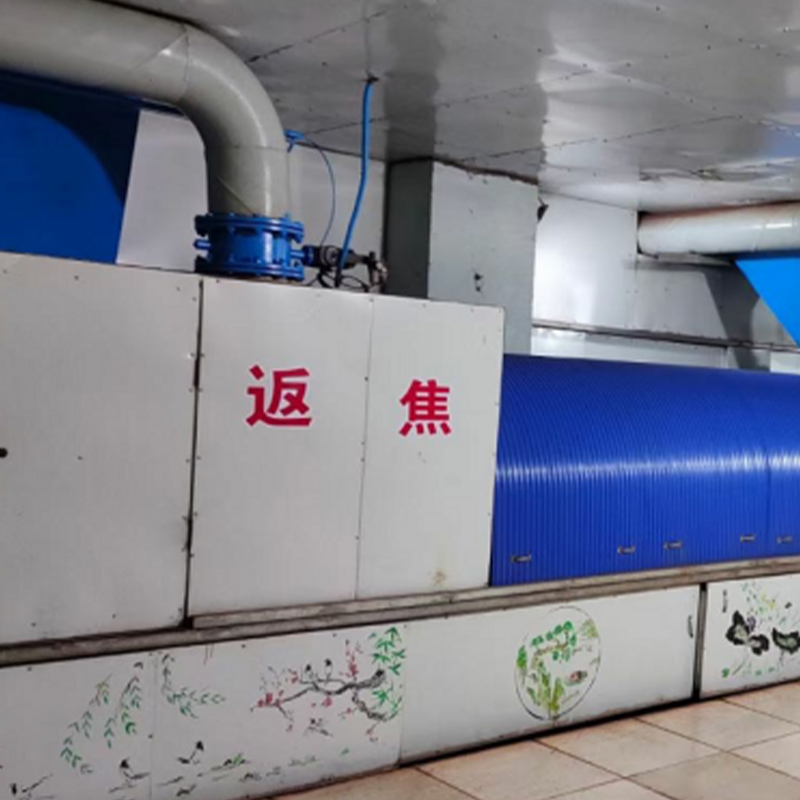 Custom Belt Enclosed Hood Manufacturers, SuppliersAnhui Tiankang Environmental Technology Co., Ltd. is China Custom Belt Enclosed Hood Manufacturers and Suppliers. Product description/pur...View Product →
The enforceable emission limit sets the guaranteed outlet concentration of the collector. Whether you are building a new line or upgrading existing equipment, the permit value is the first specification you fix.
China's GB 4915-2013 standard caps particulate emissions from cement kilns and mills at 30 mg/Nm3, and many local permits now tighten that to 10 mg/Nm3. The European BREF for cement production sets BAT-associated emission levels between 10 and 20 mg/Nm3. A baghouse with correctly selected media holds outlet dust below 10 mg/Nm3, which is why it remains the default compliance tool in modern cement plants.
With the right media, a bag filter keeps outlet emissions below 10 mg/Nm3 even when inlet loading exceeds 100 g/Nm3. That safety margin explains why new raw mill and kiln dust collector specifications rarely consider electrostatic precipitators.
Pulse-jet bag filters are the dominant choice in cement plants because they hold differential pressure stable at the high dust loadings and fine particle sizes typical of cement processes. The selection process starts with a clear definition of the process gas conditions, not with the equipment catalogue. Once the duty is fixed, the full dust collector product range narrows to a few workable configurations.
Compared with bag filter dust collectors used in lighter industries, cement service demands a stronger cage design, anti-abrasion inlet baffles, and a filter area sized at a lower filtration velocity.
The design parameters matter in a strict order. First the filtration velocity, also called the air-to-cloth ratio, which is the gas flow rate divided by the total cloth area and expressed in m/min. Then the filter media, the cleaning system, and the casing. For raw mill, kiln, and cement mill duty, size the air-to-cloth ratio at 1.0 to 1.2 m/min. Clinker cooler and crusher applications can run slightly higher at 1.2 to 1.5 m/min.
A typical configuration for a 5,000 t/d line is a low-pressure pulse-jet bag dust collector with 14 to 20 compartments, each isolated by a poppet valve so maintenance can run online without stopping the kiln.
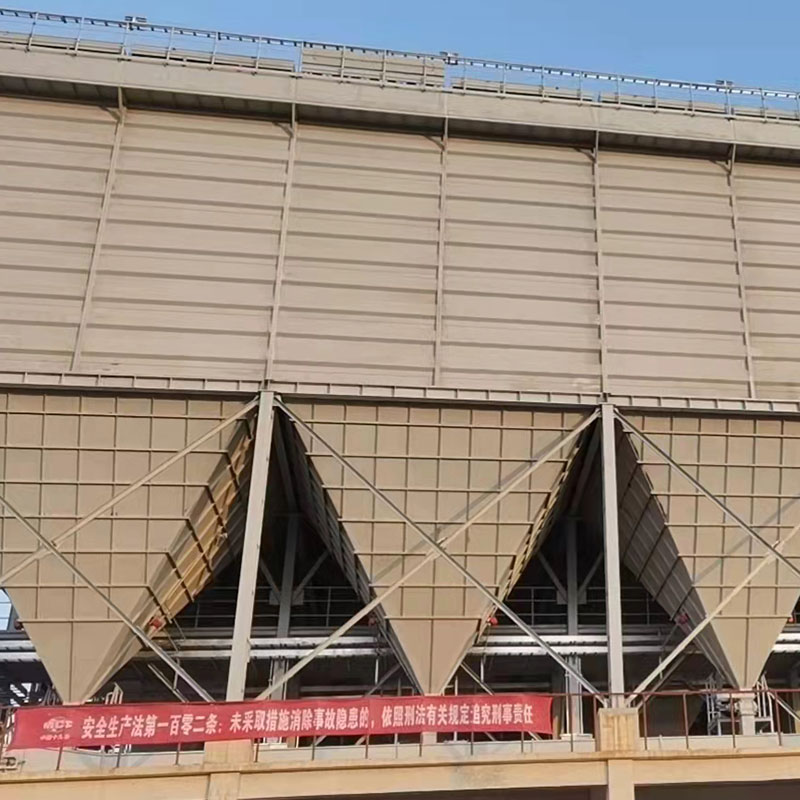 Custom Low-Pressure Pulse Jet Bag Dust Collector Manufacturers, SuppliersAnhui Tiankang Environmental Technology Co., Ltd. is China Custom Low-Pressure Pulse Jet Bag Dust Collector Manufacturers and Suppliers. ...View Product →
Filtration velocity of 1.0 to 1.2 m/min for mill and kiln baghouses, calculated on gross cloth area.
Pulse pressure of 0.5 to 0.7 MPa with dried, oil-free compressed air.
Inlet baffle designed to distribute gas evenly and settle coarse particles before the bags.
Casing and hopper insulation with trace heating above the dew point.
Walk-in clean-air plenum for safe bag replacement without removing roof panels.
Undersizing the filter area is the most common engineering error in cement baghouse projects. A 10 percent larger cloth area lowers pressure drop and extends bag life more than any premium media upgrade.
Cement dust is alkaline, abrasive, and often humid while the raw mill is in operation, so bag material determines both emission stability and replacement cost over the life of the collector.
| Media | Max continuous temperature | Main strength | Typical cement application |
| Polyester (PET) | 130 deg C | Low cost with good general abrasion resistance | Crusher and mills in dry gas service |
| PPS | 190 deg C | Resistance to acidic compounds and sulfur | Kiln preheater and clinker cooler |
| P84 polyimide | 240 deg C | Thermal stability at high peaks | High temperature zones after gas conditioning |
| PTFE membrane on glass | 250 deg C | Very low outlet dust and easy cake release | Raw mill and kiln under strict PM limits |
For raw mill and kiln baghouses where temperature fluctuates and moisture appears during mill operation, a PTFE membrane on a stable substrate is usually the safest economic choice. The membrane releases the dust cake more easily, keeps pressure drop lower, and holds outlet dust below 10 mg/Nm3 even as bags age.
Replacement filter bags must carry the same dimensional tolerance as the original cages. A bag that is 2 mm longer or narrower than specification shifts under pulse pressure, rubs against the cage, and fails early. Ordering from the original equipment manufacturer avoids this compatibility risk.
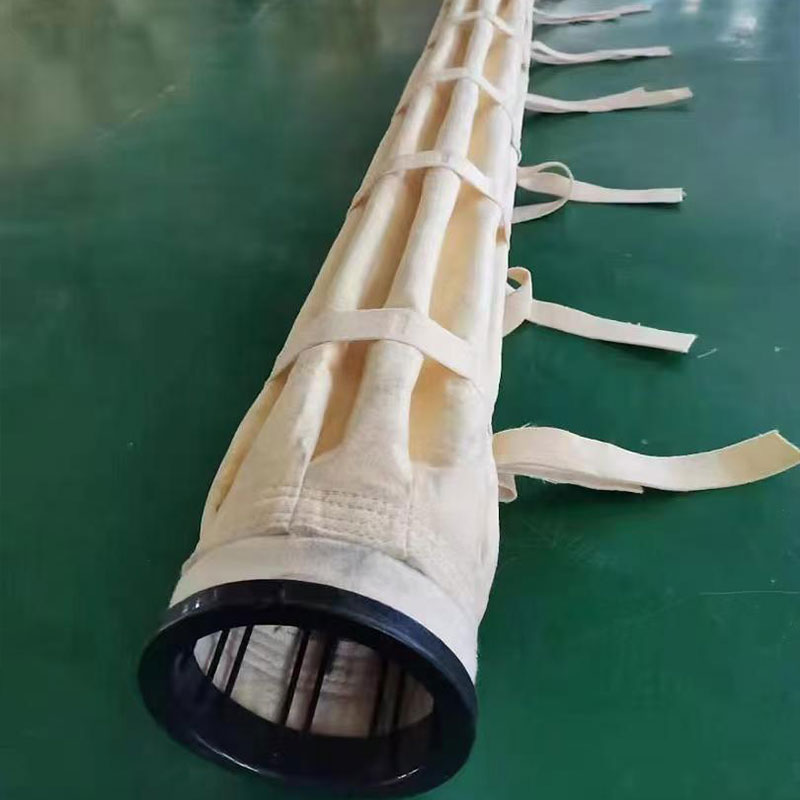 Custom Dust Bag Manufacturers, SuppliersAnhui Tiankang Environmental Technology Co., Ltd. is China Custom Dust Bag Manufacturers and Suppliers.View Product →
PTFE membrane bags carry a higher upfront price, but in humid cement gas streams they can reduce cleaning frequency by 20 to 30 percent, cutting compressed air use and extending pulse valve and bag life.
A cement baghouse stays compliant when differential pressure, cleaning cycles, and condensation risks are managed every shift instead of after a visible failure. The operating team should follow five checks as a daily routine.
Record differential pressure across each compartment at the same production rate and compare it with the baseline from commissioning.
Confirm that the pulse controller fires every solenoid in sequence and that no compartment has fallen silent.
Check compressed air pressure and dryer function, because wet pulse air destroys bags faster than process gas.
Inspect hoppers for material build-up and discharge collected dust before the level reaches the bag cage.
Replace damaged bags immediately, since a single failed bag can double the outlet emission concentration.
Condensation is the leading cause of bag caking and hopper corrosion in cement baghouses. Keep casing and hoppers above dew point during startup and shutdown, and resume filtration only after gas temperature stabilizes above 100 deg C.
Most baghouse failures in cement plants trace back to condensation, over-cleaning, or an undersized cloth area, not to the collector itself. Diagnosing the symptom correctly usually resolves the issue without replacing major components.
| Symptom | Most likely cause | Corrective action |
| High differential pressure | Cloth area undersized or bags caked | Verify the air-to-cloth ratio, check moisture and pulse settings, clean or replace bags |
| Visible stack emission | Broken bag or leaking gasket | Isolate the compartment, replace the bag, check cage and clamp fit |
| Hardened dust cake | Cleaning too frequent or gas below dew point | Reduce pulse pressure, preheat gas, insulate casing |
| Fast bag wear | Abrasive bypass or uneven air distribution | Inspect the inlet baffle, check dust accumulation before the bags |
| Hopper bridging | Sticky dust or wet gas | Improve hopper heating, add flow aids, verify condensation controls |
Pulse-jet bag filters are the best overall choice for most cement plant applications. They handle the high dust loadings of raw mills and kilns, keep outlet emissions below 10 mg/Nm3, and operate stably across the temperature range of crushing, milling, clinker cooling, and packing service.
Design the air-to-cloth ratio at 1.0 to 1.2 m/min for raw mill, kiln, and cement mill baghouses. Clinker cooler and crusher units can run at 1.2 to 1.5 m/min. Exceeding these values raises pressure drop and accelerates bag wear faster than any other design error.
With correct media selection and stable process conditions, cement plant filter bags typically last three to five years. Bags exposed to temperature swings and moisture in raw mill and kiln service often need replacement at the shorter end of that range.
Yes, if the gas is cooled or conditioned upstream. Standard baghouses operate continuously up to 250 deg C with P84 or PTFE-on-glass media. For hotter streams, a gas conditioning tower or tertiary air duct cooling brings the temperature into the safe range before the gas reaches the bags.
If your cement baghouse is already installed, start with differential pressure and condensate controls. If you are purchasing a new system, the verified supplier should show reference installations in cement service and guarantee outlet dust below 10 mg/Nm3.