English
 Français
 عربى
عربى 简体中文
简体中文


Dust Collection System Efficiency: Measure, Audit, and Improve Your Baghouse
HOME / NEWS / Industry News / Dust Collection System Efficiency: Measure, Audit, and Improve Your Baghouse
 By Admin
Content
A foundry in the central steel belt swapped its filter bags for premium ePTFE media, yet the stack monitor still read 18 mg/Nm3, nearly double the 10 mg/Nm3 limit on its permit. The maintenance manager ordered another set of bags. The fault was 40 meters away. The canopy hood above the pouring line was capturing six of every ten particles the process generated, and a leaky duct joint was pulling dilution air into the main trunk. This story repeats across steel, foundry, and cement plants because crews measure dust collection system efficiency at the filter outlet and never at the source.
The working definition is deliberately simple: system efficiency is the product of three independent efficiencies: source capture, filtration, and cleaning availability. Each stage is an independent ceiling. If the hood collects 60 percent of the fume and the filter removes 99.9 percent of what arrives, the stack cannot beat roughly 60 percent. Buying better media before fixing the hood is spending money on the wrong stage.
System efficiency equals capture efficiency x filtration efficiency x cleaning availability. A hood that captures only half of the generated dust caps the entire plant at 50 percent, no matter how good the filter is.
The hood, not the filter, sets the maximum performance of the system. Capture efficiency is the fraction of airborne dust generated at a source that actually enters the hood. Three practical hood classes exist: fully enclosed hoods, partial enclosures, and exterior hoods. Fully enclosed hoods hold 95 to 100 percent when the process opening stays small. Partial enclosures with an open face hold 70 to 90 percent when face velocity matches the process. Exterior hoods, such as canopy and side-draft designs, rarely exceed 40 to 75 percent because capture velocity decays roughly with the square of the distance from the source.
Face velocity is the lever the designer controls. ACGIH industrial ventilation practice calls for about 0.5 m/s at the face of a large enclosure and 1.0 to 2.5 m/s at slots or side-draft hoods over active dust sources. Below that range, cross-drafts from cranes, doors, or aisle traffic pull the fume away faster than the hood can collect it. The duct must also carry the captured air at 18 to 23 m/s for dry dust to prevent settling in horizontal runs.
This is why Anhui Tiankang Environmental Technology Co., Ltd. builds and supplies fume extraction system hoods as engineered products rather than sheet-metal extras: belt enclosed hoods for transfer points, blast furnace taphole capture hoods, converter front capture hoods, and refining furnace capture hoods. For electric arc furnace meltshops, the electric furnace fully enclosed hood is the highest-efficiency option because the furnace is sealed into the capture volume.
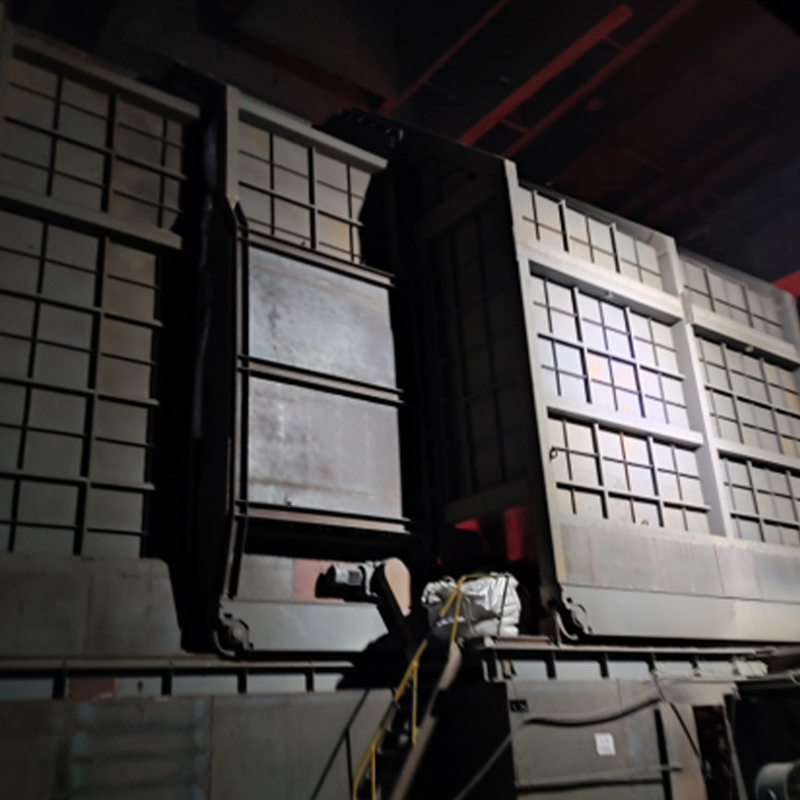 Custom Electric Furnace Fully Enclosed Hood Manufacturers, SuppliersAnhui Tiankang Environmental Technology Co., Ltd. is China Custom Electric Furnace Fully Enclosed Hood Manufacturers and Suppliers. Produ...View Product →
Run the chain for a common case: 60 percent capture x 99.9 percent filtration x 95 percent cleaning availability equals 57 percent practical system efficiency. The filter was never the problem.
Filtration efficiency is the one number most operators audit, and it is rarely the weakest stage. Once dust reaches the filter housing, modern felt or membrane media removes more than 99.9 percent of the mass arriving at the bags. The real argument is about the last milligrams: a 10 mg/Nm3 emission limit means roughly 10 milligrams of dust per cubic meter of clean gas, which a correctly selected bag or cartridge reaches without difficulty.
Air-to-cloth ratio decides whether that 99.9 percent is repeatable. Pulse-jet baghouses handling mineral dusts run at 1.2 to 2.0 m/min; fine, abrasive, or sticky dusts should be designed at 0.8 to 1.2 m/min. A higher ratio means a thinner dust cake, more frequent cleaning, and a slow rise in emissions through pinholing. Cartridge collectors with pleated media fit the same duty in a smaller footprint, but media replacement costs more per square meter.
| Technology | Typical outlet | Best fit | Design pressure drop | Operating cost |
| Pulse-jet baghouse | 5-20 mg/Nm3 | Dry mineral, metal, cement dust | 1,000-2,500 Pa | Medium |
| Cartridge collector | 1-10 mg/Nm3 | Fine, combustible, toxic dust | 1,000-1,800 Pa | Medium-high |
| Electrostatic precipitator | 10-50 mg/Nm3 | High-volume, hot, sticky gas | 200-500 Pa | Low energy, high capex |
| Wet electrostatic precipitator | Under 5 mg/Nm3 | Submicron mist and aerosols | 300-800 Pa | High, with water treatment |
For most dry bulk and metal processes, the practical choice is a low-pressure pulse-jet bag dust collector with media matched to temperature and chemistry. It delivers 5 to 20 mg/Nm3 at moderate energy cost, tolerates process upsets, and is simple to maintain. Where PM2.5 and soluble aerosols dominate, a wet electrostatic precipitator or cartridge system with HEPA after-filtration moves the outlet into the low single digits.
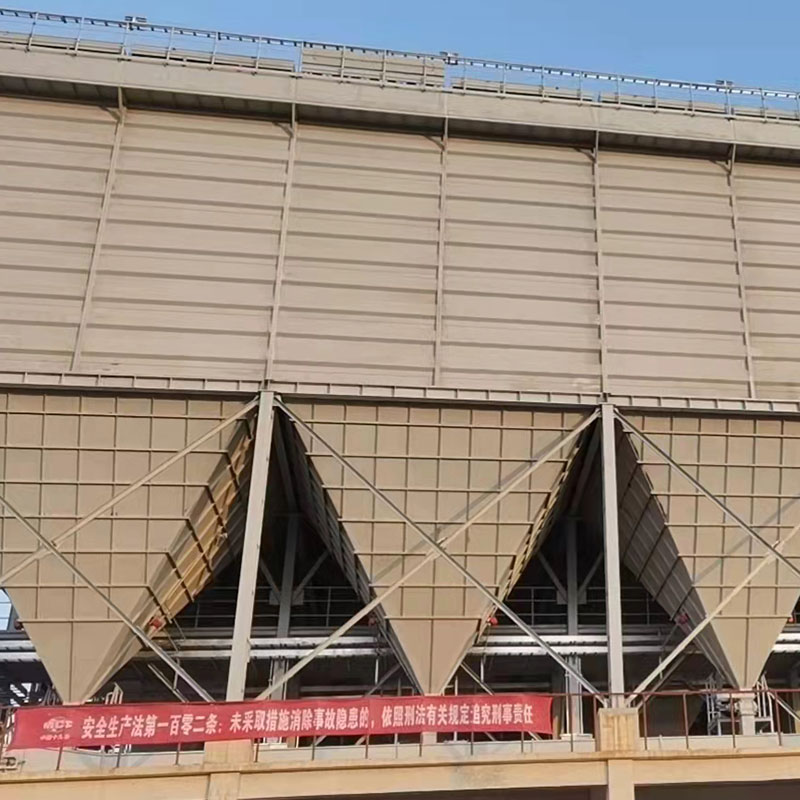 Custom Low-Pressure Pulse Jet Bag Dust Collector Manufacturers, SuppliersAnhui Tiankang Environmental Technology Co., Ltd. is China Custom Low-Pressure Pulse Jet Bag Dust Collector Manufacturers and Suppliers. ...View Product →
A cleaning system that cannot refresh the media will drag emissions upward in days. Pulse-jet collectors fire compressed air pulses of 100 to 150 milliseconds into the bag mouth at 0.4 to 0.6 MPa to flex the fabric and shed the cake. The catch is instantaneous flow: each valve demands a large volume in a fraction of a second, so manifold pressure collapses if the receiver tank or piping is undersized.
Field audits of pulse-jet collectors find the same failure pattern again and again: header pressure sags from 0.5 MPa to 0.35 MPa during a pulse, the bags barely flex, and the pressure differential climbs. The collector burns the same compressed air per cycle; the energy simply goes into a weaker pulse. Cleaning availability is the third efficiency and it should stay above 95 percent, meaning 95 percent of pulses deliver design pressure to the bag.
The operating rule is on-demand cleaning driven by differential pressure. Set the collector to pulse when the pressure differential crosses roughly 1,200 to 1,500 Pa instead of on a fixed timer. Timer-based cleaning wastes compressed air when the process is idle and under-cleans when it is loaded. After a pulse interval is retuned on a 60,000 m3/h baghouse, compressed air consumption typically falls 15 to 25 percent, and bag life extends because the fabric flexes less often.
Rule of thumb: if the cleaning header sags more than 25 percent during a pulse, the receiver tank or the pipe is too small. Fix the air supply before blaming the bags.
Filter media and leak integrity determine whether the efficiency measured at commissioning survives the first year. A felt bag installed too tight blows pinholes along the seams; a bag installed too loose abrades at the cage. Both raise the outlet emission long before the bag reaches its nominal life of two to five years. The repeatable fix is discipline: right media chemistry, correct tension, clean tube sheet, and cage inspection before every change-out.
The replacement media should follow the process, not the catalogue. Polyester felt is safe up to roughly 120 degrees Celsius. Above that, or where the gas carries acid, moisture, or fine metal fume, upgrade to acrylic, P84, or PTFE-laminated membrane. Plants that match the media to the acid dew point of the stream routinely run two to three times longer between change-outs than plants that buy the cheapest felt.
Track differential pressure per compartment and investigate any rise above 30 percent of baseline.
Inspect cages and bag seams visually at every service.
Verify pulse valves deliver 0.4-0.6 MPa at the manifold, not only at the compressor.
Seal every tube sheet joint; one bypassing bag raises the outlet reading.
Replace bags by pressure and emission trends, not by calendar or batch number.
The replacement filter bag is the consumable that carries most of this risk. Specification, seam quality, and bag-to-cage fit matter more than brand. A plant that standardizes on a single verified replacement dust bag specification for each compartment removes most of the variables that slowly erode performance, and it makes every future change-out a routine job rather than a re-engineering project.
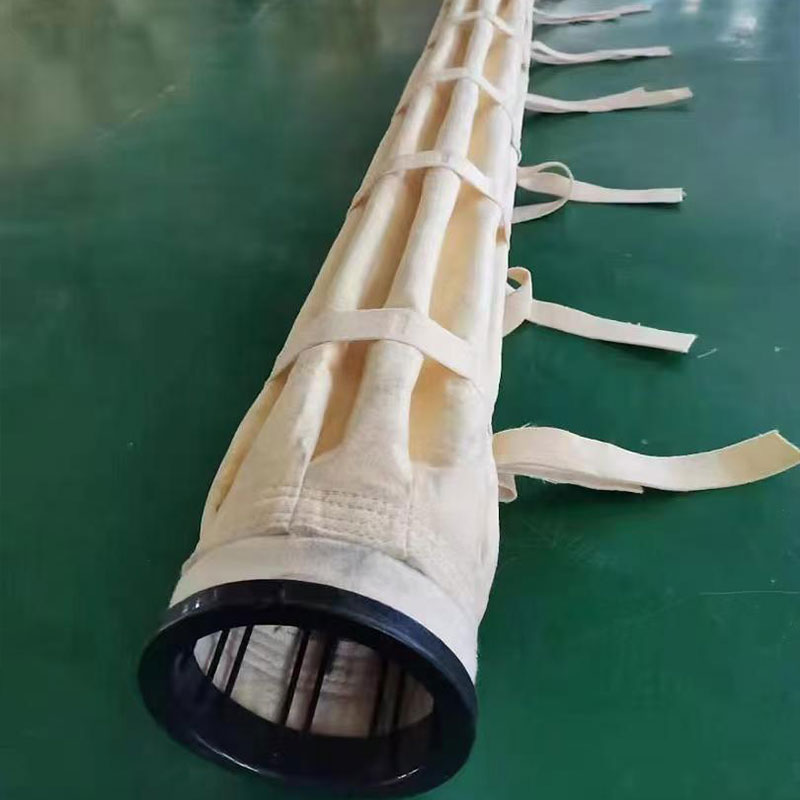 Custom Dust Bag Manufacturers, SuppliersAnhui Tiankang Environmental Technology Co., Ltd. is China Custom Dust Bag Manufacturers and Suppliers.View Product →
Set the target by stage: capture above 90 percent for enclosed hoods, outlet emission at or below 10 mg/Nm3 for a modern pulse-jet baghouse with matched media, and cleaning availability above 95 percent. Overall system efficiency is the product of the three.
Check capture and bypass before blaming media. Walk the hoods: if the fume escapes the face, no filter can help. Then check tube sheet seals and bag seating. New bags with mis-seated collars or damaged seams can raise the outlet reading as much as a torn old bag.
Continuously in a control system, and visually at least once per shift. Record a clean-bag baseline after each change-out and act when the differential runs more than 30 percent above baseline or climbs steadily over several hours.
No. Capture, filtration, and cleaning availability fail and improve independently, and a single number hides which stage is costing you money. Report the three values separately and drive each toward its own target.