English
 Français
 عربى
 简体中文


How to Reduce Maintenance on a Dust Collection Controller: 6 Practical Levers
HOME / NEWS / Industry News / How to Reduce Maintenance on a Dust Collection Controller: 6 Practical Levers
 By Admin
Content
A ten-valve baghouse running a fixed 30-second off-time commands 1,051,200 pulse-valve actuations every year. Each one strokes a diaphragm, burns a burst of compressed air and flexes the filter bags. Most plants accept that number as a fact of life, then wonder why the dust collection controller keeps appearing on the work order list.
Reducing maintenance on a dust collection controller is rarely a matter of replacing the logic module. On pulse-jet baghouses designed and commissioned by Anhui Tiankang Environmental Technology Co., Ltd. for steel, foundry, cement and glass plants, most controller-related service calls trace back to three causes: pulse cycles the bags do not need, wet or oily instrument air, and an enclosure or impulse line left unprotected. Fix those three and the controller becomes one of the quietest assets in the plant.
The guidance below is written for maintenance engineers, EHS managers and reliability teams who already own a pulse-jet system and want fewer unplanned stops, not a longer spare-parts list.
Differential-pressure demand cleaning is the largest single reduction in controller maintenance available to a baghouse owner, typically cutting valve cycles by 40 to 60 percent and compressed-air consumption by 30 to 50 percent.
The logic is simple. A timer fires pulses at a fixed interval whether the bags are loaded or nearly clean. A demand sequence reads differential pressure across the bags and starts cleaning at a high setpoint, usually 4.0 to 4.5 in. w.g., then stops at a low setpoint, usually 2.5 to 3.0 in. w.g. During light dust loading, the controller may not pulse for hours. During a dust surge, it responds immediately rather than waiting for the next scheduled interval.
The trade-off is that the controller now depends on a trustworthy DP signal. A clogged impulse line or a drifting transmitter will either over-clean or under-clean the bags, so the sensing path described further down must be right before the setpoints are trusted.
| Item | Fixed timer | DP demand cleaning |
| Cleaning trigger | Clock interval, fixed off-time | DP setpoint band, typically 4.5 in. w.g. start and 3.0 in. w.g. stop |
| Annual pulse cycles | About 1,051,200 | Typically 400,000 to 650,000 |
| Compressed air use | Constant, regardless of dust load | Falls with dust load |
| Filter bag wear | Continuous mechanical flexing | Pulse only when needed |
| Settings to maintain | Off-time and pulse duration | Start and stop DP, pulse duration, high-DP alarm |
| Main failure point | Nothing fails, but the unit over-cleans | DP transmitter and impulse line |
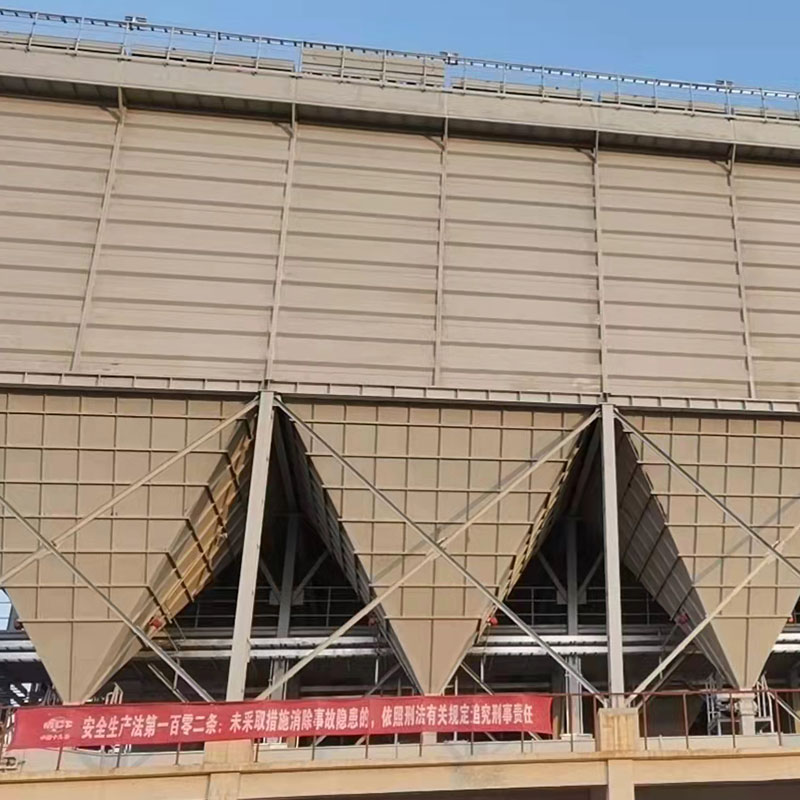 Low-Pressure Pulse Jet Bag Dust CollectorCustomizable bag filter collector using precise pulse-air cleaning for steel, power, cement and waste plants; ensure reliable DP sensing and dry compressed air.View Product →
Water and oil in the pulse-air header cause more solenoid, pilot-valve and diaphragm failures than any electrical fault, and no amount of panel servicing will compensate for wet air.
A pulse valve is rated for hundreds of thousands of dry cycles. Run the same valve on air carrying condensate and the pilot orifice corrodes, the diaphragm sticks, and the coil eventually overheats because the armature cannot complete its stroke. Specify a pressure dew point of at least minus 40 C at the dryer outlet, install a coalescing filter rated to 0.01 micron directly upstream of the air header, and drain it on a fixed schedule rather than when someone remembers. Verify manifold pressure at peak demand with a gauge, not with the panel reading: pulse valves need roughly 60 to 100 psi to deliver a sharp, short pulse, and low pressure stretches pulse duration and weakens cleaning.
A pulse-jet dust collection controller is the device that sequences compressed-air pulses across diaphragm valves. It governs exactly three variables: pulse duration in milliseconds, off-time between pulses, and the differential-pressure threshold that starts and stops cleaning.
Treat air quality as a controller specification, not a utility detail. A dryer failure detected on Monday costs one service visit; the same failure undetected for a month costs a set of diaphragms and a set of bags.
Valve pilots and DP sensing dominate service time; the logic module itself almost never fails.
Read the chart as a budget. Three quarters of the effort sits in hardware that costs little to inspect and a great deal to ignore, which is why the checks that follow pay back faster than any controller upgrade.
A controller in a clean, dry, positive-pressure enclosure reading a purged impulse line will hold its setpoints for years without adjustment.
Use a NEMA 4X enclosure with a thermostat-controlled heater sized for the coldest local night. Fit a breather or desiccant cartridge and change it on schedule. Re-torque terminals annually, keep 24 V DC signal wiring separated from drive cables, and add surge protection on the incoming supply.
Slope the sensing line back toward the duct at roughly 1 in 12 so dust cannot settle. Add a purge tap and blow it down monthly. Avoid low loops and long horizontal runs, keep tubing at 1/4 in. or larger, and zero-check the transmitter every quarter against a known reference.
Condensation inside a panel is the quiet killer. It forms overnight, bridges terminal blocks, and shows up weeks later as a random fault that nobody can reproduce. A heater rated for the enclosure volume and a door gasket that actually seals solve it for the price of a few hours of technician time.
Setpoints copied from a commissioning sheet five years ago are usually wrong, because bag condition, dust loading and air supply have all changed since then.
Record the header pressure with a calibrated gauge while the system runs at full production. Anything below 60 psi needs fixing before any timing change.
Trend DP through the production cycle. Set the start setpoint above the normal running band and the stop setpoint well below it, so the sequence does not hunt.
Shorter pulses waste air without cleaning; much longer pulses drive dust back into the bag. Long bags above 6 m may need the upper end of the range.
Verify that the high-DP alarm still trips before the fan loses measurable airflow, then lock the settings with a password and log the values.
Four scheduled checks replace most emergency callouts, and none of them takes more than an hour.
Daily: read and record differential pressure at the panel, and drain the air-header filter.
Weekly: open the enclosure door for a visual check of condensation, dust ingress and indicator lamps.
Quarterly: inspect pilot valves and solenoids, zero the DP transmitter, and purge the impulse line.
Annually: rebuild diaphragms, torque terminals, replace desiccant and review the pulse log against the original setpoints.
Log the numbers, not just the visits. A DP trend that climbs two inches over three months tells you a bag is failing long before opacity does. Filter media choice interacts directly with controller tuning, and the principles behind bag filter dust collectors explain why some fabrics tolerate far more cleaning cycles than others.
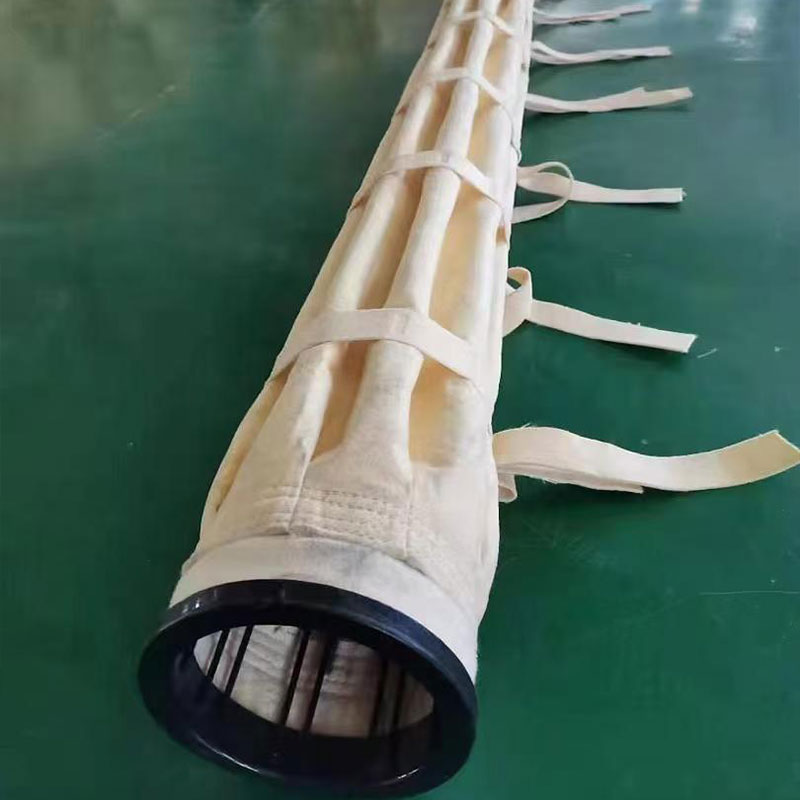 Custom Dust Filter Bags for Industrial Dust RemovalCustomizable woven or non-woven spare filter bags; choose media by particle size, chemistry and service life to match collector cleaning and maintenance needs.View Product →
Keep one spare set of diaphragms, one spare solenoid coil and one spare DP transmitter on the shelf. These three items account for the majority of unplanned controller downtime, and their lead time is almost always longer than the repair itself.
Quarterly inspection with an annual rebuild of wear parts suits most pulse-jet systems. Plants running three shifts on abrasive dust should shorten the valve inspection to every two months.
Not when the setpoints are correct. Damage comes from a start setpoint set too low, which makes the controller pulse constantly against nearly clean bags, or from a failed transmitter that pins the sequence in permanent cleaning mode.
Moisture in the compressed air. Condensate reaches the pilot orifice, corrosion restricts the stroke, and the coil overheats trying to hold the armature. Fix the dryer and the filter before replacing another coil.
Yes, when the baghouse runs more than one shift. A demand-based sequence typically pays back through compressed-air savings alone within a year, before counting the reduction in valve and bag replacement.