English
 Français
 عربى
عربى 简体中文
简体中文


How to Select an Industrial Baghouse Dust Collector for High Airflow Applications
HOME / NEWS / Industry News / How to Select an Industrial Baghouse Dust Collector for High Airflow Applications
 By Admin
Content
An integrated steel mill's sintering plant generates over 380,000 CFM of hot exhaust laden with fine iron oxide dust. Without a properly designed baghouse, the facility would violate emission standards within hours. This is the class of application for which the industrial baghouse dust collector for high airflow was engineered — not a small single-bag unit, but a multi-compartment system capable of filtering hundreds of thousands of cubic feet per minute with continuous uptime.
The term "high airflow" in the context of baghouse technology generally refers to systems rated above 50,000 CFM, with many installations exceeding 200,000 CFM. At this scale, every design decision — from the cleaning mechanism to the filter media — directly impacts operating cost, compliance, and equipment lifespan.
A high-airflow baghouse dust collector is an industrial filtration system designed to handle volumetric gas flows that demand a large filter area and robust structural support. The defining metric is not just total CFM but the relationship between airflow, filter area, and cleaning energy.
In high-airflow scenarios, housing geometry, ductwork sizing, and compartment isolation become critical. A rectangular casing with internal stiffeners and walk-in plenums is standard. The cleaning system must be able to regenerate filter bags without taking the entire compartment offline — which is why pulse-jet cleaning dominates this segment.
Among the three primary baghouse cleaning methods — mechanical shaker, reverse air, and pulse-jet — only pulse-jet can sustain the dust release efficiency required under high loading and continuous operation above 100,000 CFM. This is because pulse-jet uses short bursts of compressed air at 80–100 psi to create a shock wave that flexes the bag fabric, dislodging the cake without stopping the process airflow.
On-line cleaning — no compartment isolation needed
Air-to-cloth ratio up to 3.5:1
Frequent, low-duration pulses (100–200 ms)
Handles both sticky and fine dust
Off-line only — requires compartment shutdown
Air-to-cloth ratio typically 1.5:1 or lower
Suitable for low airflow, coarse dust
Bag wear higher due to physical movement
Low-pressure, large-volume flow reversal
Air-to-cloth ratio 1.0:1 – 1.5:1
Requires robust bag cages to prevent collapse
Better for heat-sensitive media
For high-airflow applications, the extra capital cost of a pulse-jet system is quickly recovered through lower operating pressure drop (typically 4–6 in. w.g. vs. 6–10 in. w.g. for reverse air) and reduced bag replacement frequency. An example of a purpose-built pulse-jet baghouse is the 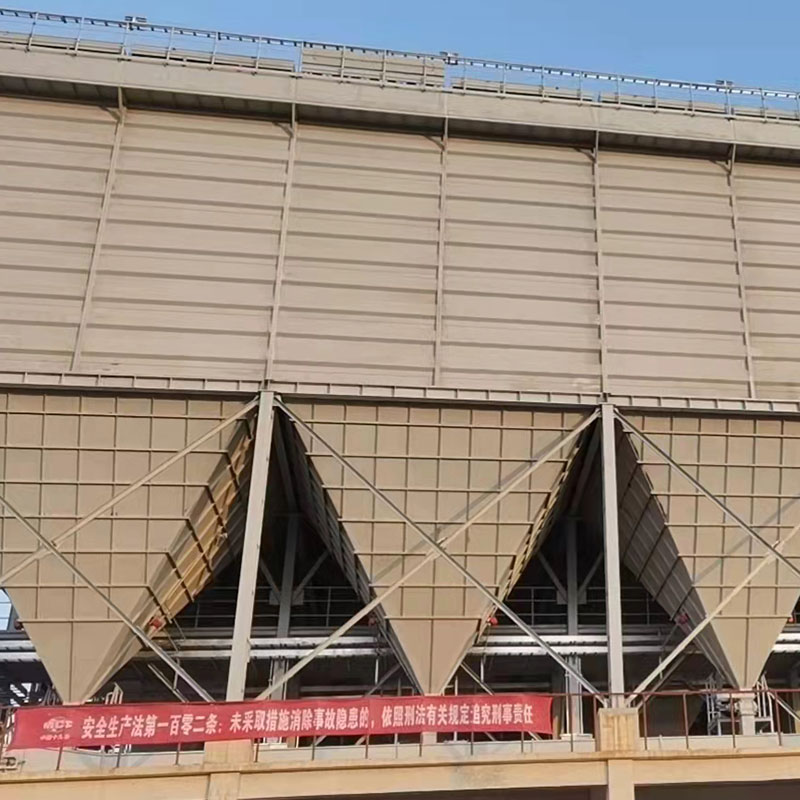 Low-Pressure Pulse Jet Bag Dust Collector with Walk-in PlenumDesigned for high-airflow applications, this unit offers a low pressure drop of 4–6 in. w.g. and modular cell plates for easy maintenance. Its customizable design ensures emissions below 8mg/Nm³ for various industries, making it a key solution for energy-efficient compliance.View Product → from Anhui Tiankang Environmental Technology Co., Ltd., which incorporates a walk-in plenum and modular cell plates for easy maintenance at high volumes.
The performance of an industrial baghouse dust collector for high airflow is governed by three interconnected variables: air-to-cloth ratio, pressure drop, and dust cake resistance. Getting each one right ensures compliance and energy efficiency.
| Parameter | Typical Value | Impact on Performance |
| Air-to-Cloth Ratio | 2.5:1 – 3.5:1 | Higher ratio reduces capital cost but increases ΔP and bag wear |
| Pressure Drop | 4–6 in. w.g. | Below 4 in. w.g. may mean inadequate cleaning; above 6 in. w.g. wastes fan energy |
| Can Velocity | 200–300 fpm | Excessive can velocity re-entrains dust, hurting efficiency |
Filter media selection must account for temperature, chemical composition, and particle size distribution. Common choices for high-airflow baghouses in steel, cement, and power applications include:
PTFE membrane on fiberglass felt — for continuous temperatures up to 260°C (500°F) and excellent release of sticky dust
PPS (Ryton) needlefelt — good for 190°C (375°F) with resistance to sulfur oxides
Acrylic (Dralon) felt — cost-effective for moderate temperatures (140°C) and acid resistance
When the gas stream exceeds 200°C or contains abrasive particles like silica or fly ash, the filter bag must be engineered for extended life. In such environments, bag life can drop below 12 months if media is underspecified, leading to frequent shutdowns and replacement costs that dwarf the initial bag price.
In a 250,000 CFM baghouse serving a cement kiln, switching from standard polyester felt (rated for 130°C) to PTFE/fiberglass composite bags extended service life from 11 months to over 36 months, reducing annual filter media costs by 55%.
The evolution of baghouse filter technology has given plant engineers a palette of media options. For high-airflow collectors, bag diameter (usually 6–8 inches) and length (up to 35 feet) must be matched to the cleaning energy so that the pulse wave travels the full bag length. Cages made from carbon steel with epoxy coating or 304 stainless steel are standard to resist corrosion.
Choosing the right baghouse involves more than matching CFM. You must evaluate the dust characteristics, space constraints, and regulatory class. The following checklist applies to any high-volume purchase:
Combustible dust requires explosion venting or suppression. High-resistivity dust may necessitate grounding or additional conditioning.
Ensure the solenoid valves and diaphragm are sized for the required pulse volume at your local compressed air pressure.
At 200,000 CFM, a single off-line compartment for bag replacement is not enough — design for at least 20% spare capacity in compartments to allow maintenance without reducing total throughput.
Regulations in most industrial regions require opacity or PM2.5 monitors on the outlet stack of large baghouses.
A high-quality baghouse manufacturer like Anhui Tiankang offers custom engineering for these variables, including the 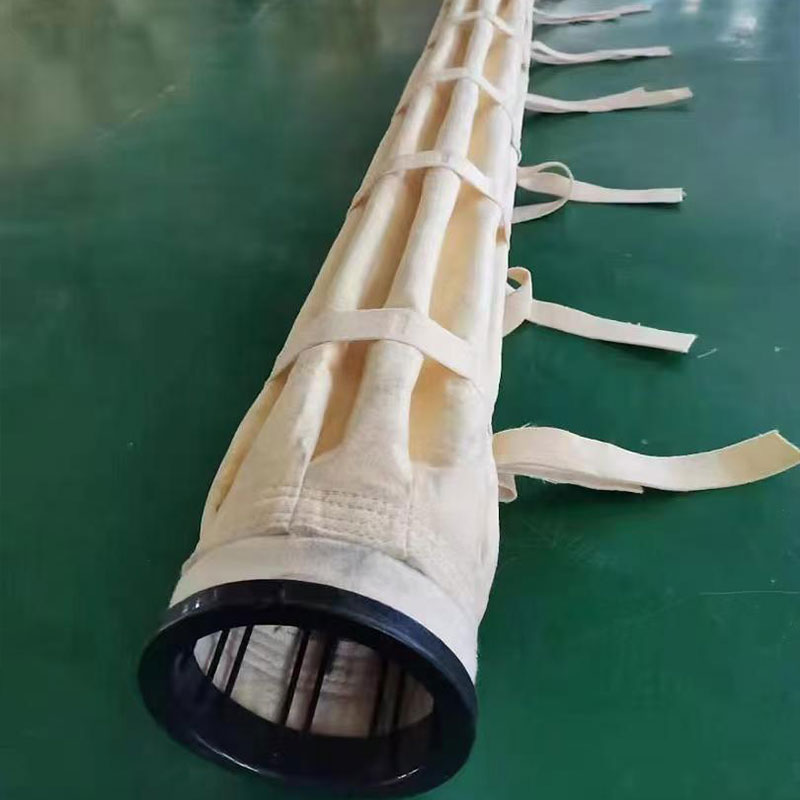 Custom Dust Bag for Pulse-Jet BaghousesMatching the exact media specification is critical for optimal air-to-cloth ratio and pressure drop. Anhui Tiankang offers tailored dust bag replacements with a wide range of materials and sizes to fit your system's peak load and application needs.View Product → replacements that match the exact media specification for your application.
Divide the total gas flow (CFM) by the target air-to-cloth ratio (ft/min). For example, 380,000 CFM ÷ 3.0 ft/min = 893,334 ft² of filter area. Then divide by the area per bag (circumference × length) to find the number of bags. Always add 10–15% safety margin for peak loads.
Yes, but the design must include a pulse-jet cleaning system with high-filtration-media surface treatments (e.g., PTFE membrane or coated felt) to prevent blinding. An air-to-cloth ratio on the lower side (2.5:1–3.0:1) also helps maintain cleanability.
Replace pulse valves before failure, monitor pressure drop across compartments, and inspect bag tension every quarter. In high-airflow systems, a single torn bag can cause a detectable emission spike, so use a compartment isolation plan that allows bag replacement without shutting down the entire collector.
A baghouse typically achieves lower outlet emissions (<10 mg/Nm³ vs. 30–50 mg/Nm³ for a modern ESP) and is less sensitive to particle resistivity. However, an ESP has lower operating pressure drop (0.5–1 in. w.g.) and longer equipment life. For high-airflow, high-efficiency applications where space is available, a pulse-jet baghouse is often the more flexible choice.