English
 Français
 عربى
عربى 简体中文
简体中文


Industrial Dust Collector Maintenance: 2026 Inspection Guide for Plant Engineers
HOME / NEWS / Industry News / Industrial Dust Collector Maintenance: 2026 Inspection Guide for Plant Engineers
 By Admin
Content
A steel plant's baghouse differential pressure climbed from 1.2 to 2.8 kPa over three weeks. The shift log showed the trend, but nobody acted until a filter bag collapsed and sent dust into the fan housing, stopping the line for 38 hours. The outage cost more than three years of planned industrial dust collector maintenance would have.
Industrial dust collector maintenance is a predictive discipline built on measurable parameters: differential pressure, compressed air quality, filter bag condition, and hopper discharge. Track them on a schedule and failures become rare. Ignore them and the first sign of trouble is a plugged filter or a compliance citation.
Differential pressure is the strongest single signal of filter health and the first number to record on every shift. A baghouse with new bags typically shows 500 to 750 Pa. Most systems run normally between 0.75 and 1.5 kPa. Above 2.0 kPa, cleaning is no longer keeping up. Above 2.5 kPa, the system is at risk of plugging or fan overload.
Record the baseline after every bag change and compare shift readings against it. A baghouse with two compartments will show different values if one cleaning valve is half blocked. Per-compartment logging isolates the source of a change.
| 0.5-0.75 kPa | Fresh or newly cleaned filters | Record baseline |
| 0.75-1.5 kPa | Normal steady-state operation | Routine monitoring |
| 1.5-2.0 kPa | Cleaning efficiency is dropping | Inspect pulse valves, check hopper level |
| 2.0-2.5 kPa | Filter blinding in progress | Increase cleaning frequency, inspect bags |
| Above 2.5 kPa | Critical | Isolate compartment, replace damaged bags |
Compressed air quality, not filter condition, is the most common hidden cause of poor baghouse performance. Oil-laden or water-laden air creates a sticky film on the filter media that no pulse can remove. The air supply must be oil-free and water-free at a steady pressure of 0.5 to 0.7 MPa.
For a low-pressure pulse jet bag dust collector, cleaning depends on manifold pressure and valve speed. A diaphragm leaking 5% of rated flow leaves bag rows un-cleaned and raises compartment pressure drop by 0.2 to 0.4 kPa.
A filter bag can look worn on the outside and still be structurally sound. Do not replace bags based on surface appearance. Replace based on gasket condition, cuff fit, seam stitching, and abrasion wear near the bottom of the bag.
When inspecting dust filter bags, shine a light from the clean side of the cell plate. A pinprick becomes a visible spot. Check the bottom third of the bag, where bags rub against the cage. Never substitute a similar-looking model; the air-to-cloth ratio and temperature rating may differ. At Anhui Tiankang Environmental Technology Co., Ltd., bag filter dust collectors are designed for inspectability.
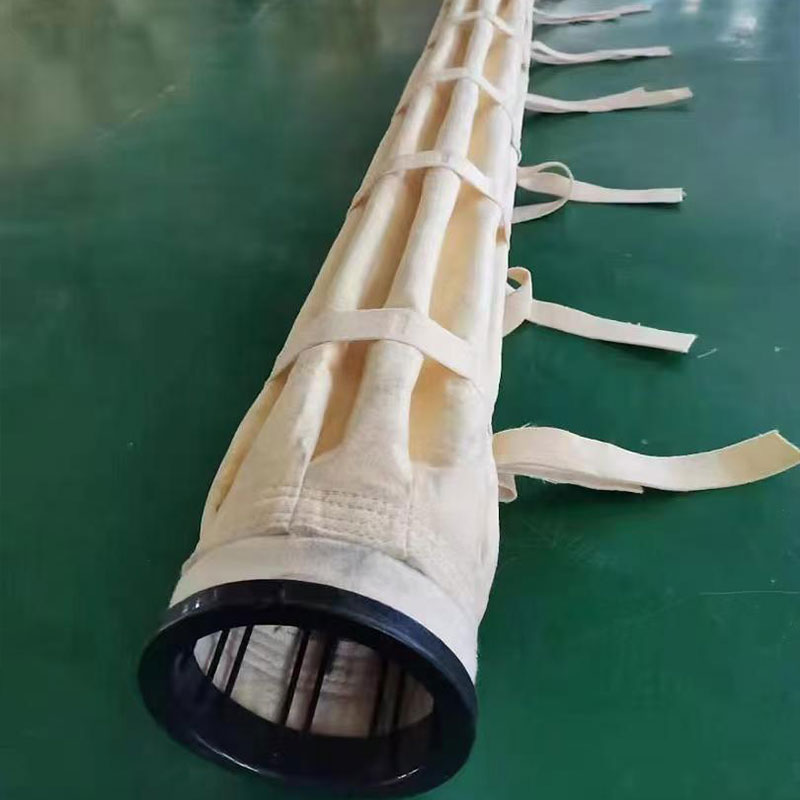 Dust Filter Bags for Inspectable Dust Collection SystemsThese filter bags are designed for easy inspection from the clean side, with emphasis on the lower third where friction occurs. Proper air-to-cloth ratio and temperature rating are critical to avoid pressure spikes and ensure reliable filtration.View Product →
The hopper is for conveying dust out of the system, not for storing it between maintenance cycles. Accumulated dust gets re-entrained and passes through the bags again, which is the fastest route to a pressure spike.
Empty the hopper before it reaches 50% capacity. Check the level sensor first. Inspect airlock wipers and rotary valve seals weekly; a worn wiper lets outside air in, increases fan load, and pulls dust through the hopper.
Fan vibration is a symptom of accumulated dust on the impeller or a bearing failure, and both need attention on the same visit. Dust build-up is more common in steel plants and cement facilities because the dust is sticky and heavy.
Lubricate fan bearings every 1,000 to 2,000 operating hours. Record vibration in mm/s; above 4.5 mm/s indicates imbalance or bearing wear. Inspect door seals and gaskets for air leaks, and check ducting and expansion joints for cracks.
A maintenance schedule that works assigns a specific person to a specific check at a specific frequency. The table below covers common failure modes in steel, cement, and glass production.
| Frequency | Check item | Method | Action |
| Daily | Differential pressure | Read gauge | Investigate above 30% |
| Daily | Moisture traps | Drain | Check filter |
| Weekly | Hopper dust level | Level sensor | Empty at 50% |
| Weekly | Pulse valves | Listen | Replace weak diaphragm |
| Monthly | Fan bearings | Vibration | Grease re-record |
| Monthly | Door seals | Check leaks | Replace seals |
| Semi-annual | Filter bags | Light test | Replace damaged bags |
| Annual | Fan wheel | Visual check | Clean and balance |
The economics favor a planned program. A maintenance technician day costs a few hundred dollars. An unplanned baghouse outage can halt a steel plant for 38 hours. The chart below shows how downtime is distributed among the components that are easiest to inspect.
More than 60% of unplanned downtime comes from filter bags and compressed air components, both inspectable in under an hour. The most valuable habit is recording differential pressure and checking pulse valve performance while the system runs.
Anhui Tiankang Environmental Technology Co., Ltd. supports industrial operators with tailored industrial dust collection systems, including baghouses, fume extraction hoods, and replacement filter media. A maintenance-friendly design pays for itself within the first year.
Daily checks cover differential pressure and moisture traps. Weekly checks add hopper level and pulse valve operation. Monthly checks include fan bearings and door seals. Semi-annual checks cover bag integrity, and annual checks cover the fan wheel.
Clean baghouses typically show 500 to 750 Pa with fresh bags. Normal operating range is 0.75 to 1.5 kPa. Above 2.0 kPa, cleaning efficiency is declining. Above 2.5 kPa, take immediate action.
Online pulse cleaning is standard for pulse jet baghouses. Do not use an air lance to manually blast a bag in the rack; it damages seam stitching and the cage. Replace the bag if it needs cleaning outside the normal pulse cycle.
High pressure drop after a bag change usually indicates compressed air contamination, a blocked pulse valve, or a hopper that is still full. Check manifold pressure, confirm every cleaning valve fires, and verify hopper level.