English
 Français
 عربى
 简体中文


What to Check Before Selecting Dust Collector Filter Bags for Your Baghouse
HOME / NEWS / Industry News / What to Check Before Selecting Dust Collector Filter Bags for Your Baghouse
 By Admin
Content
Two baghouses on the same foundry line, handling the same dust, running the same 24-bag rows. One set of filter bags runs 26 months. The other is torn through in nine. The difference is almost never the fabric brand; it is what the buyer checked before the purchase order was signed.
Before selecting dust collector filter bags, check five things in this order: the continuous gas temperature at the tube sheet, the gas and dust chemistry including moisture and acid dew point, the air-to-cloth ratio that matches the cleaning method, the dust abrasiveness and particle size, and the physical fit between bag, cage and tube sheet. A bag chosen on temperature alone will fail early, and the failure will usually be blamed on the bag.
Anhui Tiankang Environmental Technology Co., Ltd. has built baghouse equipment and supplied replacement media for steel, foundry, cement, glass and pharmaceutical plants since 2002. The checklist below is the same one our engineers work through when a customer ships a failed bag back for review, and it applies whether the baghouse is ours or someone else's.
The number that decides your filter media is the continuous reading where the bags actually hang, plus a margin. Design documents usually quote a single figure from a duct probe twenty metres upstream, and that figure is wrong in both directions.
On one cement grinding circuit we reviewed, the duct sensor read 128 degrees C while a thermocouple pushed through the tube sheet showed 96 degrees C in winter and 152 degrees C during mill start-up. Polyester at 128 degrees C looks comfortable against a 135 degrees C ceiling. The same bag at 152 degrees C for forty minutes a day hydrolyses, shrinks and loses tensile strength inside a year.
Record three numbers before you open a media catalogue: normal continuous temperature, peak temperature with its duration, and minimum temperature during start-up and shutdown. Then apply a 20 to 30 degrees C margin on the ceiling side and confirm the low end stays above the acid dew point.
A bag that survives 150 degrees C for 30 minutes a day is not the same product as one rated for 150 degrees C continuous. Write both numbers into the inquiry and make the supplier confirm each one separately.
Chemistry destroys more filter bags than temperature does, and it does so quietly. Ask for a gas analysis covering SO2, SO3, NOx, HCl, moisture and oxygen, then compare the acid dew point against the real baghouse operating temperature.
The temperature at which sulphuric acid vapour in the flue gas condenses into liquid droplets. When the bag surface sits below that line, every cleaning pulse drives acid into the fibre, and the damage surfaces months later as brittle, cracked bags clustered near the tube sheet.
Four chemistry mechanisms account for most of the failed bags we examine:
Hydrolysis from moisture plus heat. Polyester is the classic casualty; above roughly 120 degrees C with water present, it loses strength even in otherwise clean gas.
Acid attack below the dew point. Sulphuric and hydrochloric acid attack aramid and nylon quickly, while PPS and PTFE resist far better.
Oxidation. PPS performs well against acid but degrades where oxygen exceeds about 8 percent by volume or where NO2 is high.
Alkali attack from cement, lime and some metallurgical dusts, which shortens the life of glass and aramid media.
| Media | Continuous temp (C) | Acid resistance | Moisture / hydrolysis | Abrasion | Typical duty |
| Polyester (PET) | 130-135 | Poor | Poor above 120 C | Good | Dry general dust, foundry shakeout |
| Polypropylene (PP) | 90-95 | Good | Good | Fair | Food, chemical, low temperature gas |
| Aramid (Nomex) | 190-200 | Fair | Poor with SO3 | Excellent | Asphalt, abrasive metallurgical dust |
| PPS | 170-190 | Excellent | Good | Good | Coal boilers, kilns, incineration |
| Fiberglass | 260-280 | Fair | Fair | Poor | High temperature gas with PTFE finish |
| PTFE | 250-260 | Excellent | Excellent | Fair | Mixed chemistry, high moisture |
Air-to-cloth ratio is gross gas volume, including in-leakage, divided by net cloth area. It is the single figure that most often makes a correctly chosen fabric fail early, and it has to be fixed before the media is picked.
0.8 to 1.2 m/min is the normal band. Drop to 0.6 to 0.9 m/min for sub-10 micron dust, sticky dust or heavy inlet load.
Compressed air at 0.2 to 0.5 MPa. Best choice for large gas volumes and high dust concentration.
0.3 to 0.6 m/min. Low cleaning energy, gentler on the fabric, larger footprint per cubic metre of gas.
Suited to small units, light dust load and plants without a compressed air network.
Push a pulse-jet baghouse past about 1.2 m/min on fine dust and the pulse cannot rebuild the dust cake between cycles. The bags stay loaded, differential pressure climbs, someone raises the pulse pressure to compensate, and the media is damaged from the clean side. For steel and foundry work, where inlet load often runs above 50 g/m3, the practical answer is offline pulse cleaning at a conservative ratio rather than a bigger compressor.
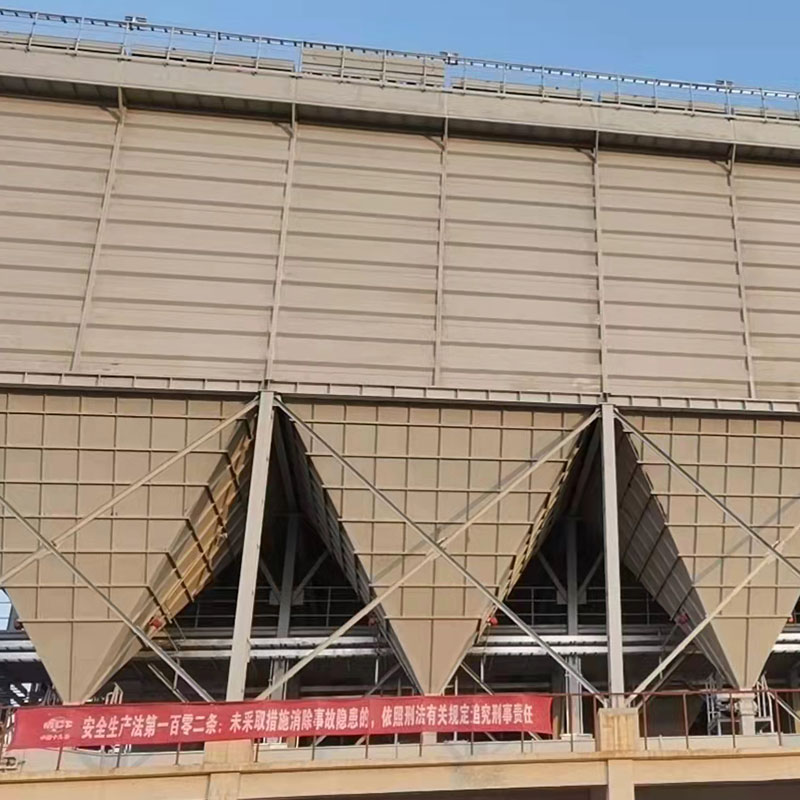 Low-Pressure Pulse Jet Bag Dust CollectorCustomizable pulse-jet baghouse for high dust loads, with precise cleaning and ultra-low emissions for steel and foundry flue gas.View Product →
Cleaning method and fabric behave as one system: how bag filter dust collectors form and shed the dust cake determines most of the service life you will actually get, regardless of the media grade printed on the datasheet.
Add 10 to 15 percent net cloth area when the gas runs within 15 degrees C of its dew point, when inlet dust load exceeds 100 g/m3, or when the control system triggers more than 20 cleaning cycles per hour.
Dust properties set the surface treatment, the fabric weight and the cleaning strategy, so ask for a particle size distribution and a physical sample, not a verbal description.
Abrasive dust such as silica, alumina, coke and fly ash: choose higher-tenacity media and keep inlet can velocity below 15 m/s.
Sticky or oily dust: PTFE membrane with an anti-stick finish, and run the ratio at the low end of the range.
Hygroscopic dust such as salt, fertiliser and some pharmaceutical powders: insulate the baghouse and hold it above the dew point.
Combustible dust: anti-static media with a conductive scrim, plus documented grounding of cage and tube sheet.
Where dust load is heavy and gas volume large, the cleaning hardware matters as much as the fabric. A rotary jet cleaning arrangement distributes pulse air through a rotating arm above the bag rows, which cuts the valve count and evens out the cleaning energy across a wide compartment.
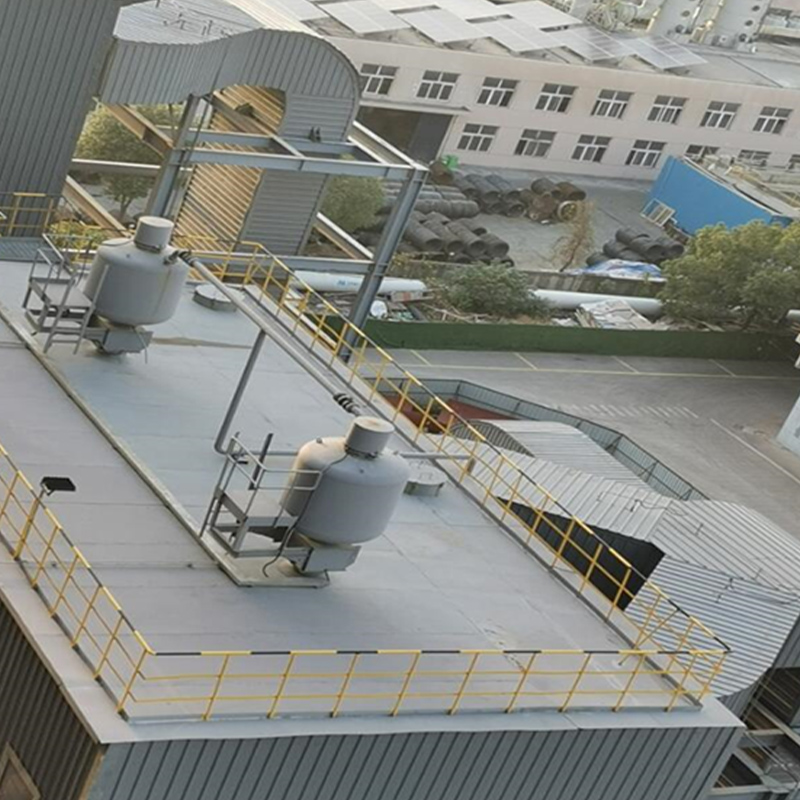 Rotary Jet Cleaning Bag Dust CollectorFor large gas volumes and heavy dust, this customizable rotary-jet baghouse distributes pulse air evenly and handles high inlet concentrations up to 1000 g/Nm3.View Product →
Roughly half of the premature failures we inspect are installation problems, not media problems, and none of them appear on a specification sheet. Measure the hardware before the bag order is released:
Bag length against cage length. A bag 10 mm short rides up with every pulse and wears through at the cap; a bag 15 mm long folds at the tube sheet and leaks.
Cage diameter against bag inside diameter. A 2 to 4 mm clearance is normal; a cage that is too tight abrades the fabric during installation.
Tube sheet hole diameter and ovality. A 1 mm oversized hole with a hardened gasket leaks dust straight into the clean plenum.
Fabric weight against cage wire count. 550 g/m2 needle felt on a 12-wire cage behaves differently from the same felt on a 20-wire cage.
Venturi and collar fit, especially on retrofits where original hardware is still in service after two bag changes.
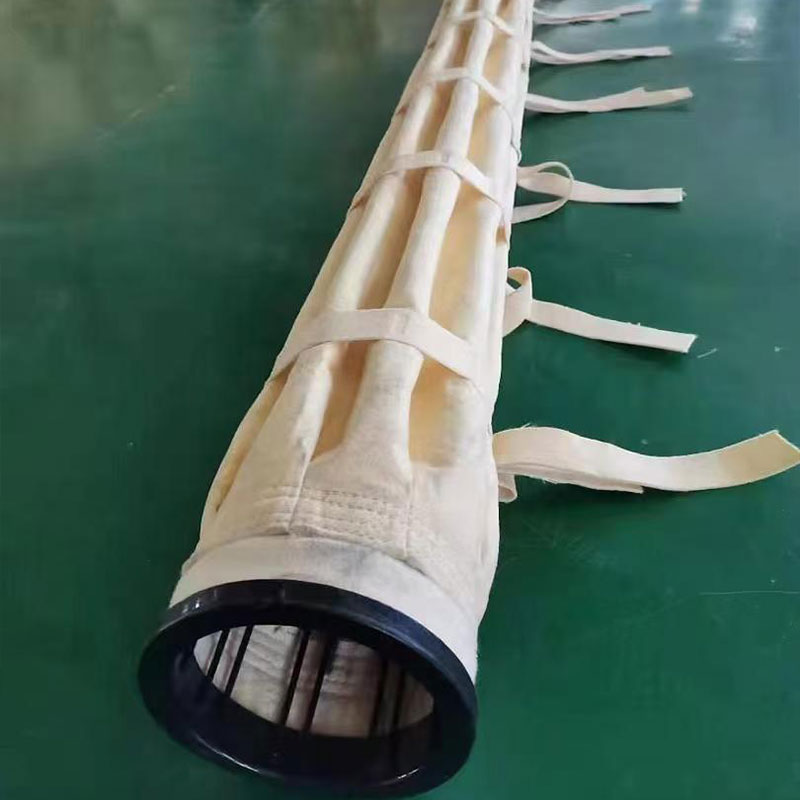 Customizable Dust Filter Bags for ReplacementReplacement bags in woven or non-woven constructions; selection depends on dust, chemistry, lifespan and maintenance, and should be matched to measured unit hardware.View Product →
Replacement media should be quoted from measurements of the real unit: a tube sheet drawing, one cage sample and one used bag are more useful than a model number.
The bag is a small share of maintenance cost; the labour to change it is the larger share. That makes documented performance worth more than a low unit price.
Does the supplier ask for gas analysis and a dust sample before quoting, or simply send a price list?
Are air permeability, tensile strength and heat-ageing data available per batch, not just per product family?
Can one supplier own the baghouse, the cages and the bags, so a fit problem has a single owner?
What is the lead time on repeat orders, and is each bag marked with grade and batch number?
A supplier who never asks what is in your gas will eventually sell you a bag that fails in the first year, and the invoice will not explain why.
The continuous gas temperature measured at the tube sheet, together with the acid dew point of the same gas. If those two numbers are known and the media is chosen against both, most early failures never happen.
No. Polyester hydrolyses when moisture and heat combine above roughly 120 degrees C, so flue gas from combustion or kiln operation destroys it quickly. PPS, fiberglass or PTFE are the usual alternatives.
0.8 to 1.2 m/min for ordinary dust, and 0.6 to 0.9 m/min for fine, sticky or high-load dust. Running above the band loads the bags permanently and forces operators to over-pulse, which damages the media.
Two to four years on a well-specified unit running steady conditions, and 12 to 24 months on harsh duty such as steelmaking or mixed chemical exhaust. Anything shorter points to a specification or installation fault rather than normal wear.